

 Capital: Oslo
 Population: 5.6 million (2025, Statistics Norway)
 GDP: €446,9 billion (2024, Eurostat)
- GDP/capita: €80 200 (2024, Eurostat)

Overview of the Norwegian fisheries and aquaculture sector



Fisheries sector
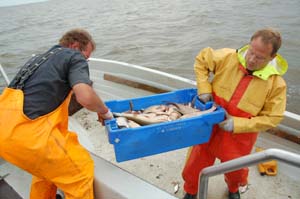
The Norwegian coast is 25.148 km long with a huge prospect for expanding fisheries and marine aquaculture in the country. Norway has 90.000 km² of sea within its jurisdiction, equalling approximately 1/3 of the total land area. Throughout its history, the fishery has been a major industry in Norway. The country’s geographical characteristics, its long coastline, and climatic factors have made the country very well suited for this industry. According to the latest available FAO statistics, in 2023 Norway was the 10th largest capture fishery and the 8th largest aquaculture producer in the world.
The main elements of Norwegian fisheries management are access and quota regulations, coupled with capacity adjustment schemes. In 2024, the total catch amounted to almost 2.340 thousand tonnes valued at €2,47 billion. The most important fisheries today are those for cod (coastal and high seas), herring, and mackerel. Included in the cod fisheries are also haddock and saithe. The cod fisheries, producing fish for human consumption, equated to approximately 20% of the total catch but was worth 41% of the total value. Catches of pelagic fish were the largest, reaching 1.189.298 tonnes (51% of the total catch volumes) with Norwegian spring-spawning herring, Atlantic mackerel and capelin representing 53% of the volume. Norway pout and blue whiting are other important species and are mostly used as raw materials for fish oil and fishmeal production. Herring and mackerel are used for both consumption and processing into oil and meal.
In 2024, there were 9.456 fishermen employed full-time, and 1.128 registered as secondary occupation. While the number of fishermen employed full-time remained relatively stable during the past decade (since 2014), the number of part–time fishermen has shown a 40% decrease during the same period. For several decades there has been a general downward trend in the number of fishing vessels, and in 2024 their total number amounted to 5.441 (down by 8% during the decade), while the total capacity of the fleet reached 1.981 thousand HP (14% increase compared to 2015)6. Over 90% of the country’s fishing fleet are vessels below 15 meters.
In 2024 the number of vessels above 28 meters amounted to 269, which is only 5% of the total fishing fleet, however these vessels represent 47% of the total capacity of the fleet. Norway shares around 90% of its fish resources with neighbouring countries and negotiates a number of annual fishery agreements in line with the Law of the Sea Convention based on scientific advice from the International Council for the Exploration of the Sea and around 90% of Norway’s fisheries are conducted on shared stocks. For the most important shared fish stocks, quota levels and management strategies are set in cooperation and annual agreement with the EU, the UK, Russia, the Faroe Islands, Greenland and Iceland, and the EU. In Norway, first sales of fishery products are managed through the systems of five sales cooperatives. Norges Sildesalgslag (the Norwegian Fishermen’s Sales Organisation for Pelagic Fish) is Europe’s largest marketplace for first sales of pelagic species.
Aquaculture

Norway has a long coastline of clean, fresh seawater that provides the best conditions possible for the operation of sustainable marine aquaculture activities. Norway is among the foremost countries in the world with respect to operations, technology, research, and development in the field of aquaculture. Aquaculture and sea ranching include a number of different activities where licenses are required. Production of salmon and rainbow trout is the most common activity, but cod, arctic char, halibut, scallop, oyster, blue mussel, and algae are also produced. The possibility of sea cucumber farming is also being considered, but the development of the project is at a very early stage.
Norway is the world’s leading producer of farmed Atlantic salmon and one of the largest seafood exporters in the world. The Norwegian aquaculture industry has developed to become an industry of major importance in the country. Commercial salmon farming started to develop in the 1970s, and at present, Atlantic salmon and trout are farmed up and down the coast. In 2024, the total sale of farmed fish and molluscs for human consumption reached 1.667 thousand tonnes amounting to over 9,27 billion euros. In 2024, the production of salmon and trout was 99% of the country’s total fish and seafood production both in terms of volume and value, reaching nearly 1.649 thousand tonnes, of which 1.553 thousand were salmon and 95,9 thousand were trout.
In addition, fish farmers produced 16.332 tonnes of other fish (mainly Atlantic cod and halibut, and Arctic charr), 1.647 tonnes of shellfish (mainly blue mussel). Algae production for both feed and human consumption reached 91 tonnes (sugar kelp and winged kelp). The long-term growth and development of the sector depend on an environmentally sustainable aquaculture industry, minimizing risks to the marine environment and biological diversity.
In 2024, the number of sites in seawater was 994 for salmon and trout production, 87 for other fish species, and 137 for molluscs, crustaceans, and echinoderms, 117 for algae. The number of land-based sites in 2024 was 27 for freshwater and 37 for salt water fish. In 2024, 2.905 licences were issued for the production of fish, shellfish, and algae – of them, 1.651 (57%) were for salmon and trout production. The production of algae entered the national statistics in 2014 and the number of licences then was 54. In 2024, this number reached 566 – over ten-fold increase. For the production of juveniles, 240 licenses were issued for salmon and trout and 184 for hatcheries, while 81 were issued for other fish. The total number of full- and part-time employees in the aquaculture sector, including juvenile production, was 10.637 (or 8.159 in full-time equivalent): 90% of them were involved in salmon and trout farming, 8% in farming other fish, and about 2% was dealing with molluscs and algae. Over 76% of the employees are men (8.075).
Processing
In 2024, 416 companies in Norway processed and preserved fish, crustaceans, and molluscs, employing 12.474 people and generating EUR 8,87 billion in turnover. The sector is dominated by 195 small and medium-sized enterprises along the coastline, which account for 68% of employment. At the other end of the scale, six large companies (more than 250 employees each) employ 28% of the workforce and generate 43% of turnover, while the remaining 215 micro-enterprises (fewer than nine employees) contribute around 9% of total value. Most plants focus on traditional products—saltfish, stockfish, and clipfish—with saltfish typically made from cod, ling, tusk, or saithe, stockfish air-dried (usually cod or haddock) without salt, and clipfish salted and dried, mainly from cod but also ling, saithe, and tusk. Clipfish made from Norwegian cod is mainly consumed in Portugal, Spain, Italy, France, and other European markets. Although salting, drying, and smoking remain central, the number of plants specialising in these methods has been declining, alongside a shift towards frozen ready-to-eat products, fish oils (including some for human consumption), and fishmeal, used primarily in aquaculture feed and, to a lesser extent, poultry feed.
Trade

In 2024, Norway exported 2,62 million tonnes of fisheries and aquaculture products for the total value of EUR 14,4 billion, of which products for human consumption represented 91% volume and 97% value. The share of farmed species (mainly salmon and trout) reached about 53% of the volume, and over 78% of the total value of exports, and the majority of product are represented by fresh fish. The EU is the largest market for fish and seafood from Norway and absorbs some almost 50% of total export volumes, with Denmark, Poland, the Netherlands, and France as the main destinations. Outside of the EU, China, UK and the USA were the largest importers. Norway is also one of the top two markets for fish and seafood from the EU; about 25% of value and 23% of volume of the country’s seafood imports come from the EU. In recent years, imports have grown significantly, partly because of the need to import fishmeal, fish oil, and fish feed for the growing aquaculture industry. The main suppliers are the EU Member States and countries in South America and Iceland. In 2024, Norway imported 404.901 tonnes of fishmeal and fish oil worth over EUR 1,3 billion, where fish oil represented 46% of the volume and 70% of the value. Total imports in 2024 reached over 685.756 tonnes valued at about EUR 2,1 billion.
Consumption
Consumption of fish and seafood products averaged 18,96 kg per capita in 2022—an almost 11% decrease compared to 2003 levels, and growing prices are the major reason for it. Sales of expensive seafood went down, while the sales of more affordable species went up. Historically, the most popular species among Norwegian’ consumers are cod, salmon, shrimp, mackerel, and European pollock.
Useful Links for Norway
- The Ministry of Trade, Industry and Fisheries
- Norwegian Seafood Council
- Fisheries.no
- Norwegian Fishermen’s Sales Organisation
- Norwegian Seafood Association
If any of the above listed links do not work or if you have a relevant link to add, please send us an email here.