This article was featured in Eurofish Magazine 4 2025.




Using innovation to tackle blue economy challenges
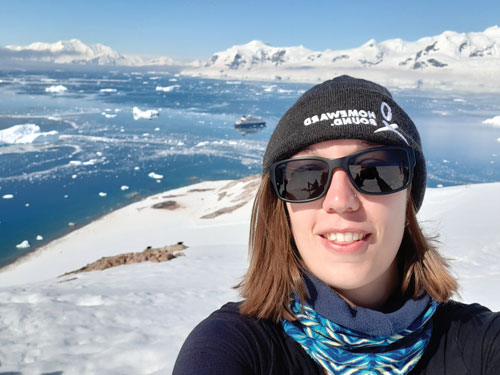
The Iceland Ocean Cluster brings together some 70 companies that are active in the blue economy. The goal of their flagship movement, 100% Fish, is to derive the maximum possible value, and reach zero waste from marine resources through collaboration and innovation. Moreover, the cluster exports its model of community and trust inspiring the creation of similar groupings in other parts of the world. Dr Alexandra Leeper, the CEO, describes here the objectives of the cluster and the activities it engages in to achieve them.
Could you briefly introduce the Iceland Ocean Cluster: its mission and vision, and your role within the cluster?
The Iceland Ocean Cluster is a community that spans all different sectors of the blue economy based in the Ocean Cluster House in Reykjavík, Iceland but with projects, activities and Sister Ocean Clusters all around the world. Our mission is a sustainable and innovative blue economy. Our team and community are purpose driven and focused on connecting and supporting individuals, startups, organisations, institutes and businesses so great ideas that solve some of our biggest global blue challenges can thrive and resilient value is created.
The cluster is well known for its “100% fish” approach. How has this concept evolved, and what impact has it had on Iceland’s seafood industry? How does the cluster succeed when at least some of its members must be competing against each other?
100% Fish is the concept of not wasting any of the precious seafood that we spend time, energy and money to capture and farm, but instead finding sustainable and value creating ways to use 100% of our seafood. In Iceland this thinking has led to a significant increase in the value of cod and a total transformation of the philosophy and resilience of the blue economy. Atlantic cod, the model species for 100% Fish, once worth around $12 (€10.5) per fish now can reach around $5,000 by using not the fillets, but the head, skins, bones, guts and beyond in a diverse range of products and sectors. There are products ranging from the traditional, fish meal and fertiliser through to higher value products with strong heritage, such as fish skin leather textiles in fashion items and cod liver oil, nutraceuticals and supplements such as fish skin collagen and mineral supplements from fish bones through to the very high value products used in pharmaceutical and medical applications such as fish skin grafts by a company called Kerecis.
And since not every fish is like -Atlantic cod nor every country like- Iceland, what is driving our work now, is learning how we can adapt and apply the core steps that has made 100% Fish so successful in Iceland to seafood contexts around the world. One big part of this success has been the identification of mutual challenges that members and seafood companies share, that are perhaps not part of the core business, but in fact a common pain point—so called, pre-competitive challenges—-reducing loss and waste from processing is one such pre-competitive challenge that companies can benefit from collaboration over competition for mutual economic and environmental gain.
How has the development of aquaculture in Iceland -influenced the activities of the cluster?
Aquaculture, both sea cage and land-based is one of the fastest growing food production sectors in Iceland. While the largest volumes are driven by Atlantic salmon and other salmonids, the land-based sector also hosts some exciting warm water species, possible due to the unique volcanic geology of Iceland, such as Japanese abalone, Senegalese sole and research species such as whiteleg shrimp and Nile tilapia. This results in growing diversity in the blue economy sector and it means, particularly in the case of Atlantic salmon, that there are increasing volumes of secondary biomass including processing cut-offs as well as sludge (the uneaten food and faeces). In both cases this has led to the Iceland Ocean Cluster extending its 100% Fish model to salmon and salmon sludge—where there is more “waste” to transform into value through collaboration. We also support emerging companies serving this sector such as technology and AI solution providers as the industry becomes more automated and digitised.
How does the cluster support the transition to more sustainable and circular practices in the blue economy? And what are some of the most promising innovations or startups you’ve seen recently within the Iceland Ocean Cluster ecosystem? Why do you feel they show promise?
There is always so much activity going on at the Iceland Ocean Cluster, both domestically and increasingly, all over the world where our team and collaborators are working toward innovation and good, sustainable business in the circular and blue economies. While there are many approaches that we take, there are some core ways we do this. We bring the right partners and communities together in an ecosystem approach to foster good ideas, be that through match-making days for investors and entrepreneurs that are aligned in stage and value focus, bringing technology companies together and facilitating conversations on potential spin-off collaborations, or asking leaders to explore their vision for the blue economy and share where they are willing and able to work together now. We lead projects that can support research and innovation for full utilisation of seafood, and product development from secondary biomasses. We also invest, incubate, and nurture the next generation of great founder and exciting ideas that we believe in.
There are many promising startups and innovations that we work with, for example, Marea that are developing sustainable coatings for food made from microalgae side streams to replace supermarket fruit and vegetable plastic packaging. Hefring Marine that is using sensors and AI to improve vessel navigation, safety, fuel consumption and supporting energy transition. Primex who is transforming shrimp shells into chitosan for a wide range of products from food to cosmetics and even medical applications. In all cases these companies have a strong vision for a resilient blue economy and are providing innovative solutions for some of our most urgent blue challenges, plastic pollution, fuel consumption and footprint, and seafood waste.
Can you give examples of how seafood by-products are being used in new, high-value applications beyond food?
This, I am happy to say is becoming a very long list, so I will share just a handful of recent examples we have come across that are exciting, innovative and beautiful. The use of salmon blood into biomedical blood clotting agents and anti-coagulants by companies such as Salmonics. The use of fish skin collagen in dental care and regenerative medicine. The development of mussel shells into bio-glass tiles in a collaboration between the architecture firm Bureau de Change and a student artist Lulu Harrison. Kerecis in Iceland is leading the way in skin grafts from fish skin but has also developed a whole range of further medical products that really showcase the wide range of possibilities for fish in health care. Please do explore our website https://sjavarklasinn.is/en/ for other examples.
The cluster is known not only for innovation but also for thought leadership. Could you say something about recent publications, research initiatives, events, and other networking opportunities the Iceland Ocean Cluster provides to bring stakeholders together?
We are driven by a desire to create positive change in the blue economy, in Iceland and around the world and a big part of this is sharing our story and that of remarkable entrepreneurs and industries we work with around the world. This meant our team has had the chance to inspire action through 100% Fish in the US, Korea, New Zealand, Ghana, Chile, and the UK in the last 12 months, to name just a few. We welcome groups from all around the world too, to share our cluster model and the cluster house function and to explore new collaborative partnerships.
In May, Iceland held its annual Innovation Week run by the company, Iceland Innovation Week, who also have their office in our cluster house. This week sees the whole city light up with innovation and this year our team really wanted to showcase just how much activity is happening in Iceland and beyond. We hosted a range of events at the cluster, including some collaborative events with the United States Embassy in Iceland that brought innovators together to share experiences of entering the US market. We opened our doors to the public in our Blue Open House where blue companies, from brand new startup ideas to mature companies in the circular and blue economies came to show and tell everyone who they are and what they do. Events like these mean we get to engage with new communities, companies increase their visibility and we all get inspired for the future of the blue economy!
There are a number of recent publications that can be found on our homepage from a range of projects with partners around the world about how we can create more value from seafood, how we can reduce waste, and how we can bring communities together to trigger meaningful change.
How does the cluster engage with the public or younger generations to raise awareness about the potential of the blue economy and circular innovation? And how does it collaborate with similar initiatives abroad, particularly in Europe? Do you see potential for the Icelandic model to be replicated in other coastal nations, and if so, what conditions are key for success?
We always host resident intern students from both Iceland and other countries at the Ocean Cluster House. We also have high school and university groups visiting from around the world. We consider this a really important part of our operations, both to hear the ideas and perspectives of younger generations and to share all our exciting ideas and to meet our community. One of the most important parts of this is really telling the stories that can inspire future leaders in the blue economy.
We have an ever-growing network of Sister Ocean Clusters around the world built on a philosophy of collaboration and modelled on the principles of community and trust that have been so effective in Iceland. Collectively, the Sister Ocean Cluster Network is -finding ways to work together on topics like 100% Fish, industrial symbiosis, and a more sustainable blue economy. Through this network of clusters there is a huge variety of innovation landscapes, cultures, approaches and priorities that strengthen the impact of a single cluster acting in isolation. Key success factors of all clusters include a driven leadership team with a strong purpose to find solutions and bring community together.
As a woman in a leadership position within the blue economy, how do you view the current level of gender diversity in the sector, and what advice would you give to young professionals, especially women, interested in working in ocean-related innovation and entrepreneurship?
This is a complicated question to answer as there is nuance and difference in the diversity at the sectoral, country and role level. Just looking at the statistics of gender in the blue economy in the EU (https://blue-economy-observatory.ec.europa.eu/women-blue-economy_en), it is clear that the sector is still unbalanced, with the employment of women in the sector and women’s salaries still lagging. The industry would benefit from greater representation of women at key decision-making tables, and roles that can be more flexible to accommodate for balancing parenting and work. All this of course also requires societies, cultures and governments that enable people to thrive equally in work and life.
I would advise young people interested in a career in ocean-related innovation or entrepreneurship to find mentors, to get experience—try things, it’s as important to find out what you don’t like, as what you do. I would also advise exploring and articulating your “Why,” why are you excited about the ocean sector, why is your idea one that needs to happen? Why are you the one to do it? Why now? The ocean sector is increasingly diverse and needs diverse minds and solutions to evolve so find ways in which your skills set, and knowledge fit.
In your view, what will be the biggest challenge facing the Icelandic seafood industry in the next 10 years? How do you see the future of the Iceland Ocean Cluster? In which direction do you think it will or should evolve?
For the Icelandic seafood sector there are a number of key interlinked challenges to optimise the environmental and economic sustainability of the sector in the context of a changing climate. It will be essential to continue reducing the carbon footprint of the sector through more efficient gear, or alternative fuels, or hybrid vessels. Ensuring talent development in an industry that is becoming ever more technical and digital will be crucial to continue progress for the whole blue economy. As the salmonid aquaculture continues to expand in Iceland it will also be key to learn from the fisheries sector on topics including the Cod model of 100% Fish. These challenges are all highly relevant internationally, globally too, we still waste far too much of the precious seafood that we take time, energy and money to capture and farm. In 2023 the World Economic Forum estimated that world-wide we lose and waste more than 23 million metric tonnes of potentially edible aquatic food.
The Iceland Ocean Cluster is evolving to extend its mission and hard learned lessons about collaboration and 100% Fish around the world, extracting the secret sauce of what has been -successful in Iceland and -enabling seafood industries and communities across the globe to adapt and implement these models. We have started to do this in areas like Greenland, the Great Lakes and the Oregon Ocean Cluster in the US, and in -Namibia, to name a few.