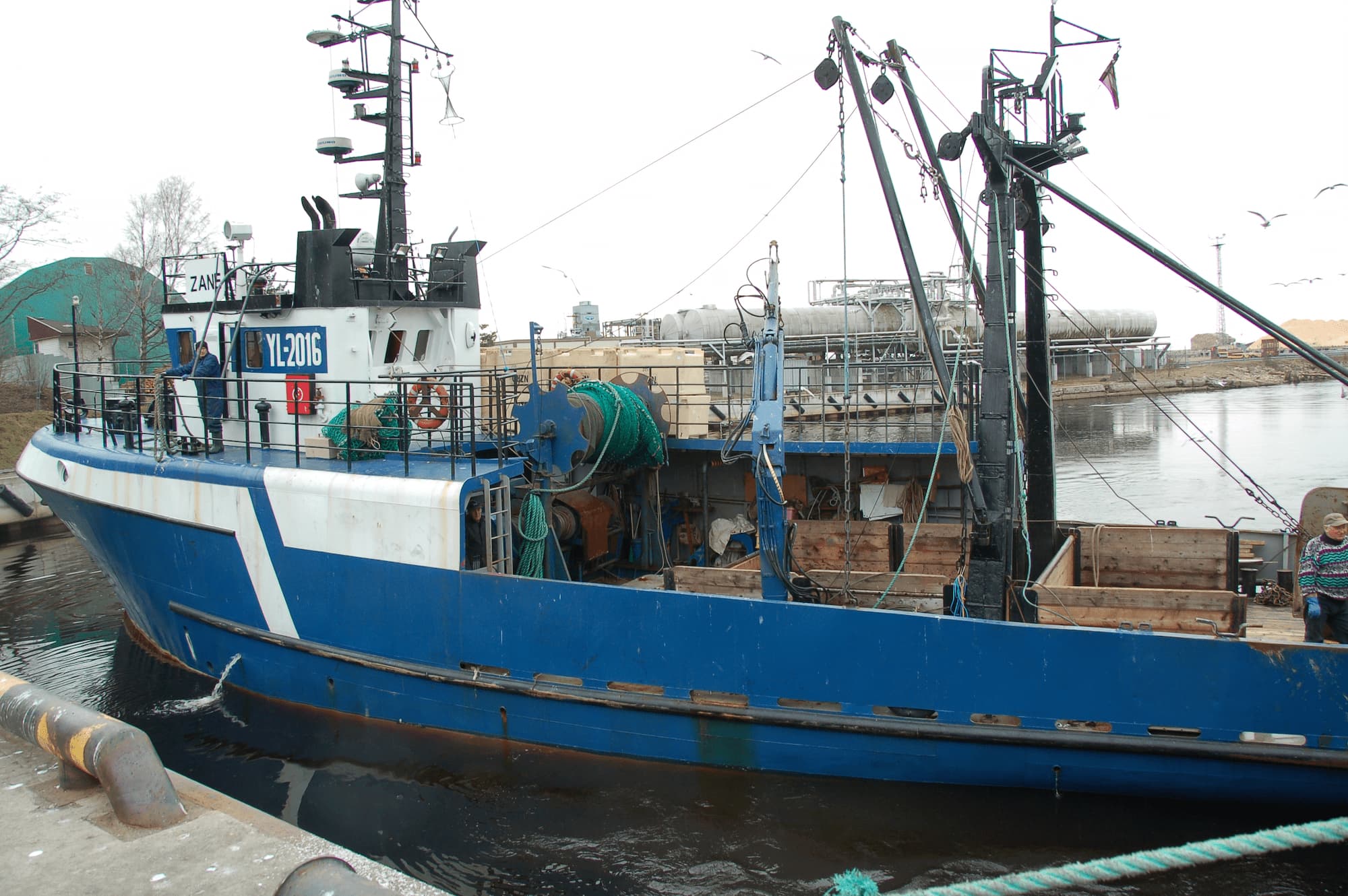
The Latvian fleet is active in the Baltic Sea, the Gulf of Riga, coastal waters, and also in the Atlantic Ocean off the coast of western Africa. In the Baltic Sea the main catch in terms of volumes is of sprat followed by herring, cod, and flounder. In the Gulf of Riga on the other hand, Baltic herring is the primary catch followed by European smelt, while the coastal fishery targets mostly herring and flounder.

The sprat and herring fishery together from all fishing zones amounts to some 50,000 tonnes. This fishery provides the raw material for the Latvian fish processing sector including for the canning industry. In addition the fish is block frozen and is exported to countries in Eastern Europe. This trade has been hit lately by the embargo on exports to Russia and other countries of the customs union with the result that fishers and processors are working hard to find new markets for their pelagic fish.
Quotas have been sliding for a decade
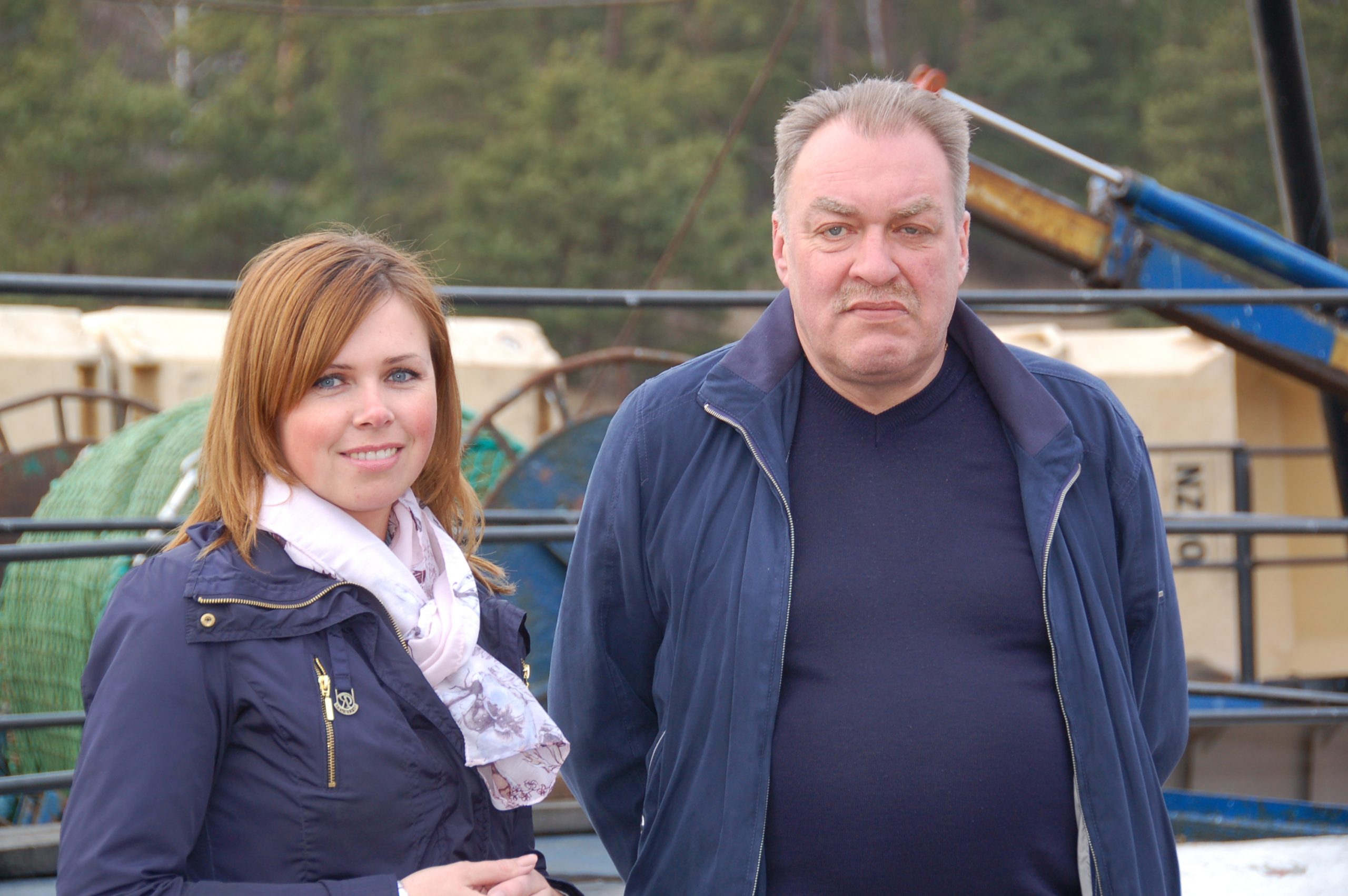
In Saulkrasti, 50 km north of Riga along the coast, Agris Lapins owns a fishing company with four trawlers targeting herring and sprats in the Gulf of Riga. Varita catches some 3,200 tonnes of fish a year in total, which is the size of its annual quota. Each year, however, the quota has been decreasing. Figures from the Latvian Ministry of Agriculture show that the quota for sprat in the Baltic Sea and the Gulf of Riga has almost halved over the last decade from 58,000 tonnes to 30,000 tonnes in 2015, while the quota for herring has been more stable moving from just under 25,000 tonnes to just over that figure over the same period.
Mr Lapins says the fall in quotas is based on the evaluations by the scientists studying the resource, evaluations that he finds difficult to agree with. But companies can do little to prevent the decline in quotas, he says, but the situation is not good for us. The only way to compensate for smaller quantities of fish is to create a product with more added value, to make more with less. When the weather starts to warm up the vessels will load up with ice from an ice generator in the factory so that the fish can be stored in ice as soon as it arrives on board. The four vessels in the Gulf of Riga can be tracked in real time. A vessel monitoring system shows the positions of all the vessels in the area, the ports they come from, whether they are fishing vessels or not, and other data besides. With a glance at the screen Mr Lapins can tell what his vessels are doing out on the water, whether they are fishing or returning to port. The vessels fish throughout the year with the exception of a month in summer from 10 May to 10 June when the fish are spawning. If in summer it gets very hot (beyond 20 degrees centigrade) then too fishing is interrupted because the quality of the fish tends be lower. From October to the end of April is the period when the quality of the fish is at its peak. When the temperature of the water is 6 degrees the quality of the fish is good. In summer the fish tends also to have more fat, though this does not impact the quality in any way, says Lelde Lielmane, the sales manager. The decrease in the quota allocated has meant that the company really works for only seven or eight months in the year. The four months in summer (May to August) are used for maintenance work on the vessels, the nets, and in the factory. Before the first half of December there is usually no quota left, so there is no more fishing activity for a further three to four weeks. If quotas go any lower it will be difficult for us to continue, says Mr Lapins.
Fish is processed immediately into blocks
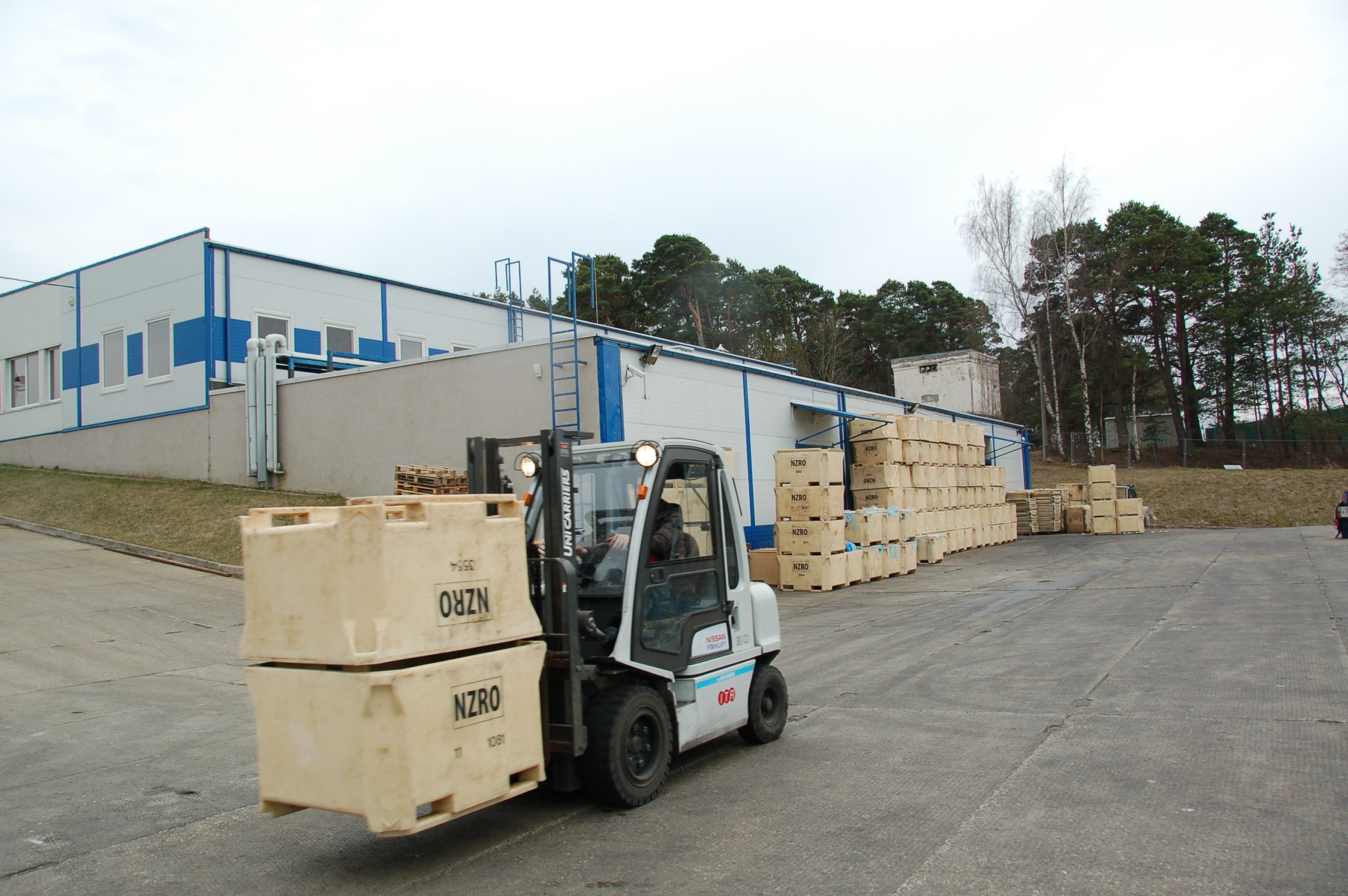
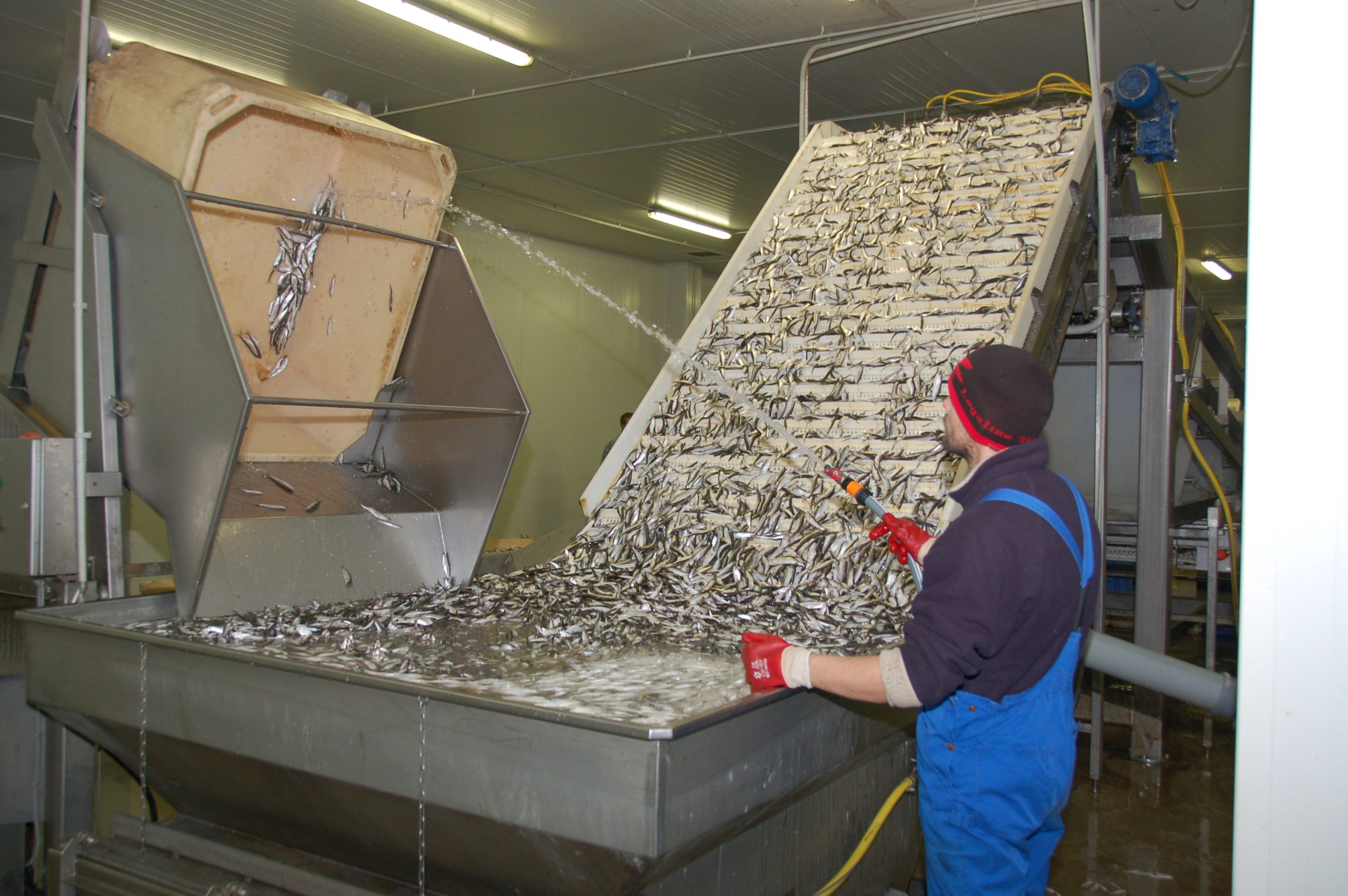
Typically the vessels will leave the harbour early in the morning and return in the afternoon. As a vessel returns to port a forklift truck gets ready to receive the fish. Three of the vessels are the same size, while the fourth is a little smaller. A crane on board reaches down into the hold and starts unloading the tubs. As they are landed the forklift whisks them away two at a time. In the processing facility the tubs are emptied into a grading machine that sorts them by size. Sprat and herring often school together so the catches when they come on board tend to be a mix of the two species. While there is some overlap in sizes – small herring can be the same size as large sprat – the two types of fish can largely be separated in the machine. The sorted fish is then filled into plastic bags, which are frozen at minus 40 degrees, a process that takes about 8 hours. The final product, a 10 kg block of fish, is then placed in storage at minus 18 degrees.
The blocks are sold to customers in the Ukraine, Denmark, Lithuania, Estonia, as well as in Latvia. Most of the catch is treated in this way, but part of it is also sold fresh, to processors in Latvia or to companies in Estonia that freeze the fish themselves. In the Ukraine companies use the fish as raw material for smoking, for making conserves, or for other products used for human consumption. In contrast, Danish buyers look for smaller sizes of fish that is then used in the fishmeal manufacturing industry. Varita has been heavily affected by the Russian embargo on imports from the EU. We used to sell 50% of our production on the Russian market, says Ms Lielmane, but since 2014 when the market closed we have been looking for other opportunities. The Latvian canning industry provided one such opportunity. Canned Riga sprats smoked in oil are a well-known product made by several Latvian companies for markets in Eastern Europe, and Varita started supplying its products to this industry. However, Russia, the single biggest market for these canned products blocked imports in the middle of 2015, which was another setback for Varita.
EU support helps the company and the local community
| Varita | |
|
Skultes iela 3 Tel.: +371 67954808 Chairman of the Board: Agris Lapins | Activity: Fishing, processing Vessels: 4 Quota: 3,200 tonnes in the Gulf of Riga Species: Baltic herring and Baltic Sprat Products: Frozen 10 kg blocks; fresh fish Markets: Latvia, Lithuania, Estonia, Denmark, Ukraine Employees: 51 |
We are satisfied with our current markets, explains Mr Lapins. The price we get for our fish is a bit lower, but we know we will get it. In Russia the price was higher, but so was the uncertainty. Varita is a member of a producer organisation together with 12 others. Among the benefits of membership is that the PO supplies fish tubs to all its members which are used to transport and store the fish on board and in the factory. The PO also supported the company to apply for the European funding that contributed to building the processing factory and installing the machinery. Ms Lielmane also explains how the PO helps its members by buying fish from them if prices fall below a certain floor. And if the company stores the fish because prices are too low, the PO will pay the company for the storage. Both she and Mr Lapin agree that it is very useful organisation. Without the PO and without the support from European funds Varita would not have been able to build and equip the factory, she emphasises, nine tenths of the costs were covered. In addition, the company also got support for a couple of trucks that are used to deliver the fish to customers.
On the other hand the factory helps to preserve the local community. And in a small way it has also reduced the migration of people to other areas in search of livelihoods. Four people who had left for the UK have now come back to work in the factory, says Ms Lielmane.