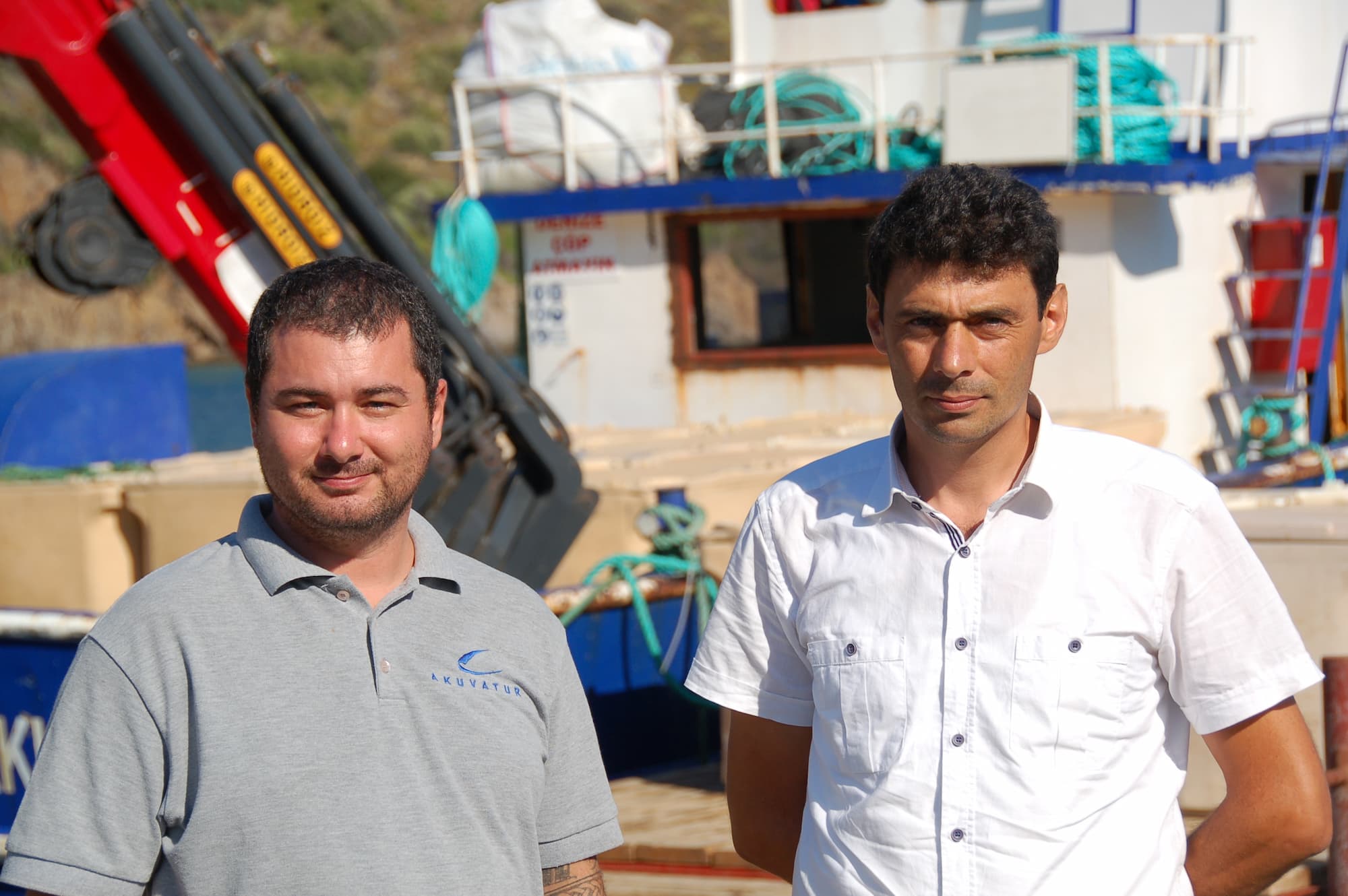
Mahir Yirmibesoglu and Mustafa Yenikurtulus, the cage and packaging facility manager.

In a sector crowded with farming and processing companies Akuvatur stands out for its approach, which differs in several respects from other producers. Owned by an academic, Dr Haluk Tuncer, Akuvatur has concentrated on species other than seabass and seabream. In addition, the company grows fish to sizes that are usually larger than the typical market-sized fish.
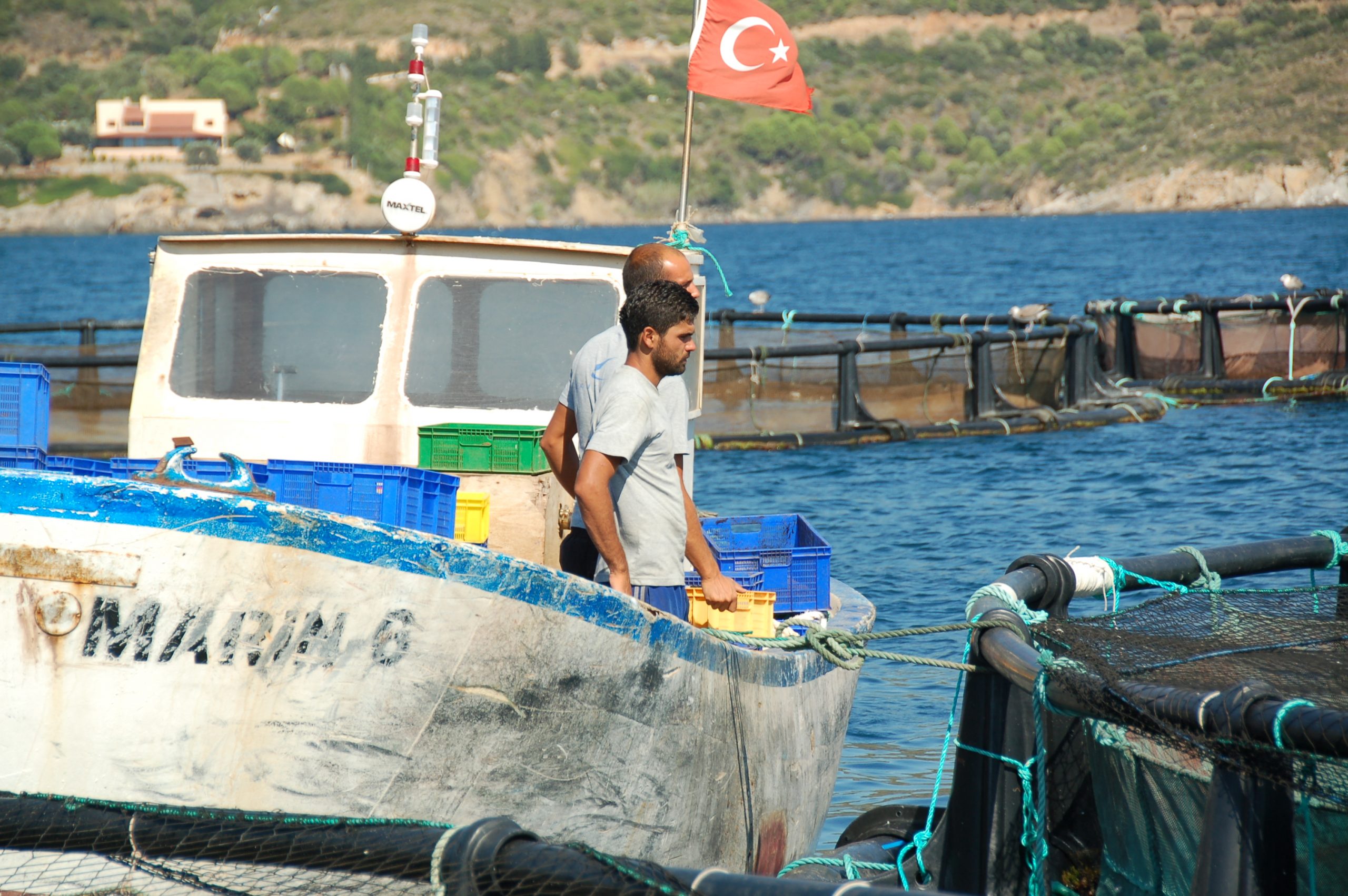
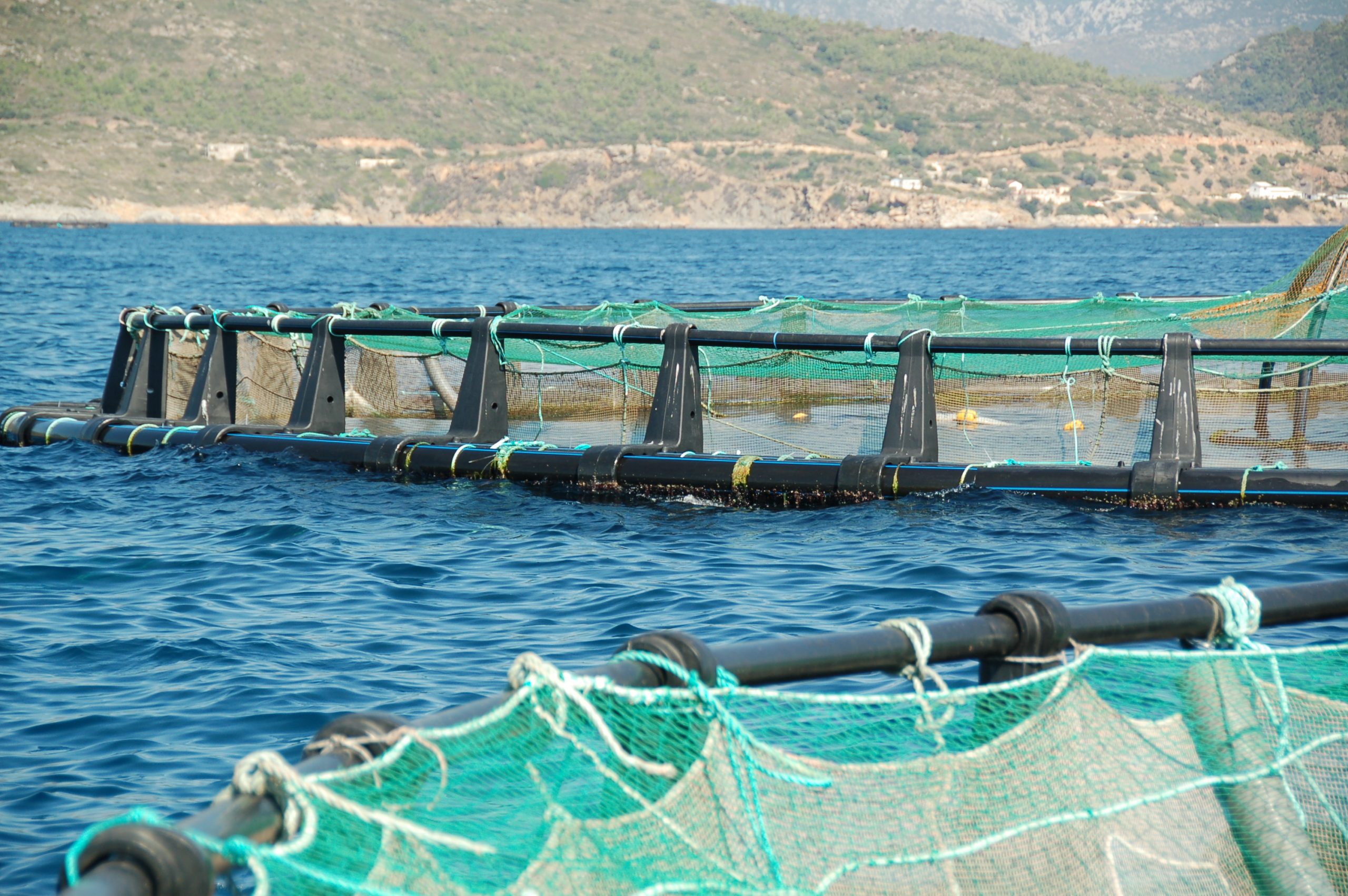
Akuvatur’s farming site is off Karaburun, close to Izmir, an area that is designated a reserve. It has a small rural population that is engaged mostly in animal rearing, chiefly goats, and non-industrial agriculture, mainly the cultivation of fruits and vegetables. The construction of permanent structures along the coast is prohibited, and Izmir is about 100 km away so there is little risk that the water is polluted by effluents from the city. The site of the cages is out at sea, where currents and weather conditions are more extreme that in areas with sheltered bays. However this also means that there is less accumulation of feed and faeces from the fish and the currents result in fish with more muscle and less fat, giving the meat a good texture.
Broodstock maintained for each species
The company is fully integrated with its own broodstock, hatchery, nursery, and grow-out cages and thus completely self-sufficient. The nursery cages are also in the sea, but they are smaller and located closer to the coast than the grow-out cages. They are also termed adaptation cages as they are used to introduce the fingerlings from the hatchery to conditions in the sea. Mahir Yirmibesoglu, who works on the site, says that the fingerlings are put in the nursery cages from the hatchery when they reach a size of about 2 g. The company has two hatcheries, one in Milas in the west and the other in Adana near the Syrian border. Akuvatur farms a number of different species, among them, common dentex (Dentex dentex), pink dentex (Dentex gibbosus), blue-spotted seabream (Pagrus caeruleostictus), seabream (Sparus aurata), and seabass (Dicentrarchus labrax) and for each of these species the company maintains a broodstock.
One of the characteristics of the company is that it does not use traditional extruded pellets to feed the fish. Our feed is half dry, says Mr Yirmibesoglu, not fully dry, it still has moisture from the ingredients that go into it which are mainly marine proteins. Our feed is not composed chiefly of soja bean meal, which is increasingly being used as a substitute for fish meal, due to the high cost of the latter. The meal is made from sardines, anchovies, squid, among other ingredients such as fish oil and vitamins. Among the species farmed dentex does not eat feed in the form of extruded pellets as it is too dry. The company’s specially formulated feed is therefore necessary if the dentex is to survive at all, let alone grow to market size. The various ingredients used in the feed are bought from fishermen, mostly local fishers who fish in the Mediterranean, but also sometimes from Black Sea fishers. The feed is then produced in the company’s HACCP-certified factory.
|
|
Specially produced feed high in fish protein
Customised feed using fresh ingredients adds to the costs. As Mr Yirmibesoglu says, that is why our fish is a little pricey. Dentex is in any case more expensive, being a relatively seldom fish on the market, but our seabass, a species that everybody produces, also tends to be more expensive. According to him, the difference in price can be justified by the better taste. The fish eat a different and more natural feed and this is reflected in the flavour and texture of the meat. Seabass and seabream are produced mainly because customers want these fish as well. But the company really wants to be known as a producer of less common species. Dentex, for example, is very rare and many think it to be already extinct, so much so that when it appears on the market people notice it. Akuvatur farms dentex to a minimum of 600 g and all the way to 1.5 kg. Pink dentex another seldom fish found naturally in both the Mediterranean and the Atlantic is also farmed by Akuvatur. The company grows this species from 800 g to 3-4 kg in size. This is a significant investment because the fish takes a minimum of three years to reach this large a size. Blue-spotted seabream, another species the company grows is a close relative of the seabream, but with a pinkish tinge to its silver colour and blue spots on its back. It has a slightly higher fat content than seabream and is a very tasty fish with a typical market size of 400-600 g. Some companies do farm this fish, putting it on the market after 12-14 months, but at Akuvatur it takes 16 months to reach this size due to the different feed as well as rearing techniques. The feed because it is wetter is easier for the fish to digest, but at the same time it takes longer for the fish to put on weight because the feed is natural and the animal proteins in the feed take longer to digest. On the other hand the longer growing time has a positive effect on the texture and firmness of the meat. The blue-spotted seabream is grown to small and large sizes at Akuvatur as they are like two different products. Smaller fish are good for frying or grilling, while the larger specimens should be slow roasted.
Managing several species is more complex
At the site there three areas for on-growing cages, in which the fish are produced to market size, and one area for the nursery cages. Cages are different sizes depending on the species and vary from 12 m to 50 m in diameter. In the nursery cages the juveniles learn to adapt to many of the conditions they will face in the grow-out cages. In the hatchery they hatch in salty water, but moving into the nursery cages is still a major change. The nursery cages are placed in relatively shallow water, but even here the 2 g fingerlings have to get used to the presence of waves, sunlight, changing weather conditions, and fluctuations in temperature and salinity. For some these changes are too much and they perish. But the rest grow and are moved to the on-growing cages when they reach a weight of about 60 g. For each of the species the adaptation is individual. The size when the fish leave the hatchery varies with the species, as does the time they spend in the adapting cages and the size reached when they are transferred to th
e on-growing cages. The individual planning that is needed for each species also adds to the complexity of the farm management and the costs of production.
The fish is sold chiefly (about 60%) to markets in Europe, but the domestic market is also an important destination, where restaurants and big retail chains like Metro are the primary customers. In Europe, Greece, Bulgaria, Portugal, Italy, the UK, and France are the main export destinations. It is easier to sell the fish in Mediterranean countries, because there consumers are already familiar with the species. Unfortunately the economies in Spain, Italy, Greece and even France are not particularly healthy and consumers are reluctant to buy expensive fish. Occasional shipments are also made to the United States and Canada. The company is now looking to expand its export markets as its current markets are more or less saturated. The market for fish of the size produced by Akuvatur is lucrative, but limited and at this stage finding new destinations is probably easier than selling more fish on to an existing market. The demand for the different species also varies, says Mr Yirmibesoglu, blue-spotted seabream is relatively easy to sell, but finding new customers for the big common dentex and pink dentex is a demanding task. Despite these challenges sales are growing slowly and each year the production has increased. Today the total volume is about 1,500 tonnes for all the four species of which blue-spotted seabream amounts to about 40%, followed by seabream, pink dentex, and common dentex.
| Akuvatur Mediterranean Seafood Co. | |
|
Mansuroglu Mh. 295/2 Tel.: +90 232 375 6800 Managing Director: Dr Haluk Tuncer | Products: seabass and seabream fry; fresh fish (real dentex, pink dentex, and red seabream, seabass and seabream) Fresh fish sizes: 300 g to 2.5 kg Production: 80m fry; 1,500 tonnes fresh fish Markets: Domestic retail chains, domestic wholesale markets, exports to Greece, Spain, Italy, France, Portugal |
From laboratory to farm is a major step
Akuvatur has not stopped working on new species to farm. It has a unit that is steadily researching potential candidates. However, moving from the laboratory into commercial production is a huge leap, common dentex took 5-6 years of study before it could be successfully farmed, and so any developments will necessarily be slow. Another issue, of course, is the market, even if a species can be commercially produced, if the market is not ready to accept it, the effort will be wasted. Akuvatur can in fact produce some 15 species, but decided to restrict production to the four that would be in most demand. This sobriety will inform its decisions in the future too.