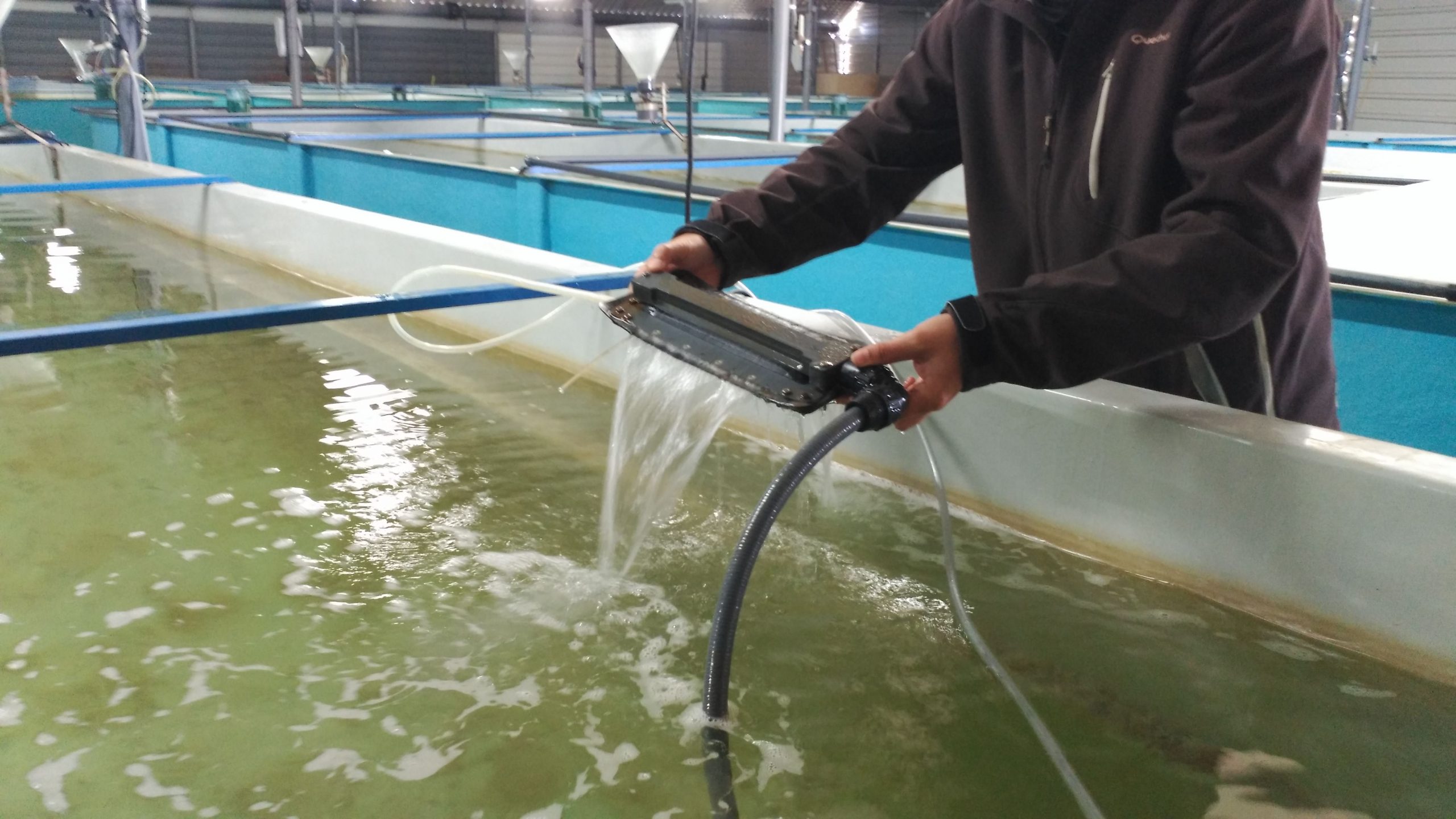
The Spanish fisheries sector is among the most highly advanced in the world with well-developed activities in capture, aquaculture, processing, and trade as well as a sophisticated research and development. capability.

About 81,000 people are directly employed in the capture fisheries, aquaculture and processing subsectors. While this represents less than half a percent of the total Spanish workforce, jobs in the fisheries sector are often disproportionately important in many small and remote coastal areas. Turnover in the processing industry amounts to EUR4.1bn, while production from capture fishing and aquaculture is valued at EUR2.8bn and EUR0.05bn respectively.
Strategy to guide innovation and development
Given the above figures, it is especially important to focus attention on innovation and technological development that has an impact on fishery products and, above all, on the consumer. The Spanish fisheries administration has therefore approved the Strategic Plan for Innovation and Technological Development for fisheries and aquaculture for the period 2014-2020. The aim of the plan is to increase competitiveness and ensure the continued leading position of Spanish fisheries and aquaculture, through innovation and technological development, and by optimising resources considering economic, social, environmental and sanitary requirements. The fisheries sector has great potential for technological development. However, there are certain factors that hinder the uptake of innovative processes and products.
Technological progress is not easy when small and medium companies dominate the sector. These companies usually do not develop their own technology but they acquire it by purchasing machinery and equipment. Innovation and technological development in these businesses comes up against some barriers such as low awareness of the importance of innovating and incorporating new technologies, the high cost and difficulties in finding financing, and the need for qualified personnel. In addition, the current economic and political situation is slowing the adoption of new technological developments because of the many uncertainties.
Innovation helps a traditional industry diversify
On the other hand, fisheries products are perceived as healthy products, and if the population grows as forecast, it will be necessary to provide the market with more fish and seafood (complementing fishing with aquaculture). This presents an opportunity to provide new products and new presentations encouraged by research from member institutions in the Spanish Network of Excellence. New activities, products and services provide an opportunity for companies to add value and to diversify in a sector with a long tradition and deep roots in Spanish culture,
The strategic plan analysed the sector identifying its strengths, weaknesses, opportunities and threats. Among the main strengths are the national and international demand for seafood, the high commercial value of products, a network of diverse institutions and organisations in the sector, and a very strong scientific research capability. On the other hand, the weaknesses include the lack of coordination between administration and science and between science and industry, a low level of private research and development, and the fragmentation of the sector. The perception of seafood as a healthful product, the potential of new species, and the presence of technology platforms were all considered opportunities, while overfishing, IUU fishing, environmental degradation, and the negative impact of the economic crisis, constitute some of the threats to the sector.
With regard to innovation and technological development certain priorities have been established for the period 2014-2020. These have been broadly categorised into resources, fish farming, fishing technology, processing, and marketing. Measures being considered under resources include diversification of activities and conservation, while for aquaculture the priorities are identifying new species and greater use of biotechology. Reducing the environmental impact of fishing operations and adapting vessels to utilise discards are major priorities for the fishing sector, while in the processing industry, better use of by-products and exploiting species that currently have little or no value are among the goals. Finally, developing novel marketing channels, new markets, and innovative sales strategies are all priorities under the marketing category.
The strategic plan also considers the ongoing fourth industrial revolution, also known as Industry 4.0, that is transforming manufacturing to be:
− Flexible. Intelligent and flexible automation. It adapts flexibly to the demands of an increasingly diverse and dynamic market.
− Smart. It takes advantage of the internally and externally generated information throughout the value chain to enable decision-making in the shortest time in order to achieve the maximum efficiency in each one of its activities.
− Virtual. It allows, through simulation tools to optimize the implementation of new production lines and the evaluation of alternatives in real time.
− Sustainable. As horizontal axis on which other activities pivot: taking advantages of limited resources, process optimization, minimizing carbon footprint.
This will result in industry that can manufacture small personalised volumes closely synchronised with suppliers, can avoid waste, simulate scenarios and thereby reduce risk, and can anticipate food safety problems in a product.
These developments are exciting, but also challenging in many ways, not least of which will be funding. Fortunately, the European Maritime and Fisheries Fund and other instruments are available to support these goals until 2020.