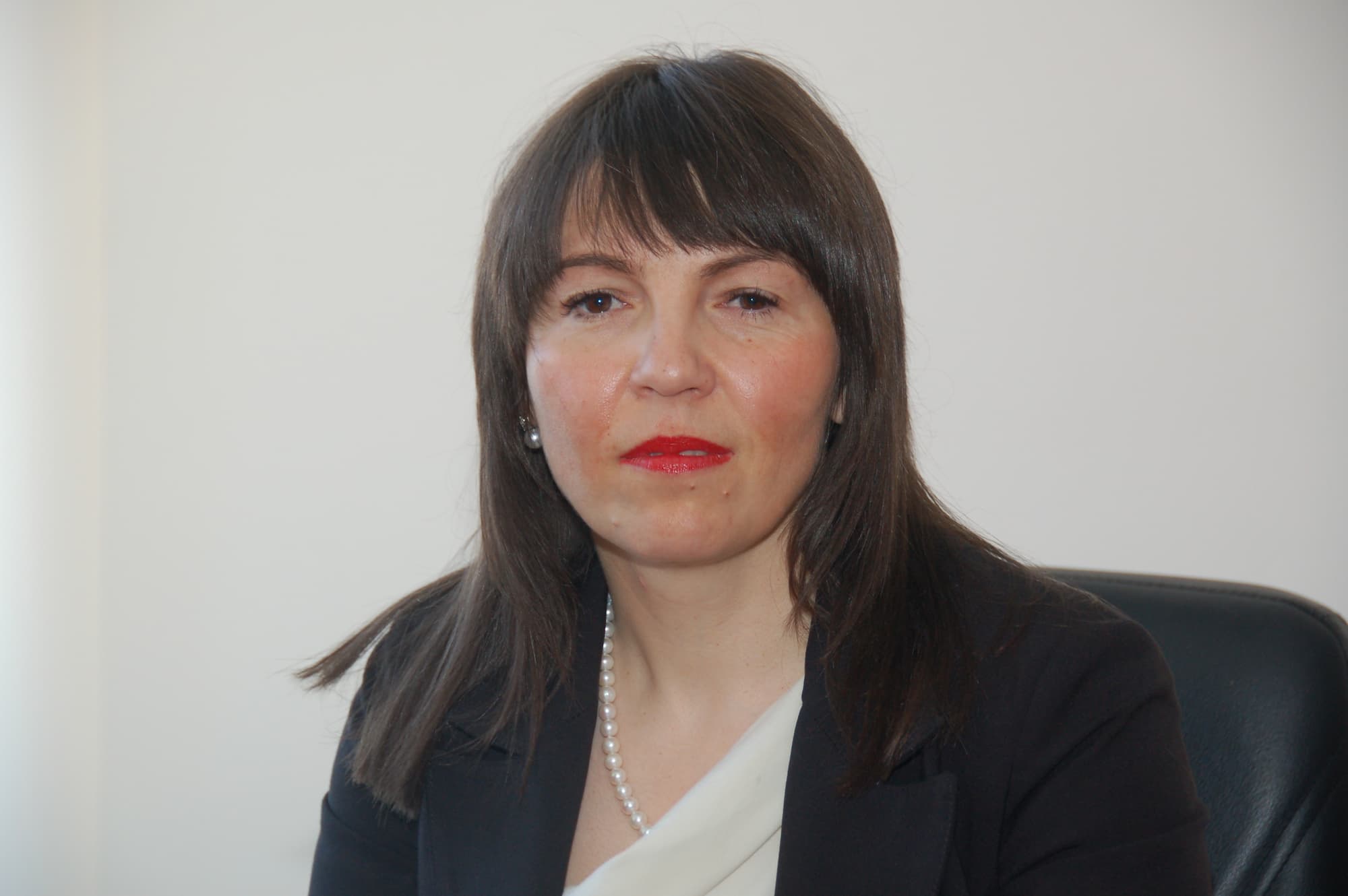
Lina Kujalyte, Vice Minister in the Lithuanian Ministry of Agriculture

Lina Kujalyte, Vice Minister in the Lithuanian Ministry of Agriculture has been responsible for aspects of the reformed Common Fisheries Policy that are only now being implemented, for example, the landing obligation, which in the Baltic Sea came into force at the start of the year. Lithuania also held the chair of BALTFISH, an organisation that brings stakeholders from EU countries around the Baltic Sea together to work out common positions on policies concerning the Baltic. Ms Kujalyte is also a strong proponent of aquaculture, a sector which will receive the largest chunk of funding from Lithuania’s allocation from the EMFF. Here she discusses some of her priorities for the fisheries sector in the country.
The BALTFISH Forum was established in 2010 as a platform for discussing important issues related to fisheries in the Baltic Sea. How does BALTFISH differ from the Baltic Sea RAC? What are BALTFISH’s strengths and weaknesses and how do you see the forum developing in the future?
I think that even the composition of BALTFISH starting from now is very different from that of the Baltic Sea RAC. The decision making body of BALTFISH is a high level group, a directors’ level group, so there are only fisheries directors or someone replacing a fisheries director at the meetings. In the Baltic Sea RAC, the main representatives are stakeholders. Apart from the high level group Baltfish also has the Baltfish Forum, which is a forum of stakeholders and includes fisheries directors, members of the Baltic Sea RAC, and stakeholders, who may not be members of the RAC. So BALTFISH comprises a larger and wider group than the Baltic Sea RAC.
Regarding BALTFISH´s strengths and weaknesses, I think that BALTFISH works as a model of collaboration between countries and provides a precedent for a way of working together. All the regions already have regional co-operation, such as the Scheveningen group in the North Sea. So Baltfish could perhaps be seen as an example of cooperation that is a little bit more advanced. This is because we cooperate not only, for instance, on the landing obligation or technical rules which are already in the CFP and can be decided regionally, but we also work together when preparing the Councils on TACs and quotas. The outcome is expressed in a document and represents a joint position agreed on by eight countries and, as a result, carries significant weight.
The Lithuanian chairmanship of BALTFISH comes to a close at the end of this month. What were the priorities of the Lithuanian chairmanship at the start of the period and how much closer has BALTFISH come to realising these?
During my presidency of BALTFISH, we had several priorities. First of all were the TACs and quotas, because every year BALTFISH gives not only advice and recommendations to the European Commission or even the European Council under the TACs and quotas regulation, but it also gives a regional position. So if everybody around the Baltic Sea agrees that this position represents each country’s position sufficiently, then everybody goes with one voice to the Council. It is then much easier to agree on a compromise that is acceptable to everybody in the Council when the eight member states directly involved are jointly interested in implementing the regulation. We will work towards getting this common position on TACs and quotas.
The second priority was the multi-annual management plan for the Baltic Sea which is now under negotiation between the Parliament and the Council. Our task was to provide a common position for the region, which is directly involved in this regulation and its implementation. Since it is the first plan under the new CFP, we were keen that it went smoothly and that we were aware of how it was developing. Our common position always takes into account other stakeholders, NGOs, and the European Commission, so that if we have questions, we can always ask the Commission. We believe that this way of working could set a precedent for all the other plans to come. We have set a precedent on how the regulations can be drafted, including what should be included or what principles should not be forgotten, and on the principles of working together in order to get to the result of the participants’ objective.
The third priority of our presidency was the implementation of the landing obligation in the Baltic Sea. Our region is very much prepared to work together and we were quite ready to implement it and now I think the rules of the landing obligation have started working quite well in the Baltic Sea.
The reformed Common Fisheries Policy (CFP) has introduced a number of new elements to the European fisheries sector, including a strong commitment to sustainability, elimination of discards, regionalisation, improved labelling, and better data collection. What has been the impact of these elements on the Lithuanian fisheries sector? Where have you seen improvements for the sector and where do you think things could still be better?
Of the new elements introduced by the CFP reform, probably the most challenging was the landing obligation, because it requires that all the small fish be landed. This is challenging in Lithuania because there is no industry for small fish, and they cannot be used for human consumption. This was quite challenging, and we are still working on this so that the fishermen can be sure that when this fish is landed it has somewhere to go. The landing obligation was also a challenge for the fishermen because there was a lot of uncertainty concerning the legislation, when it would implemented, whether there would be a transitional period etc. Therefore we organised seminars and made a flyer for the fishermen together with the other BALTFISH member states clarifying that 1 January would be the start of the legislation.
The idea of introducing this discard ban was to try and make fishermen use more selective gear so that they had fewer discards. In the Baltic Sea the fishermen already have very little discards. We would like the fishermen to use the EMFF when it starts up to invest in more environmentally friendly equipment and in energy efficiency.
Regarding data collection, I think where we are in Lithuania we have quite an elaborate developed system for data collection, for control, although of course there are many more things which can be done, and of course every year we try to improve the data collection and control.
While aquaculture in the rest of the world has been growing rapidly, in Europe it has been stagnating. The new Common Fisheries Policy and the European Maritime and Fisheries Fund (EMFF) are expected to reverse this stagnation by promoting the sustainable growth of European aquaculture. Given this, what developments do you foresee for the Lithuanian aquaculture sector?
In the new programme period we want to continue the development of aquaculture. The main priorities are investments, and increasing the added value and the assortment of aquaculture species. The aquaculture sector is the first priority in our draft Operational Programme (OP) and it also gets the largest share of the funding. We are also interested in an environmen
tally friendly aquaculture sector that ensures the preservation of a healthy environment for wildlife. In the draft OP we envisage compensation for farmers to ensure the protection of seals and cormorants, despite the damage they might do to stocks.
In order to increase the number of farmed species, we will promote new species, but of course everything depends on the business, and on the market, but we see that there is a lot of potential. Demand for new species and for a bigger variety of products is strong. A few years ago, the main aquaculture species in Lithuania was carp. It is still the main species in Lithuania, but there are more and more new species coming and their percentage in the total production is increasing.
Lithuania’s allocation from the EMFF is EUR63m. Which are the areas that will be prioritised for receiving co-funding, and why?
First of all, the biggest amount goes to aquaculture, then there are four priorities which we allocate more or less similar amounts: fisheries, marketing and processing measures including producer organisations, their production and marketing plant storage, and then community-led local development priorities, which are like the FLAGs. So for those four we allocate more or less similar amounts, and then CFP, so in terms of money, data collection and control is in the third place. And then there is the IMP.
The EMFF replaces the European Fisheries Fund, which was established to co-finance initiatives to reach the objectives of the CFP. As far as the Lithuanian fisheries and aquaculture sector is concerned, what would you say have been the most successful projects to be funded by the EFF?
The benefits from the funding will be most obvious in the long-term, but a very useful benefit was all these investments in aquaculture, in recirculating systems and in these new companies. Another very useful benefit was the investments in ports. In Neringa we will have two new ports, small ports for fishermen, and also one for inland waters in Silute. We also have quite a large and innovative project under development, a marine aquaculture laboratory in Klaipeda. The laboratory itself is placed in Klaipeda and Smiltyne, near the Maritime Museum. It will be the only, and the newest, marine aquaculture laboratory among the three Baltic countries and will enable us to improve data collection, and conduct research.
Seafood Expo Global is the world’s biggest and most international seafood show and an important venue for companies to promote themselves and their industry. While the seafood industries from neighbouring countries always maintain a high profile at the event, the Lithuanian sector does not enjoy the same kind of visibility. Why is this and is it likely to change in the future?
Lithuanian companies are always present in the exhibition, but not always with a national stand. Since it is a commercial exhibition, the companies decide how they represent themselves in the exhibition. The national stand, which was there two or three years ago, is very beneficial, not only for the companies but for the country as well. So I would really invite them to do it annually, like our neighbours do, but we will see. As I said, the Lithuanian companies are always there, especially the big ones, and the companies which are not there as exhibitors are always there as visitors.
As a country, we think that it’s very important to have a national stand, but then it turns to the money and who should pay for the stand? So this question is still up in the air, it’s not answered yet. We know that for some of the other countries with a national stand it used to be money from the EFF, but probably not in all the countries, and probably not any longer.
In our case, when our companies made national stand, they used EFF money. I do not think all the expenses were covered by contribution from the EFF. As a managing authority and as a country we had a call for applications for marketing measures and promotional campaigns under the EFF, including the participation in expositions.
We are keeping the measure in our EMFF operational programme because we consider it useful but we cannot be applicants. We should still talk with the companies, but as a measure it stays in our operational programme.
What impact has the Russian import ban on products from the EU had on Lithuanian seafood exports? What steps (if any) is the ministry taking to mitigate the impact on exporters?
We asked our companies about their losses as a result of this ban. The export ban does not apply to all products. Since the products to which it does apply are not of much importance to Lithuanian exports, the impact of the ban has been modest particularly when compared to the effect the ban has had on our neighbours, who also export to Russia. In addition, the EU has applied some measures to help the member states in this respect. For example, the quota of sprat, which is allowed to be transposed from one year to another in 2014, was increased.