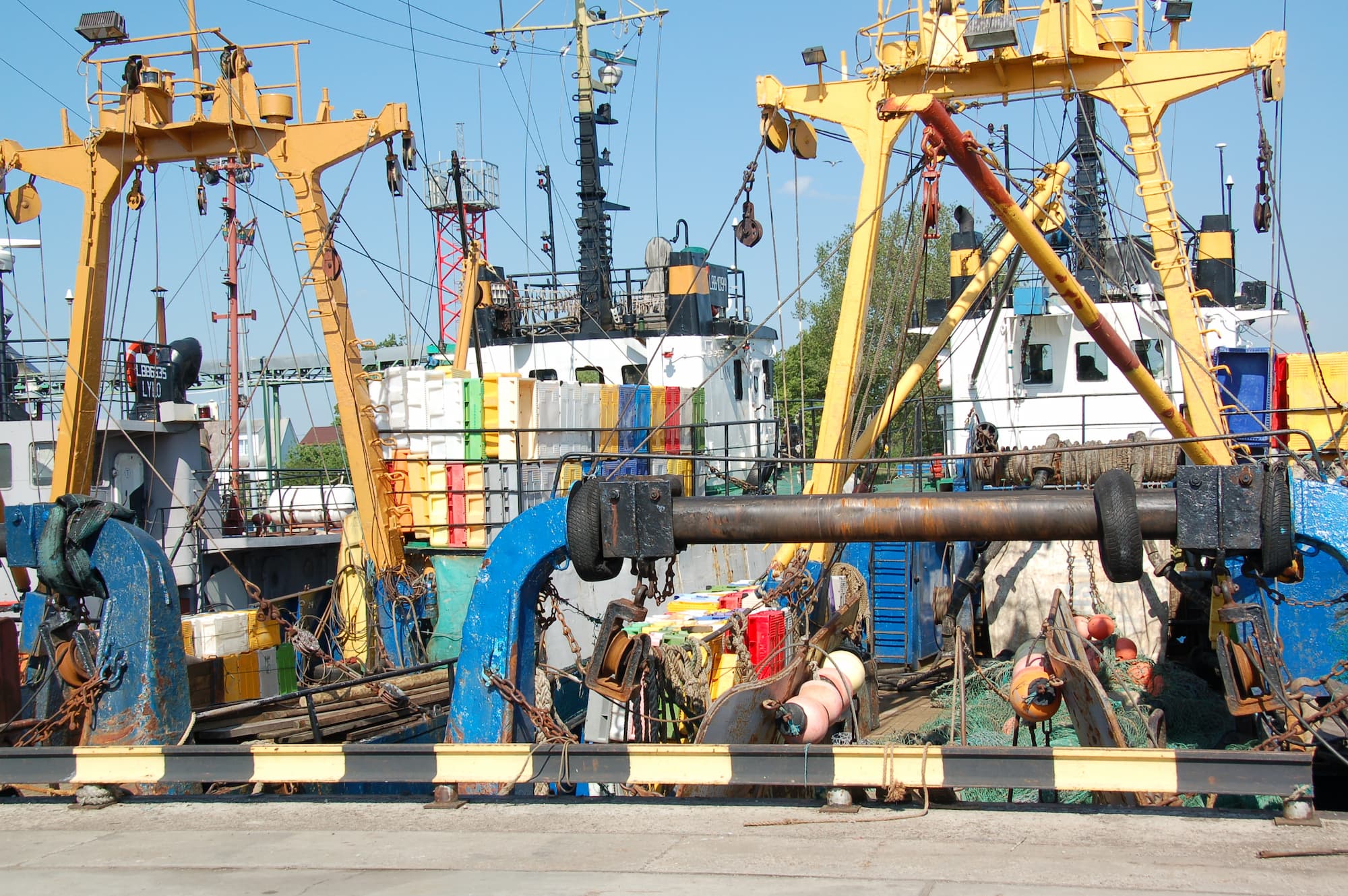
The Baltic Sea fishing fleet comprises 29 vessels. They target mainly four species, sprat, herring, cod, and flounder.

The Lithuanian fisheries sector has a long historical traditions and is a part of the national heritage in the Baltic Sea coast area. The segment comprises a high seas fleet, a Baltic Sea fleet, and a coastal fleet. There is also a small freshwater fishery in the Curonian lagoon. The aquaculture industry in Lithuania is dynamic and the production of farmed fish has been increasing in terms of both value and volume.
Despite one of the shortest coastlines in Europe Lithuania has a long tradition of fishing. The Lithuanian fleet in 2014 consisted of 146 vessels. The fleet can be broadly categorised into vessels that fish in the Baltic Sea coastal area, those that operate in the Baltic Sea, and finally the high seas fishing fleet. The latter are large vessels above 40 m in length and are active off the coast of west Africa (Fishery Committee for the Eastern Central Atlantic), in the north Atlantic (North East Atlantic Fisheries Commission, Northwest Atlantic Fisheries Organization), in the Svalbard area, and in the South Pacific (South Pacific Regional Fisheries Management Organisation).
Expiry of FPO with Mauritania hard for sector
The number of vessels in the Lithuanian high seas fleet has remained roughly stable between since 2008 at about 12 vessels. Since 2009, when landings by this fleet reached 180 thousand tonnes, they have fallen to 74 thousand tonnes in 2013. In 2014 Lithuania’s distant water fleet was fishing in Mauritanian waters under the terms of the partnership agreement between Mauritania and the EU. Seven vessels caught 85 thousand tonnes of pelagic fish, mainly sardinella, mackerel, and horse mackerel. This was the largest volume of fish caught by the Lithuanian fleet under EU fishery partnership agreements with third countries, which shows the importance of Mauritanian waters for the fleet. Vessel owners are therefore unhappy that the agreement with Mauritania expired on 15 December 2014 and has so far not been renewed. However, in July the 6th round of negotiations between the European Union and Mauritania were held, so it is possible that in the nearest future the fishermen will receive positive news about this important fishing zone, says Ieva Zundiene, Chief Specialist in the Fisheries Policy Division. The EU has an agreement with Morocco and in 2014 Lithuanian vessels caught almost 30,000 tonnes of pelagic fish in Moroccan waters.
In the north Atlantic the high seas fleet targets cod, redfish, and shrimp. In this area Lithuania has small quotas of other species such as Greenland halibut, skates and rays, grenadier, and squid, but these are usually swapped for quotas of species that are more interesting for the fleet. These swaps take place between vessels from the same country’s fleet, but also between vessels from different EU nations and even between EU vessels and non EU vessels, though this is more complex. The EU’s western waters (Bay of Biscay, Celtic Sea, and the English Channel) were also a significant source of catches for the Lithuanian high seas fleet in 2014. Altogether two vessels caught 30,000 tonnes of fish including 825 tonnes of sand eel, 10,471 tons of herring, 4,871 tonnes of horse mackerel, 4,620 tonnes of blue whiting, and 9,411 tons of mackerel. In the Svalbard area in the Norwegian EEZ, Lithuanian vessels were allocated 647 fishing days and one vessel caught some 375 tonnes of shrimp. The fleet is also active in the south Pacific, where it targets jack mackerel, the dominant pelagic species in the region.
International efforts monitor the high seas fleet
The EU is a contracting party to these regional fishery management agreements thanks to EU countries’ histories of fishing in these areas. Once the total TAC has been decided it is divided proportionately between the contracting parties. The high seas fishing vessels often process, freeze, and store the fish on board. The vessels are expensive to maintain so the owners are keen that they spend as much time fishing and as little time in port as possible. As a result the production is often trans-shipped, that is, unloaded in the fishing ground from the fishing vessel to another vessel that brings it ashore. However, the fishing vessels also need to come to port at regular intervals to change the crew and to stock up, and managers try to ensure that when these trips are made that the hold is full and can be unloaded. The high seas fleet may be operating a long distance from Lithuania, but it is still subject to controls by the Lithuanian Ministry of Agriculture. The Fisheries Service under the Ministry of Agriculture is responsible for control issues and recorded a total of 9 offences committed by the fleet in 2014 of which one was serious. The service monitors the vessels using the vessel monitoring system and also makes joint physical inspection missions with inspectors from other countries.
| Lithuanian high seas catches (tonnes) | ||||
| 2011 | 2012 | 2013 | 2014 | |
| North West Atlantic | 1,009 | 756 | – | 7 |
| North East Atlantic | 6,434 | 1,982 | 1,425 | 2,484 |
| Svalbard fishing area | 749 | 652 | 429 | 375 |
| Mauritanian EEZ | 66,133 | 23,225 | 57,042 | 84,851 |
| Guinea EEZ | 11,908 | 13,118 | 5,000 | – |
| Senegal EEZ | 19,165 | 12,598 | – | – |
| Marocco EEZ | 16,445 | – | – | 18,655 |
| Greenland EEZ | – | – | – | – |
| EU Western Waters | – | 1,838 | 1,320 | 30,618 |
| Pacific Ocean | – | – | 10,391 | – |
| Total | 121,843 | 54,169 | 75,607 | 136,990 |
In the Baltic Sea Lithuania has quotas for cod, herring, sprat, and salmon, while the most important species in terms of catches are cod, herring, sprat and flounder. Quotas for three of the species cod, salmon, and sprat, have declined compared with 2012. Cod is down by 23% to 3,400 tonnes, salmon by 22% to just under 1,500 individuals, and sprat by 5% to 10,700 tonnes. The only species where the quota increased is herring, which increased by 108% to 4,800 tonnes. However, fishers are not filling their quotas. For cod the percentage of uptake has declined from 56% in 2012 to just over a fourth in 2014. This is due to the fish itself which for some years has been small and skinny and does not fetch a good price. As a result fishers are not targeting cod but are going after herring and sprat the price for which is better, but even here the quota uptake seems to be decreasing. In 2012 the herring quota was completely fished, while in 2014 the proportion was only 65%. The utilisation of the sprat quota too has fallen from 100% in 2012 to 81% in 2014.
Landing obligation brings new responsibilities
One of the major changes introduced by the reformed Common Fisheries Policy is the ban on discards of fish (the landing obligation (LO)), which became operational from 1 January 2015 with regard to cod and salmon fisheries in the Baltic Sea, pelagic fisheries in all areas, and industrial fisheries in all areas. From this date catches of cod, salmon, sprat and herring in the Baltic Sea will be subject to the landing obligation, while for catches of plaice the date is 1 January 2017. Under the landing obligation all catches of the four species shall be landed and counted against the quota. The new regulation differs from the old in that all unwanted by-catch, such as fish which fall under the minimum conservation reference size, or for which the percentage allowed has been exceeded, or for which the vessel has no sufficient quota must not only be entered into the logbook, but also landed. Also fish of species under the LO that are not marketable must be recorded and landed. Some species and gears are exempt from this obligation because fish released from these gears have a high rate of survival, for example, salmon or cod caught in trap nets or fyke nets. In this case the fish has to be recorded in the log book but will not count against the quota. The minimum landing size has been rechristened the minimum conservation reference size and is unchanged for salmon, flounder, seatrout and plaice, though for cod it has been decreased from 38 to 35 cm. Catches that f
all under the minimum size and that are subject to the landing obligation must be landed, but may not be sold for direct human consumption. Indre Sidlauskiene, director of the Fisheries Service under the Ministry of Agriculture, the Service is responsible for policing the landing obligation, recalls how at a meeting with the Commission, the idea was floated of using discards for charitable purposes. The Commission, she says, was quite categorical however that the use of discards for human consumption did not arise as it might have created a market for this fish resulting in more discards rather than less. This catch may be used for fishmeal or fish oil, for pet or mink feed, or for pharmaceutical or cosmetic purposes. Catches of undersized fish of species that are not subject to the landing obligation or catches of these species that exceed the permitted percentages should be returned to the sea. While excess catches of those species subject to the landing obligation must be landed. The obligation to land the fish will also give a clearer picture of the extent of the discards, says Ms Sidlauskiene, which, until now, has obviously been somewhat hazy. While there is a general feeling that discards in the Baltic Sea fisheries are insignificant, she feels that the true picture will be available at the end of the year as the data is now being systematically collected and analysed.
| Lithuanian catches in the Baltic Sea (tonnes) | ||||
| 2011 | 2012 | 2013 | 2014 | |
| Cod | 3,057 | 2,483 | 1,742 | 1,196 |
| Baltic herring | 2,655 | 2,276 | 2,475 | 2,153 |
| Sprat | 9,730 | 11,245 | 10,353 | 9,679 |
| Flounder | 452 | 648 | 1,002 | 733 |
| Total | 15,894 | 16,652 | 15,572 | 13,761 |
In Lithuania the lack of models to follow that could illustrate how the landing obligation should be implemented in practice necessitated an analysis of the sector to better understand how unwanted by-catch could be avoided. The analysis drew on different studies some of which had very different estimates of the percentage of by-catch in, for example, the Lithuanian cod fishery. International studies recommend the use of trawls with a Bacoma window (an escape window) or a T90 codend (where the mesh of the codend is turned 90 degrees) in order to promote selectivity. The study concluded that since most Lithuanian trawlers are already using a bacoma window, one of the ways to reduce discards was to improve the monitoring and control of the fishery. These efforts will be led by the Fisheries Service. Indre Sidlauskiene feels that while it is not feasible at the moment to control all the fish that is landed in Lithuania, it may be possible in a few years. The study also showed that processing companies were interested in the by-catch for the production of feed for farmed animals, or pets. The analysis also suggested that implementation of the landing obligation would be more effective if actions were initiated that would increase awareness among the fishermen of the nature and extent of the changes and to develop the logistics of by-catch management.
Fisheries Local Action Groups (FLAGs) make important contribution to rural development
Support for these activities is available through the European Maritime and Fisheries Fund, which assists countries in achieving the objectives of the reformed Common Fisheries Policy. The EMFF replaces the European Fisheries Fund, which funded projects in the last programming period, 2007-13. One of the priorities of the EFF was support for the sustainable development of fisheries areas by adding value and creating jobs at all stages of the fisheries and aquaculture supply chain, as well as supporting diversification inside and outside fisheries. Under this bottom up approach local fisheries communities, by involving different actors, the private sector, local administrations, and civil society, that came together in a so-called fisheries local action group (FLAGS), were entitled to receive support for initiatives that led to more sustainable and diversified local economies as well as increased employment. Tomas Kersys from the EU Support Division of the Fisheries Department in the Lithuanian Ministry of Agriculture says the FLAGS were one of the most successful elements of the CFP. In Lithuania ten FLAGS were formed across the country, among them the Zarasai and Visginas FLAG in the Zarasai district along the border with Latvia, which Mr Kersys feels had one of the best strategies of all the FLAGS as it worked hand in hand with the national rural strategy as well as the local municipality’s strategy. This meant that the FLAG could draw on support from the EFF as well as from rural development funds, and municipal funds, something that it will continue in the next period (2014-20). According to Mr Kersys, this ability to work with different players and use different sources of support are among the reasons for the success of this FLAG’s strategy.
| Aquaculture production in Lithuania | |||||
| 2014 | 2013 | 2012 | 2011 | ||
| Common carp | Vol. (t) | 3,306 | 3,751 | 3,257 | 3,061 |
| Val. (EUR) | 6,778,508 | 7,570,738 | 6,539,406 | 6,307,684 | |
| Rainbow trout | Vol. (t) | 109,5 | 115,1 | 114,6 | 40,7 |
| Val. (EUR) | 440,107 | 368,451 | 359,300 | 163,157 | |
| Bighead carp | Vol. (t) | 97,2 | 52,2 | 23,3 | 27,4 |
| Val. (EUR) | 294,357 | 158,457 | 61,271 | 63,218 | |
| Grass carp | Vol. (t) | 87,6 | 52,7 | 40,8 | 35,5 |
| Val. (EUR) | 255,371 | 143,234 | 117,188 | 95,676 | |
| Atlantic sturgeon | Vol. (t) | 72,8 | 115,8 | 55,4 | 51,7 |
| Val. (EUR) | 372,319 | 669,898 | 277,889 | 269,413 | |
| Others* | Vol. (t) | 171 | 124 | 91 | 64 |
| Val. (EUR) | 819,144 | 598,522 | 308,599 | 340,074 | |
| Total | Vol. (t) | 3,845 | 4,211 | 3,582 | 3,280 |
| Val. (EUR) | 8,959,806 | 9,509,300 | 7,663,653 | 7,239,222 |
Arvydas Veiksra, the head of the Zarasai and Visaginas FLAG, says the area has one of the highest concentrations of lakes in Lithuania, with over 300 lakes and ponds of different sizes, including three of Lithuania’
s biggest lakes. Altogether, the 1,400 sq. km district has 166 sq. km of water surface. The presence of so much water has contributed to the development of various recreational fishing activities and the FLAG has completed a number of projects that aim to develop the infrastructure that, for example, make it easier for recreational fishers and their boats to access the lakes. The FLAG has also received support for projects to improve the aquatic environment, enable fish migration routes and prevent illegal fishing. One of the projects on Sartai lake resulted in the development of wharf, from where boats could enter the water, footbridges, and a waterfront with tables and benches, where visitors can picnic, as well as swings and slides for children. Mr Veiksra says that some of the projects will continue in the next period as they are not yet completed. He points out that the creation of infrastructure makes the area more attractive for anglers, who come not just from the immediate neighbourhood, but from as far as Kaunas, some 200 km away, to fish. The FLAG is therefore planning to build a small hotel where the guests can get food and accommodation as the presence of these visitors gives a boost to the local economy. The next phase of the project will see two more landing areas for boats and the FLAG will work together with the rural development programme to establish services such as boat rental, fish smoking, and entertainment for non-angling members of the family. Anglers fish both in summer and in winter, when the water freezes (ice fishing), and are allowed to take away a maximum of 5 kg of fish, the rest has to be returned to the water.
Another project under the FLAG is intended to give disabled fishermen access to the water. While this may benefit only a relatively small number of fishers it is in accordance with the national tourism strategy which seeks to develop infrastructure for disabled tourists as well. It would also be the first time in the region that the needs of disabled fishers are being addressed. While small towns and villages are losing people to the bigger cities as in other parts of Europe, there is also a certain level of migration in the other direction, says Ieva Zundiene from the Fisheries Policy Division. Young people seeking cheaper accommodation and a life closer to nature are moving from cities to the country. Organisations like the FLAGS, whose overall strategy is to try and create self-employed people and prevent the hollowing out of the area, play an important role in helping the newcomers find employment or set up their own small business, says Mr Veiksra.
Aquaculture industry gradually diversifies
The Lithuanian aquaculture industry is based primarily on common carp, which accounts for almost 90% of the 2014 production of 3,800 tonnes. Over the last few years farmed fish production has shown a slight tendency to increase going from 3,200 tonnes in 2010 to 4,200 tonnes in 2013. The remaining 10-12% of the production is made up of small volumes of several species including rainbow trout, bighead carp, grass carp, and sturgeon. In terms of value carp accounted for 76% of the total followed by rainbow trout at 5% in 2014. In unit value terms however, carp was among the cheapest fish at EUR2.05 per kilo, while the most valuable was European catfish at EUR13.21 per kilo. Production of European catfish has increased 200 times, though from a very small base, since 2009, more than any other species. Production of sturgeon, grass carp, African catfish, pike and trout has also grown significantly since 2009, while that of common carp has stagnated. The industry uses various production technologies for the different species and has been enthusiastic about adopting newer recirculation technologies. These systems have a low impact on the environment and all the parameters can be controlled, but they are expensive and typically require large production volumes of high value species to be profitable. In Lithuania they are used for the production of African catfish, while carp is grown in traditional earth ponds, and tanks and raceways are used for sturgeon and rainbow trout.
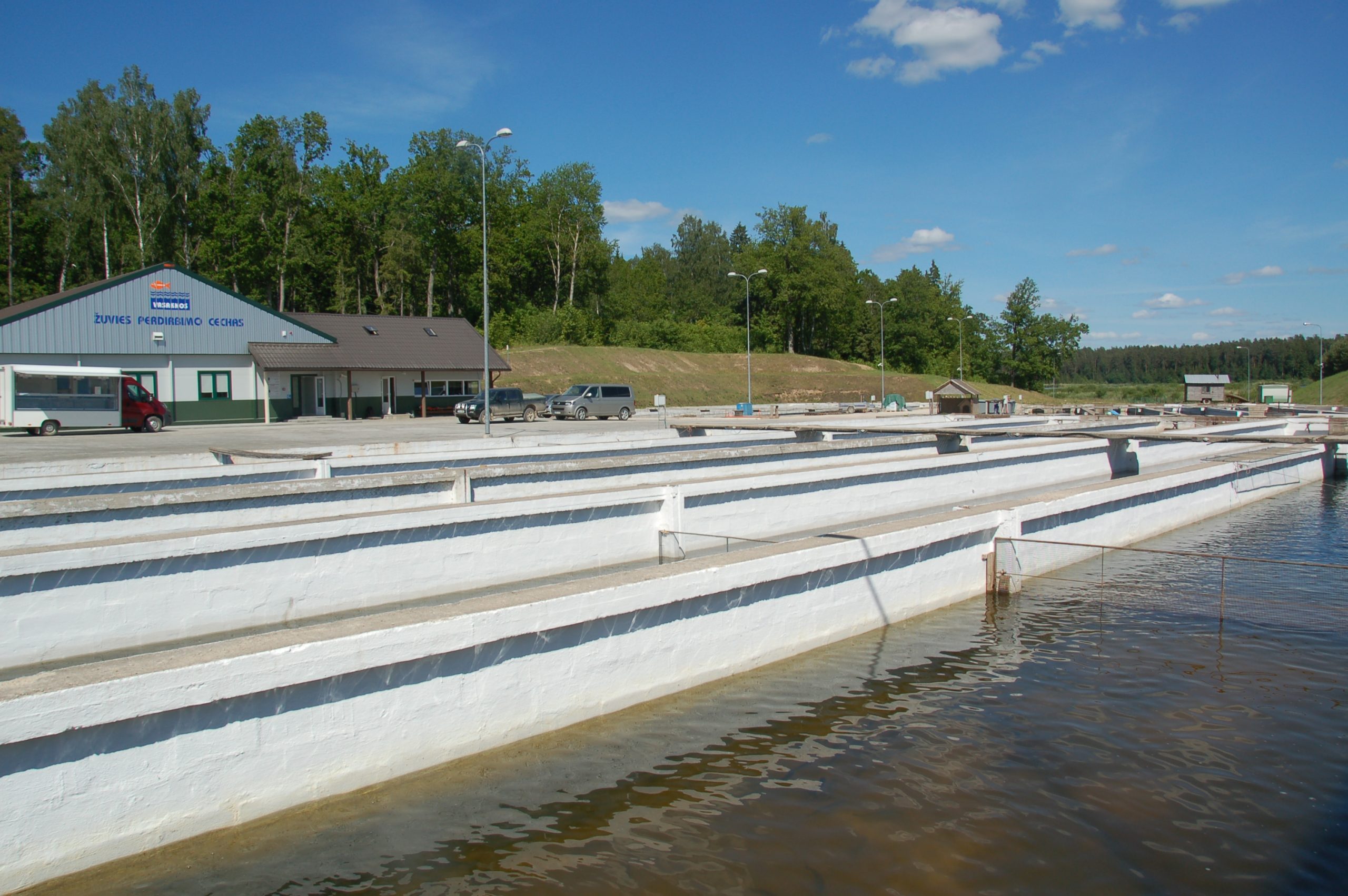
Traditionally farmed fish has been sold live. Consumers like to know that their fish is fresh. This however is changing as there is less time available to spend in the kitchen. Younger consumers do not want to have to wrestle with a whole fish, they want something more convenient. As a result farmed fish is increasingly available with more added value. This could be in the form of fresh steaks or fillets, or smoked items. Farmers are also processing their production themselves for sale mainly on the domestic market, where they distribute the fish often using mobile fish shops. Selling through supermarkets is more demanding and the margins are not as attractive. Processing companies use mainly imported raw material, fish and seafood, which is processed and exported as well as distributed on the domestic market. There were about 50 active processors in 2014 producing surimi products, smoked seafood, fish fillets, and prepared or preserved fish. Export markets are primarily the neighbouring Baltic States and other countries in the EU, such as Germany and France. Russia, although a destination for some Lithuanian products, is not a major market and the ban on imports of certain products from the EU had no significant impact on Lithuanian exports.