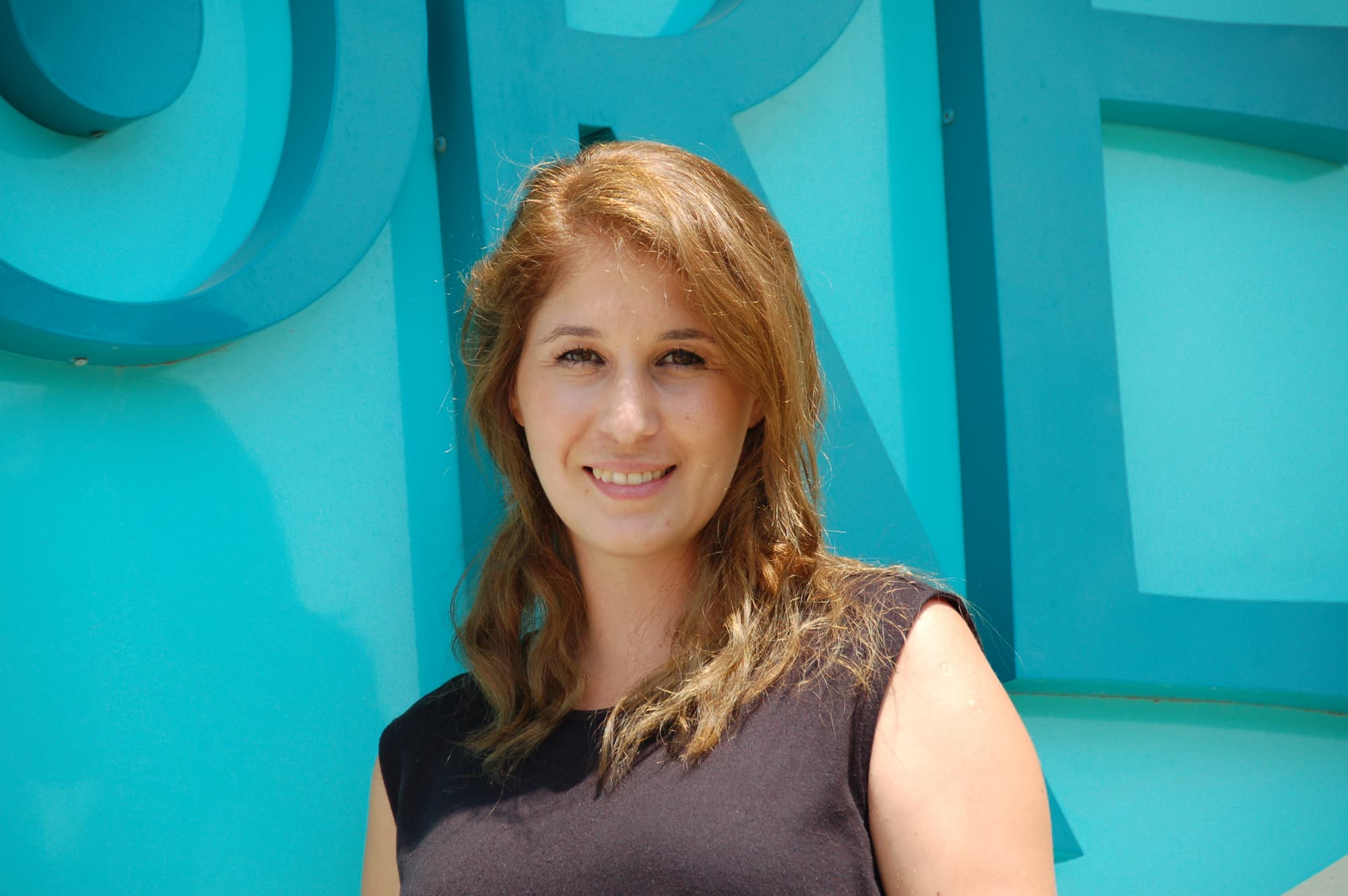
Asli Kahramanoglu is responsible for exports at More.

More Aquaculture is a producer and exporter of seabass, seabream, meagre and trout. The company has its own production of seabass and seabream and a network of suppliers that provide the company with the trout that it requires to meet its commitments. More has been in the aquaculture business for the last 13 years and is owned by the AKG Group, a conglomerate with interests in building materials and tourism apart from fish.
With three production facilities along the Izmir coast of the Aegean Sea offering a combined capacity of 3,350 tonnes of seabass and seabream a year, More Aquaculture is among the bigger Turkish producers of seabass and seabream. In addition to these species, the company also offers its customers trout and meagre in different presentations. Trout and meagre, however, are not produced by the company itself, but are obtained from external suppliers. The company thus produces a wide range of products and product forms that are sold on markets in more than 15 countries including the European Union, the US, Canada, and the United Arab Emirates.
Half the fish goes into fishmeal
The company’s processing plant is located in Izmir enabling the fish from the cages to be brought to the plant within 90 minutes of being harvested. The proximity of the plant to the on-growing cages means that the fish is processed, while it is still very fresh resulting in a better quality product with a longer shelf life. The company produces and processes fish of several different sizes depending on the demands of the market and the individual customer. Mr Cenk Limni, engineer responsible for quality control in the factory, says the company works with fish that vary in size from 200 g to 1 kg in the case of seabass and seabream and from 200 g to 350 g in the case of trout. Fillets usually weigh between 50 g and 250 g. The fillets are produced by hand, lines of women stand at a belt taking a fish and filleting it in a few seconds. They are skilled at producing the fillets, says Mr Limni, and the yield we can get from manual filleting is higher than what we can expect from a machine, which is why we prefer to use people. But the yield even from manual filleting is only around 50%, that is, 10 kg of fish will result in 5 kg of fillets. The fillets can be cut in different ways depending on what the customer requires – a butterfly fillet, standard cut, or V-cut, head on or off, skin on or off – but the yield remains more or less the same. Fillets can further be supplied with the pinbones out (PBO) or with them still in place (PBI). While fillets account for the bulk of the production about a third of the volume is gutted fish, a proportion that changes from time to time. Although half the fish is discarded, the company recovers at least some of the cost by selling the waste to a contractor for conversion into fish meal.
The facility is equipped to produce both fresh and frozen products. A high capacity spiral freezer is used to rapidly freeze the fish which is packaged as required by the customer. For example, individually frozen fillets are packaged in bulk in plastic-lined cartons, or in polyethylene bags for the retail market, while fresh fillets are stored under ice chips in EPS boxes. The facility has a HACCP plan in place and is also certified to several different standards including BRC (British Retail Consortium), IFS (International Featured Standards), Global G.A.P., Friend of the Sea and ISO. These standards ensure that the entire production process from the raw material to the finished product meets international requirements.
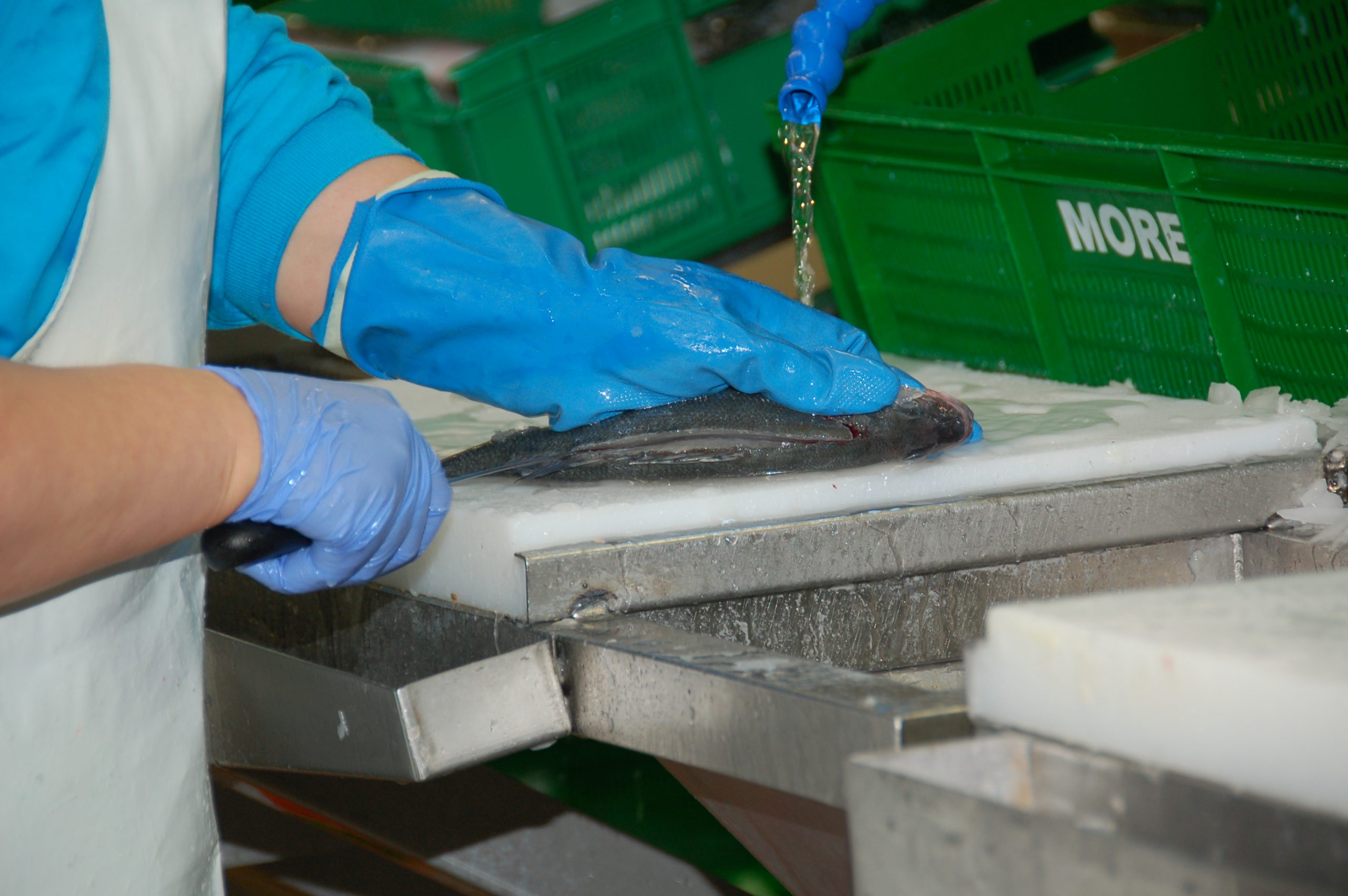
Regular sampling to monitor temperature at arrival
The raw material arrives at the factory from the cages in tanks filled with a mixture of ice and water that maintains the fish at a temperature between 0 and 2 degrees. Samples are taken from each tank to monitor the internal temperature and to check for parasites. The tanks are emptied in to a large receptacle which carries the fish on a belt to the automatic grading machine. The grader divides the fish in to the desired size categories, for example, 200-300 g, 300-400 g, 400-600 g etc. placing all the fish in a size category into a crate. At this stage the fish are checked for marks or deformities and removed from the processing operations if necessary. The plant has the capacity to produce 20 tonnes of whole fish a day. Once the fish has been graded it goes through a descaling machine to remove the scales before going further through the production process. Although production is maintained all the year round, there is a peak in the months leading up to Christmas. During this period the company hires more staff, to cope with the increased volumes. This period is also a time when demand for other products such as meagre increases. Asli Kahramanoglu, the export responsible, says although More does not produce meagre it obtains the fish in order to supply customers who request it. It is popular in the United Arab Emirates and in some countries in Europe, and she foresees a bright future for the fish.
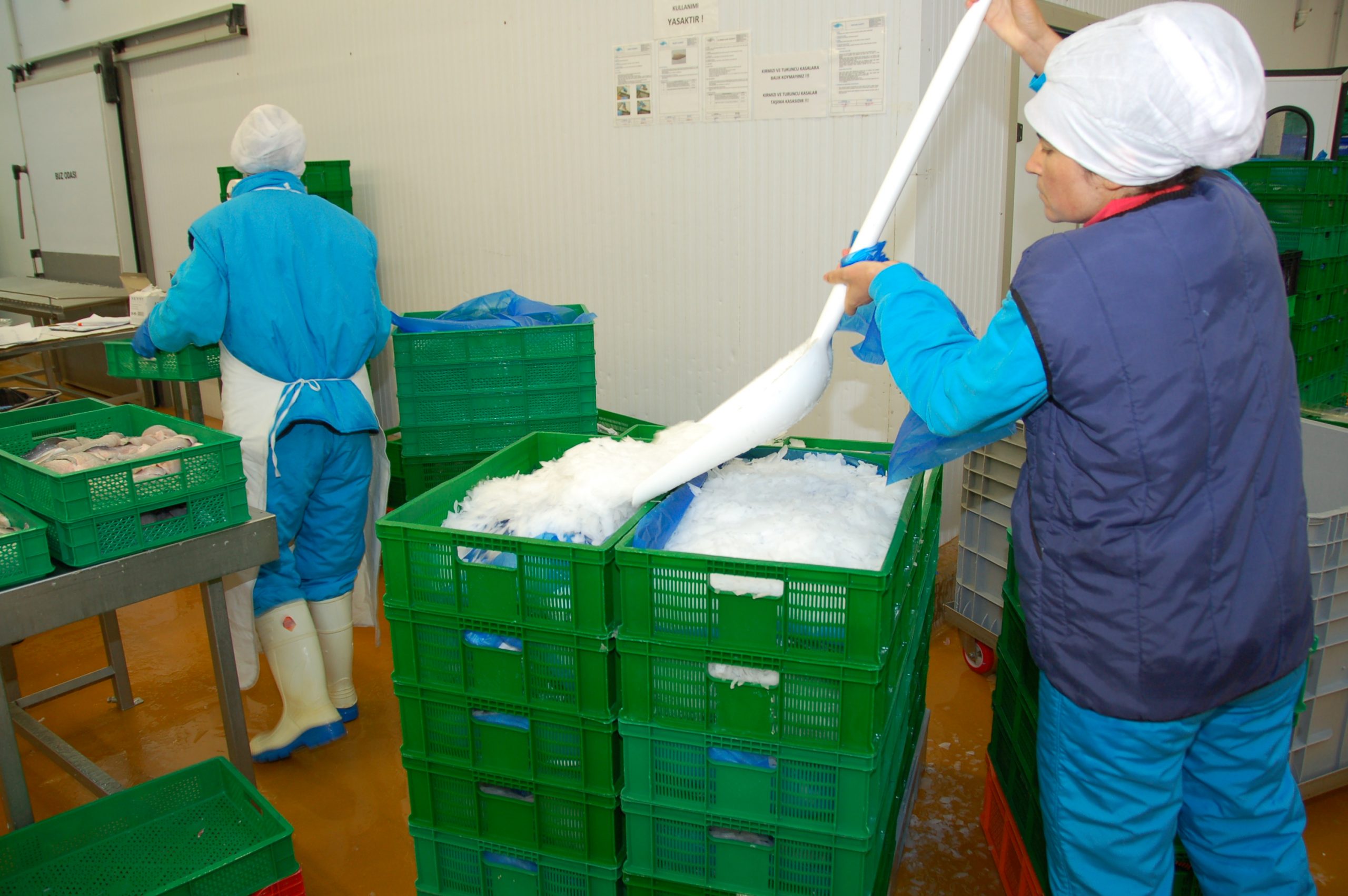
Currently most of the production is frozen with only a small proportion being produced fresh for customers in the US, Canada, and the Middle East. This fish is air freighted to these destinations, while the frozen production is sent overland to markets in Europe – the UK, France, Switzerland and Italy. Seventy percent of the exports go to the UK, where the company maintains a warehouse, with partial shipments going to destinations in continental Europe. Ms Kahramanoglu also points out that knowledge about seabass and seabream is increasing in another important market, the US, something that the industry in Turkey can only profit from. The current situation in Greece has also given Turkish producers a boost as prices have climbed and there is a need to fill the gap caused by the withdrawal of some Greek producers, but most are aware that this is a temporary development that is likely to reverse at some point in the future. The countries of the Middle East are proving to be very good markets for the company’s products, specifically the fresh whole round fish and Ms Kahramanoglu is optimistic that this relationship will continue.
| More Aquaculture | |
|
Kemalpasa Cad. 6170/1 Tel.: +90 232 472 13 00 | Export responsible: Ms Asli Kahramanoglu Employees: 185 Volumes: 3,350 tonnes in the cages (capacity) Production: 5,000 tonnes Species: Seabass, seabream, (trout, meagre from external suppliers) Products: Fresh or frozen whole, gutted, filleted fish Main markets: UK, France, Italy, Switzerland, Kuwait, Quatar, UAE, Canada and the US |
The future is in sophisticated packaging
For the future More is looking at different packaging systems, modified atmosphere, vacuum packs and possibly shrink-wrapped products as Ms Kahramanoglu feels that is where the future lies. The company has also started to produce some ready-to-cook products, seabream and seabass fillets with a dressing that were recently sent to a buyer in Eastern Europe. While fresh fish is still generally considered superior to frozen, more and more consumers are becoming aware that fresh fish is actually often 7-8 days old when it is sold, while frozen fish is processed within hours of the fish leaving the cages. This awareness helps counter some of the prejudices about frozen fish and can only boost the fortunes of companies like More.