This article was featured in Eurofish Magazine 6 2026.

The signal crayfish (Pacifastacus leniusculus) is the most widespread non-native crayfish species in Europe. It was deliberately introduced to compensate for the decline of the European noble crayfish. An unfortunate decision, as the newcomer quickly proved invasive and increasingly displaced native crayfish. It can also transmit crayfish plague, thereby damaging aquatic ecosystems.
There are numerous examples of non-native species being successfully introduced into Europe, becoming part of everyday life and enriching our diets. Potatoes, tomatoes, peppers, and maize, as we know them, only reached Europe from the New World across the Atlantic after Columbus‘s voyages. The introduction of rainbow trout was also largely a success, although not every conservationist would agree. So why should the same not be possible with the signal crayfish (Pacifastacus leniusculus)? That was probably what many people thought when it arrived in Europe from North America in the 1960s. The main reason for importing it was the rapid decline of the noble crayfish (Astacus astacus), once found in almost all the continent‘s waters but increasingly disappearing. This sensitive species was suffering from water pollution and crayfish plague, a fungal disease that is usually fatal. The hardy signal crayfish seemed to offer a suitable alternative. At 16 to 18 cm long, it is almost the same size and occupies a similar ecological niche in aquatic habitats. Its succulent, tender flesh, often compared with lobster, is exceptionally tasty, suggesting that commercial exploitation could be profitable.
Critics’ concerns attracted little attention. After all, the signal crayfish was not the first non-native crustacean to reach Europe, deliberately or inadvertently, in recent decades and spread through its waters. The Chinese mitten crab (Eriocheir sinensis) probably arrived around 1900. Other species followed, including the spiny-cheek crayfish (Orconectes limosus), red swamp crayfish (Procambarus clarkii), calico crayfish (Faxonius immunis), marbled crayfish (Procambarus fallax f. virginalis), and rusty crayfish (Faxonius rusticus). Once established in Europe, these species used the interconnected river and canal networks to spread, displacing native species almost everywhere. From the outset, the signal crayfish proved particularly aggressive and competitive. Its introduction began in Finland, Sweden, and Spain; today it has been recorded in 28 European countries. Signal crayfish do not merely migrate through waterways: in search of new habitats, they can cover distances of two to three kilometres overland. Biologists fear that the introduction of this species may have dealt the final blow to native crayfish, including the noble, stone, and white-clawed crayfish. Although the newcomer is resistant to most strains of the crayfish plague pathogen, it can transmit the disease to other species. Rather than slowing the mass die-off of native crayfish, it has accelerated it. Consequently, fisheries and nature conservation legislation in most European countries now expressly prohibits stocking signal crayfish in open waters.
Distinctive features make identification easier
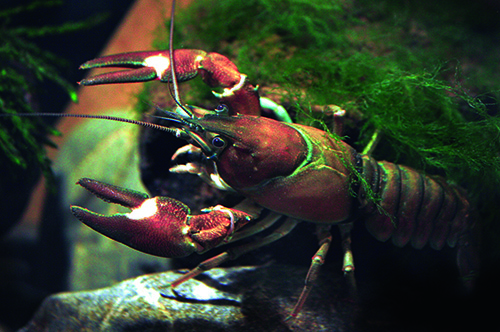
Even people with little zoological knowledge should have no difficulty identifying the signal crayfish. Its shell (carapace) is smooth and, unlike that of the noble crayfish, has no spines behind the cervical groove. The naturalist James Dwight Dana noted this as early as 1852 in his first description of the species, giving it the Latin name leniusculus, which translates roughly as ‘the little gentle or smooth one’. The large claws are also strikingly smooth, without spines or bumps. Its basic colour is usually brown, although sometimes olive or bluish. The undersides of the powerful claws are red to orange, serving as a warning when the claws are raised. Particularly distinctive is the turquoise-white patch on the upper side of each claw, at the joint of the movable finger, from which the species takes its name. Occasionally, however, this marking is missing or indistinct. Females, at 12 to 14 cm long (around 60 g), are considerably smaller than males, which average 16 to 18 cm, occasionally reach 20 cm, and can weigh up to 200 g. The maximum lifespan is reported to be about ten years.
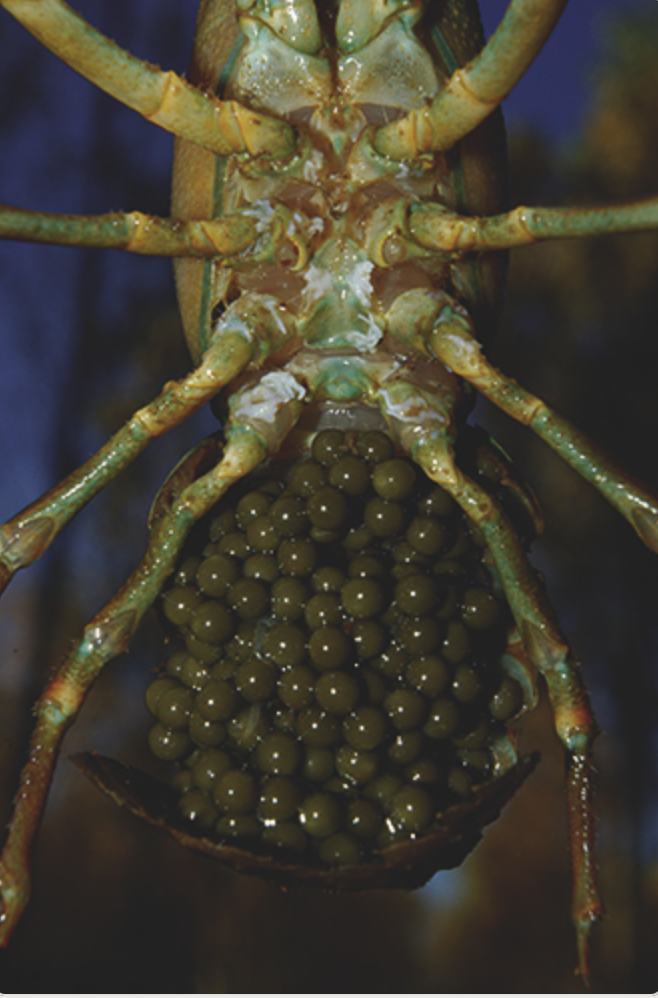
A female signal crayfish bearing eggs. The species outcompetes the native noble crayfish among other reasons because of a shorter time to maturity and higher fecundity.
Signal crayfish originate from the part of North America west of the Rocky Mountains. Although not particularly demanding in their habitat requirements, they thrive in well-structured waters with abundant vegetation, and among stones and tree roots that offer plenty of hiding places. They prefer cool flowing water at around 15 °C but can tolerate higher temperatures, which have become relatively common in summer. In addition to the ecological damage they cause, signal crayfish are unpopular because of their burrowing activity along dams and dykes. They excavate burrows up to two metres deep into riverbanks, potentially making them unstable. However, they do not necessarily need burrows. Where sufficient natural hiding places exist, they often dispense with them.
Threat to native crayfish
As opportunistic omnivores, signal crayfish are far from fussy eaters. They can exploit almost anything their habitat offers: aquatic insect larvae, mussels and snails, fish eggs, tadpoles, small fish and carrion, worms, and living or dead plant material, even leaves falling into the water from trees along the bank. When food is scarce, these aggressive crayfish sometimes turn on smaller members of their own species. They make use of virtually any organic material available in the water. They usually begin foraging at dusk and continue throughout the night, although in quiet, undisturbed habitats they may also feed during the day.
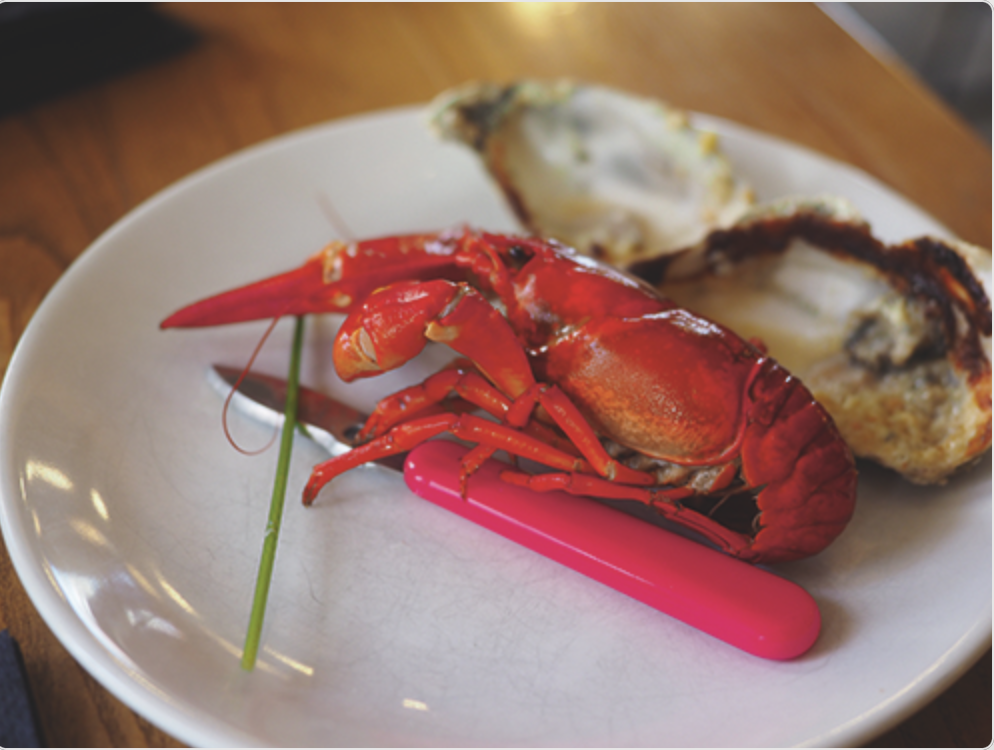
Signal crayfish are appreciated for their culinary value. In Sweden (and Finland),
late-summer crayfish parties (kräftskiva) are a tradition and often feature signal crayfish.
Signal crayfish reach sexual maturity in their second or third year. During autumn mating, which usually follows a sudden drop in temperature in October or November, the male attaches a sperm packet (spermatophore) to the female‘s abdomen. Within about ten days she lays some 200 to 400 eggs, which she carries after fertilisation until spring. The larvae hatch between May and July. Initially they remain close to their mother and only gradually become independent after their second moult.
Broadly speaking, then, the biology of signal crayfish is similar to that of our native species. Nevertheless, they pose an immense threat to native wildlife because they seriously disrupt the ecological balance of European rivers and lakes, driving indigenous crayfish species to the brink of extinction. This is not only because they can carry crayfish plague, which is completely harmless to people and domestic animals but devastating to European crayfish. Their competitive strength also leaves other crayfish little chance in the struggle for food and habitat, relentlessly displacing them. Signal crayfish are immune to crayfish plague and grow rapidly; they are hardy, aggressive, and undemanding. They even eat food rejected by other species, cover long distances during their migrations, and are not stopped by weirs or other barriers across watercourses, which they simply bypass overland.
A solution to the problem currently seems impossible
The targeted eradication of signal crayfish from European waters, many of which are connected in extensive networks, is practically hopeless. Once the species has become established in a waterbody, removing it is almost impossible. Conventional methods such as crayfish lift nets, traps, or hand collection can at best contain the problem, not resolve it permanently. This makes preventive measures to halt its further spread all the more urgent. Upstream migration in rivers can, for example, be restricted to some extent by mechanical ecological barriers combining vertical drops with perfectly smooth surfaces. In still waters, however, the only effective option is often to drain them completely. Even for small ponds, this entails enormous effort, with no guarantee of lasting success: it is often only a matter of time before the invaders return from neighbouring waters. Containing the spread of signal crayfish calls for coordinated cooperation across Europe and national borders. The inclusion of the species on the EU‘s first Union list of invasive alien species under Regulation (EU) No 1143/2014 established a sound basis for such cooperation.
Even catching and removing these invasive crayfish does not entirely eliminate the problem, however, because their carcasses can also threaten native crayfish populations. Signal crayfish must be thoroughly disinfected before disposal; otherwise, crayfish plague pathogens could be carried back into waterways in rinsing water or rainwater. Nets, transport containers, clothing, wellington boots, and even the water in which the crayfish have temporarily been kept may be contaminated with the pathogen and must therefore be carefully disinfected.
Culinary use could be worthwhile
Anyone who associates signal crayfish solely with risks and environmental damage is overlooking another aspect: the species was originally introduced into Europe for culinary use. Although the edible meat from the tail and claws accounts for barely more than 10% of total body weight, it is particularly delicious. The crayfish plague pathogen poses no risk to humans, as the disease can only be transmitted to crayfish. Cooking in boiling water provides an additional safeguard. Signal crayfish meat is extremely lean, easy to digest, and low in energy, containing just 70 to 82 kcal per 100 g. It is an excellent source of protein with little fat, while also providing vitamins, especially B12, and minerals such as sodium, potassium, iron, phosphorus, calcium, and magnesium. The tender meat lends itself to many dishes, particularly pasta and risotto, and can also be served in salads or added
to soups.
Manfred Klinkhardt