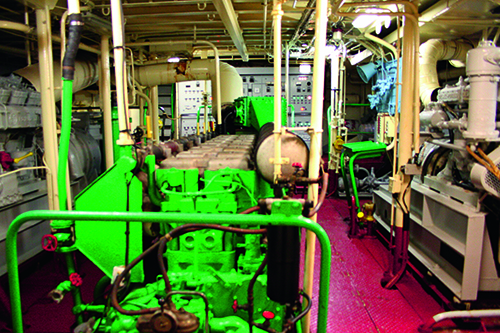
This article was featured in Eurofish Magazine 6 2026.

In February 2023, the European Commission announced its strategy for the energy transition in the fisheries and aquaculture sector: dependence on fossil fuels is to be reduced and the sector brought into line with the European Green Deal. The EU aims to achieve climate neutrality by 2050. To meet this ambitious target, fishing is now expected to switch to renewable and low-carbon energy sources as quickly as possible. But is that even possible?
Fishing makes a very important contribution to global food security while placing remarkably little burden on the global climate. According to UNCTAD data, the sector accounted for just 0.1% to 0.5% of total global emissions in 2023. Fishing also accounts for a relatively small share of the food sector’s greenhouse gas emissions, at around 4%.
Since the last major reform of the Common Fisheries Policy (CFP) in 2013, fisheries and aquaculture have faced, and continue to face, a series of unprecedented challenges: Brexit, the COVID-19 pandemic and the energy crisis, dwindling fish stocks, tighter catch quotas, and the designation of marine protected areas and offshore wind farms. All these developments have progressively restricted the fishing opportunities available in the past, forcing the industry through a very painful transition. Fisheries management and fishing methods are being continually improved to make operations more environmentally friendly and effective, and to reduce bycatch. Now policymakers are confronting the sector with an even greater challenge: the stated goal of decarbonisation. In fact, no political encouragement was needed to save energy, particularly marine diesel and electricity. But while politicians are primarily concerned with protecting the climate and reducing CO2 emissions, fishers are motivated more by costs, as energy now accounts for the largest share of operating costs in the EU fisheries and aquaculture sector. Every sensible fisher therefore seeks to reduce diesel and electricity consumption, even without
outside pressure.
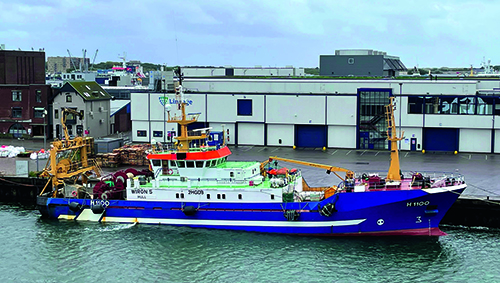
Using biofuels, biogas, and green hydrogen to power fishing vessels would reduce emissions,
but they are neither universally available nor produced in sufficient volumes.
The price of marine diesel doubled in the space of a year, between 2021 and 2022, and has continued to rise since then. This has imposed substantial additional costs on all fleet segments and sharply reduced their profitability. At 2022 energy prices, almost 40% of the coastal fishing fleet, around 66% of the offshore fleet, and 87% of the distant-water fleet were no longer profitable and needed financial support to continue operating. Under this pressure, virtually every measure offering even a modest improvement in energy efficiency was readily adopted, and a large proportion of the fishing fleet was even laid up. Between 1996 and 2020, the number of fishing vessels registered across the EU fell by around 30,000, from 103,834 to 73,716. Efforts to save diesel and shrinking fleets have already reduced emissions by 50%. At present, little more can be done without the EU fishing industry losing still more ground in global competition. It now accounts for just 3.9% of global catches.
EU policymakers are pushing ahead with reducing fossil fuel use, but is such a tight timetable for decarbonisation really realistic? After all, it would require alternative green technologies, new types of fuel, and carbon-neutral energy sources. The EU’s existing legal framework would probably also need to be adapted. The European People’s Party (EPP) group in the European Parliament wants to reform the EU’s Common Fisheries Policy (CFP) in order to preserve the balance between the CFP’s socio-economic dimension and food security under the pressure of decarbonisation, and to strengthen the competitiveness of European fisheries. In a position paper on ‘decarbonising the fishing fleet’, the European Economic and Social Committee (EESC) calls for an appropriate timetable for decarbonisation that takes account of technological, logistical, and legislative developments. Otherwise, costs could rise disproportionately, with no scope to pass them on through higher fish prices. Fish could become an unaffordable luxury.
Does the CFP need reform?
In the EESC’s view, the enormous costs of decarbonisation in a sector that is difficult to electrify, such as fishing, far exceed the funding available at European level. The committee identifies several challenges that still stand in the way of decarbonising the fishing sector. Appropriate technologies needed to achieve net-zero emissions in the sector are lacking. Fishing vessels often operate far from ports and therefore need reliable solutions, such as fuel-efficient engines that emit fewer pollutants and improved vessel designs. Biofuels, biogas, hybrid engines, and green hydrogen could also help achieve significant emissions reductions. However, these fuels are far from universally available and are not produced in sufficient quantities. Innovative wind-assisted propulsion technologies could contribute to lower emissions as well. Although individual solutions exist in this area, they have yet to be introduced widely across the fishing sector.
Decarbonisation should also prompt consideration of a programme to build new fishing vessels, whose average age across the EU is 31.5 years. Simply replacing the engines on such old vessels is neither sensible nor feasible. There is little point in replacing only the laces on a pair of worn-out shoes with holes in the soles. Alternative energy sources generally require more space and pose additional risks to safety on board. Low-carbon propulsion technologies using methanol or hydrogen require larger fuel tanks, while electric motors need greater energy-storage capacity than conventional diesel engines. Many small-scale fishing vessels lack this space (75% of vessels in the EU fleet are less than 12 metres long). The EU’s capacity limits based on gross tonnage should therefore be reviewed, as they make it even harder to install low-emission technologies on board. More suitable measures could be ‘net tonnage’ or the formulas used in Iceland and Norway, under which crew recreation and rest areas are excluded from the calculation, depending on the allocated quota or the vessel’s size.
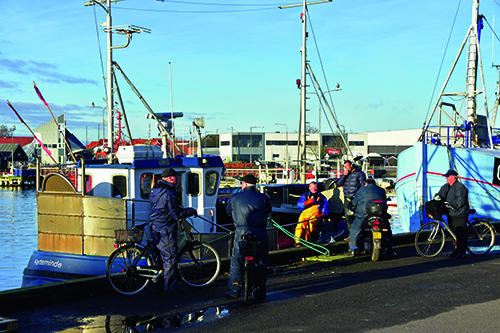
Electric motors need greater energy-storage capacity than conventional diesel engines. This poses a challenge on vessels where space is a constraint.
By defining fishing capacity as it does, the CFP conflicts with requirements laid down in social legislation, such as International Labour Organization (ILO) Convention No. 188 on Work in Fishing. Space allocated to the galley, cabins, toilets, or recreational areas has nothing to do with the capacity to catch or store fish. Nevertheless, it is currently included when calculating fishing capacity in the EU. A review and possible reassessment could therefore be helpful in the context of decarbonisation, as changing propulsion systems requires the construction of climate-friendly vessels with greater on-board capacity (gross tonnage) to accommodate new machinery, tanks, and batteries. Environmental organisations, which are already critical of fishing, fear, however, that reassessing or even increasing capacity would put fish stocks under still greater pressure. A study commissioned by ‘Seas at Risk’, the European umbrella organisation for more than 30 environmental NGOs, concludes that this is not necessary. It argues that there is sufficient unused capacity within existing national fleet capacity ceilings to make the transition to low-carbon technologies. Reform of the CFP is therefore unnecessary. Bruno Nicoastrate, senior fisheries policy officer at Seas at Risk, even calls for the transition to low-emission and low-carbon fishing to be accelerated.
No genuine alternative propulsion system in sight
That, however, is likely to be very difficult. Although various initiatives have been launched around the world, most are still research pilot projects far removed from practical application. For the time being, this also applies to the EU-funded research initiative ‘DecarbonyT’, involving more than 70 scientists from 17 organisations in seven EU countries. In six regions of the Mediterranean and Black Seas, they are to investigate the potential of experimental fishing nets and trawl doors to reduce CO2 emissions. The aim is to improve hydrodynamic efficiency and thereby reduce specific fuel consumption (litres per kilogram of fish). This may make some contribution to decarbonising fishing, but it is certainly not a major breakthrough.
Strictly speaking, it is not even clear yet which propulsion technology offers the best prospects of success. Current electric propulsion prototypes cannot yet power a full fishing day of 12 or 14 hours at sea, let alone fishing trips lasting several weeks. Special charging infrastructure would have to be developed to recharge batteries at sea. The ‘Karoline’, which entered service in 2015 as the world’s first commercially operated electric fishing cutter and was intended to herald a comprehensive green transition in Norwegian fisheries, therefore uses a hybrid system. The 11-metre vessel usually motors to the fishing grounds under diesel power and switches to quiet, emissions-free electric propulsion only once it arrives. As soon as the 195 kWh batteries are depleted, the tried-and-tested diesel engine has to take over again.
Synthetic low-CO2 fuels that are not produced from plant biomass are so far available only in very small quantities and are also virtually twice as expensive as conventional marine diesel. Methanol not only requires considerably larger tanks but also extremely stringent safety measures, as inhaling even small quantities of methanol vapour is highly toxic and can cause serious damage to health, permanent blindness, and even death. Liquefied natural gas (LNG) is already used as a marine fuel, but it, too, seems far from ideal. Although LNG engines emit 25% less CO2 than diesel engines, their exhaust contains mainly methane, whose greenhouse effect is considerably greater than that of CO2. This would be a case of driving out the devil with Beelzebub. Moreover, to achieve the same propulsion power, LNG tanks on board would need to be three times as large as conventional diesel tanks, potentially creating capacity and safety problems. Hydrogen is efficient, but would require tanks with four times the volume.
Announcing an ambitious decarbonisation target is one thing; being able to implement it in practice is quite another. Low-emission technologies are expensive and apparently not yet fully mature for use at sea. High costs and the lack of alternatives make it seem rather unlikely that the stated target can actually be achieved
by 2050.
Manfred Klinkhardt