This article was featured in Eurofish Magazine 5 2026.

A restaurant on the Croatian island of Vis provides a textbook example of adding value to fish caught in the surrounding waters.
For well over a decade, EU policy has sought to strengthen the position of small-scale fishers within the value chain by helping them retain a greater share of the value of their catch through processing, branding, improved product quality, and direct or short-chain sales. The underlying objective is to enable fishers and fishing communities to earn more from the fish they catch rather than increasing catches. Small-scale fisheries receive particular attention because of their importance for employment and for the economic and social fabric of many coastal communities. European fisheries funds, both the EMFF (2014–20) and the EMFAF (2021–27), have supported measures that can add value to catches, including direct sales, quality improvements, cold storage, small-scale processing, labels of origin, links between fishers and restaurants, and fishing tourism. In Croatia this approach has been applied through measures supporting value addition and income diversification, as well as projects designed to shorten supply chains and connect fishers more directly with consumers and restaurants.
A fish market is resurrected as a fish restaurant
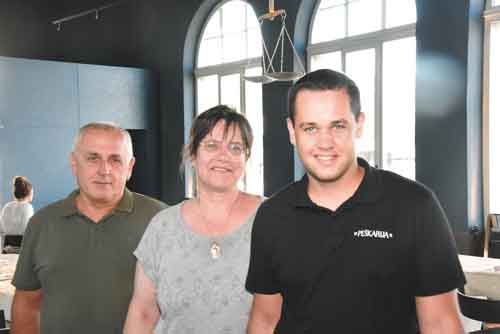
A good example is Peškarija 1911, a restaurant occupying the former fish market on the waterfront in Vis town, where the Linčir family has created a direct link between fishing, value addition, and short supply chains. Toni Linčir, owner of the restaurant and a fisher by trade, supplies the restaurant with its requirements for fish and sells the remainder of the catch to processors and other buyers on the mainland. The building was constructed as the Vis fish market in 1911 and for generations was a place where local fishers sold their daily catch. According to Mr Linčir, trading activity declined over time due to a lack of fishers supplying the market, which eventually stopped functioning about a decade ago. For a period, the building was used for storage before the Linčirs saw an opportunity to again use the space for an activity involving fish.
The original concept was that Peškarija would operate as a fish market in the morning, then reopen as a bistro and wine bar later in the day. However, sanitary and administrative requirements made it impractical to use the same premises for fish retail and restaurant service without separate facilities for each activity. Besides, too few professional fishers on the island needed a small public fish market. Many already had buyers or sold directly from their vessels.
The restaurant therefore became the main activity and the long stone fish counter, dating from 1911, survived the renovation and is now the central communal table, with seating for around 30 people.
Menu features small pelagic species
Mr Linčir operates two vessels that target species from the surrounding Adriatic. Sardines and anchovies are particularly important, while the restaurant also serves species such as mackerel and greater amberjack, a species targeted by only a small number of boats. The bulk of the small pelagics catches is sold to processing companies as Peškarija uses only a small fraction—about one tonne of sardines and one tonne of anchovies annually. The menu gives small pelagic fish a more prominent role than they generally have in the island’s restaurants. In an interview to journal.hr Mr Linčir’s son, Ivo Linčir, mentions that sardines, anchovies, and mackerel had been unfairly neglected in local restaurant cooking, something he wants to remedy. Peškarija serves traditional preparations alongside more contemporary ones using species associated with everyday fishing to create innovative and unusual dishes. Fish from the surrounding sea is not the only local product served at the restaurant. The wine too comes from the island, while one of the desserts on the menu is based on a carob flour produced in Komiža, a neighbouring town. The restaurant thus provides a platform for other island products alongside his own catch.
Peškarija remains open for most of the year even though business is heavily concentrated in the tourist season. Mr Linčir explains that this is a deliberate strategy to provide full-time around-the-year employment to a core team of four or five island residents because experienced seasonal workers are difficult to find. The team includes cooks trained in the local hospitality school which strengthens the connections between local institutions and contributes to the island’s economy even when there are no tourists. Permanent employees understand the fish they serve and the traditions behind it, so though keeping trained local staff through the quiet months may cost more, it means the restaurant retains people with knowledge of its products and its history.
Younger generation shows little interest in fishing
Fewer people want to become professional fishers when income can be earned more easily from renting rooms and apartments, says Mr Linčir. He is now the only fisherman operating this type of fishery in the immediate area. From his perspective, fishing has also become more difficult: catches are lower than before, fish are sometimes smaller, and different species increasingly appear mixed in the same schools. He points as well to pressure from predators such as tuna and dolphins, while describing the rules, regulations, and reporting requirements as increasingly time-consuming. As a result he is more optimistic about the future of his restaurant—which he expects to be able to supply with fish for the foreseeable future.