This article was featured in Eurofish Magazine 5 2026.

A new three-year Horizon Europe project, Seadeep—Sustainable Energy Advancement through Digitalisation for Energy Efficient Production in Aquaculture and Fisheries, will demonstrate how digital technologies and energy-efficient solutions can help reduce energy use, greenhouse gas emissions, and operating costs in aquaculture and fisheries. The project runs from June 2026 to May 2029 and brings together 30 partners from 11 countries.
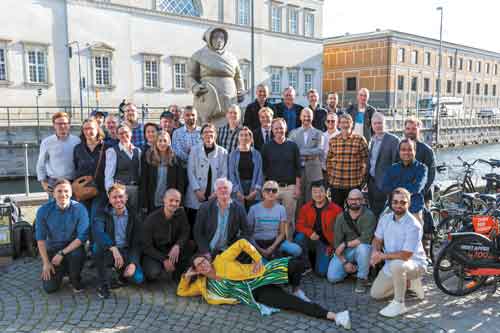
The consortium, which brings together research organisations, technology developers, aquaculture and fisheries operators, industry networks, and others, met in Copenhagen on 10–11 September 2026 for the project kick-off meeting. Partners used the opportunity to get to know each other and establish the basis for the work ahead.
Optimising production in aquaculture and fisheries
Seadeep focuses on three areas where energy use, production efficiency, and digitalisation offer considerable scope for improvement. These are recirculating aquaculture systems (RAS), macroalgae cultivation, and small-scale fisheries. Its overall objective is to develop and demonstrate digital and energy-efficient solutions under real operating conditions, improving productivity while reducing environmental impacts. Technologies will be tested and validated at nine demonstration sites in the North Sea and Baltic Sea regions, enabling not only their technical performance to be assessed, but also their adaptability to different production systems and environmental conditions.
In land-based RAS, the project will investigate solutions ranging from energy-efficient pumping and water treatment to digital twins, artificial intelligence-based production optimisation, fish welfare monitoring, microbiome management, and automated environmental, social, and governance reporting. For macroalgae production, Seadeep will demonstrate low-energy drying, drone-mounted LiDAR for biomass estimation, and optical technology for measuring nitrogen content. In small-scale fisheries, sensors, real-time monitoring, and AI-supported decision tools will be tested to improve route planning, monitor fuel use, and help vessels operate more efficiently.
Solutions developed with and tested by commercial partners
An important feature of the project is its emphasis on demonstration and replication. Rather than developing technologies only under laboratory conditions, Seadeep will work with commercial operators to test solutions in everyday production environments. The project aims for energy and greenhouse gas emission reductions of around 15–30% at demonstration sites, while also examining economic viability, regulatory barriers, user acceptance, and the potential for wider market uptake.
The project is coordinated by the IVL Swedish Environmental Research Institute, and partners include the research organisations Fraunhofer, NIVA, Gdynia Maritime University, and AZTI; as well as technology companies specialising in sensors, artificial intelligence, monitoring, automation, and energy-efficient systems. Aquaculture and seaweed producers, including Oceanloop, Danish Salmon, SmögenLax, Nordic SeaFarm, Ocean Forest, Norfolk Seaweed, and Vetik, will provide real-world demonstration environments, while fishing-sector partners in Poland and Denmark will support the small-scale fisheries trials. European networks and clusters, including the Submariner Network, Food & Bio Cluster Denmark, EATiP, and Eurofish, will contribute to stakeholder engagement, communication, capacity building, market uptake, and policy outreach. For more information visit https://www.seadeep.eu/.
Eva Kovacs, Eurofish,
eva@eurofish.dk