This article was featured in Eurofish Magazine 6 2026.

A better understanding of the moulting process can improve welfare and productivity in both lobster capture fisheries and aquaculture.
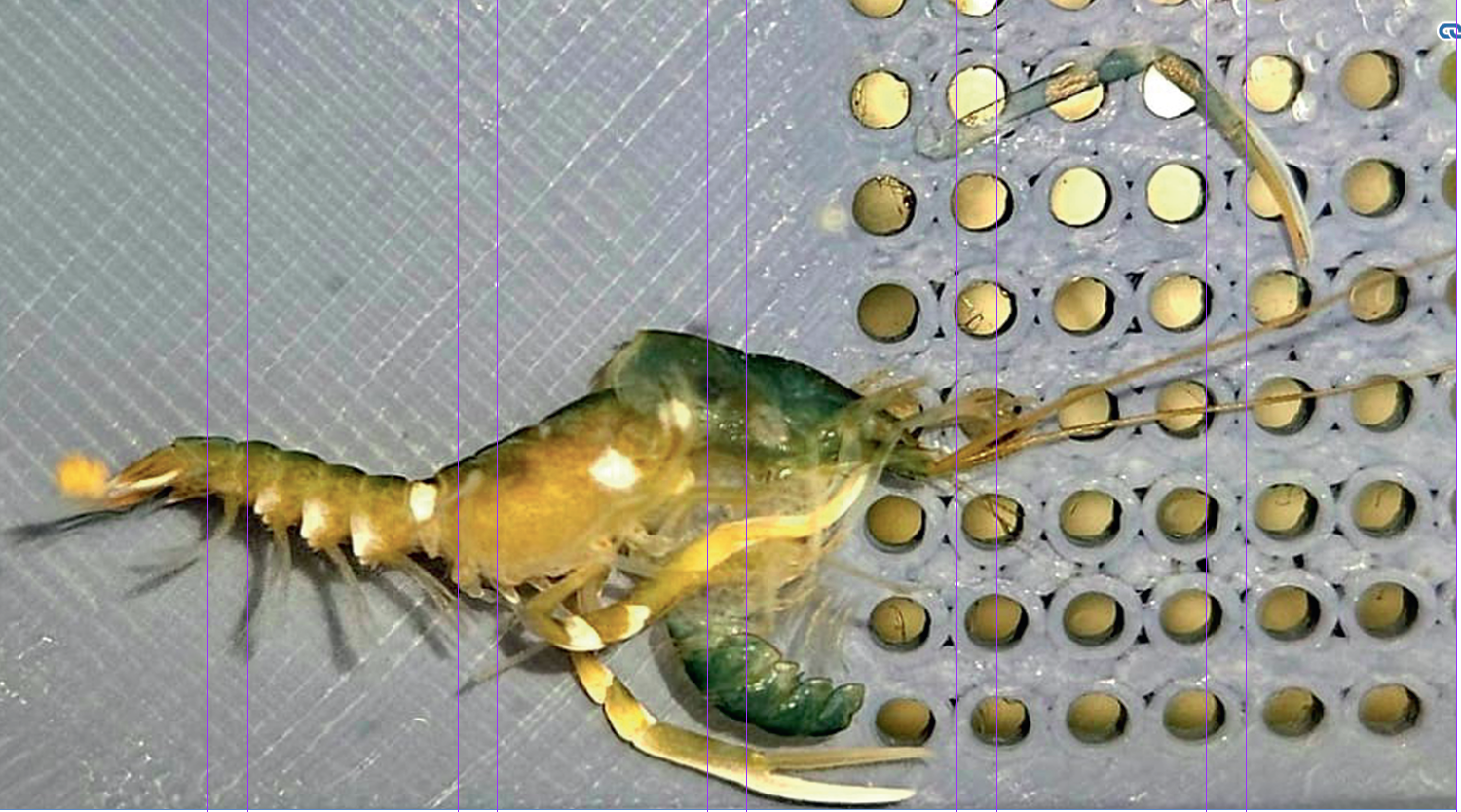
Lobsters are important crustaceans in fisheries and aquaculture, valued as a protein source and a high-quality luxury seafood. The UN’s Food and Agriculture Organisation (2024) estimates that wild capture and aquaculture lobster production have remained relatively stagnant at 300,000 metric tonnes per annum. For producers, wholesalers/coops, processors, and fisheries managers, lobster biology critically determines growth rates, survival, and overall stock performance, with direct implications for yield and market value. Central to this biology is “moulting,” the shedding of the animal’s hardened shell and the formation of a new shell, allowing the lobster to grow (Figure 1).
For lobsters moulting is a challenging life stage, a period during which the animal is susceptible to predation, physiological and environmental stress. Climateinduced stressors, particularly ocean warming and marine heatwaves, can disrupt normal moulting by shifting its timing and slowing its progression. This prolonged moulting process can increase susceptibility to shell disease and elevate mortality risk. Because growth and shell renewal rely on successful moulting, this process strongly shapes performance and productivity in both aquaculture and wild fisheries. Postharvest losses can be particularly prominent during moulting, especially during transport from farm/sea to wholesaler to market. This is often caused by manual handling of the animal, transport, and changes in water conditions, such as shifts in temperature, pH, and ammonia buildup in the holding tank.
The moult cycle
Moulting in lobsters is a complex process that creates a high-risk period, reducing fitness and survival, and it occurs numerous times throughout the animal’s lifespan. The process includes four key stages, intermoult, premoult, moult, and postmoult, and can span weeks to months, depending on season, nutrition, species, sex, and the animal’s age (Figure 2). During the intermoult (‘resting’) stage, the lobster functions normally, feeding and growing. When the animal enters the moulting process (i.e., premoult), its body begins to absorb water, swell, loosen the old shell, and form a new soft shell underneath the old one. Mineral shifts also occur as calcium in the old shell declines and magnesium increases, aiding shell breakdown and rebuilding. This change can cause the animal to absorb more salt, raising its internal salt levels and stressing its body as it tries to maintain a homeostatic state (osmotically balanced). Additional hallmarks of this stage include progressive darkening of the shell and the appearance of split lines on the gill chamber. Both are reliable visual indicators of imminent onset of moulting.
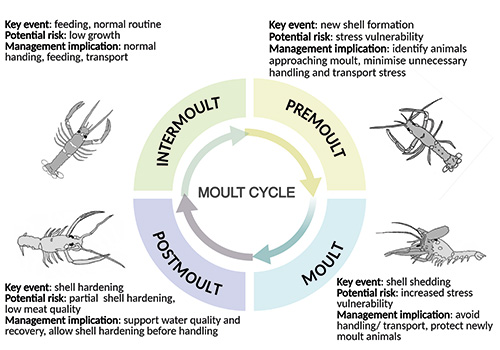
Figure 2: Lobster moult cycle highlighting key physiological transitions, production risks, and stage-specific management considerations.
The moult stage begins when the old shell breaks along the shell-split line, and the animal expends substantial energy to pull itself free from the old shell. The newly formed soft shell offers limited protection, leaving the animal vulnerable to environmental stressors, disease, and predation. As a result, the animal seeks refuge in rocks and crevices, where it remains concealed until the next stage, postmoult. In this final stage of the moulting cycle, the animal continues to absorb water to expand into its new shell, then rapidly absorbs calcium carbonate and trace metals through water and nutrition to harden and restore structural strength. After moulting, the animal often consumes its discarded shell, reclaiming up to 80% of its calcium carbonate and trace metals to accelerate mineralisation and hardening of the new shell (Mergelsberg et al., 2019). The organism also reabsorbs residual proteins and chitin from the old shell. Once complete, the animal returns to the intermoult state, identified by the resumption of routine behaviours, including feeding, which replenishes depleted nutrients and energy, supports tissue repair, and sustains growth and bodily functions.
Moulting triggers
Several factors control moulting, with hormones (e.g., serotonin, methyl farnesoate, crustacean hyperglycaemic hormone) at the core and environmental factors such as temperature, photoperiod, and nutrient availability that regulate its timing and progression. At the start of the cycle, the eyestalk’s X organ/sinus gland releases moultinhibiting hormone, which suppresses the Y-organs (located on the side of the thorax) from producing moulting hormones and keeps the animal in the intermoult stage (Figure 3). As moultinhibiting hormone production declines, the Y-organs release ecdysone (moult hormone) into the circulatory fluid (haemolymph), where it is converted to 20hydroxyecdysone, the active hormone that initiates premoult (Mykles, 2021). When the moult hormone drops again, the body reshapes its shell tissues, sheds its old shell, and changes its blood chemistry. After moulting, hormone levels stay low, helping the new shell expand and harden and supporting tissue repair. Natural light-dark cycles (photoperiod) help control lobster behaviour and physiological processes, including moulting, reproduction, migration, and metabolic rhythms. Moulting is primarily triggered in dark conditions, whereas prolonged illumination can delay or disrupt the process, exposing the animal to stress and reducing survival chances.
Moulting-inhibiting hormone release is photoperiod-dependent: secretion rises under illumination, whereas darkness suppresses the hormone, allowing the animal to initiate moulting. However, successful moulting also requires adequate nutrient reserves and a quality food source. During premoult, lobsters accumulate energy and nutrient reserves, including lipids, proteins, and essential minerals, within the hepatopancreas and muscle tissues. These reserves are subsequently mobilised to support the substantial metabolic demands of moulting and early postmoult recovery, when the animal must rebuild and harden its new exoskeleton. At this stage, adequate dietary protein and essential amino acids are critical for normal cuticle formation, while lipids provide energy and phospholipids enhance cholesterol utilisation for moult-related hormone production. Minerals and trace elements also support shell hardening. Failure to restore internal nutrient reserves and/or nutritional deficits can delay moulting, weaken postmoult recovery, and increase the risk of body deformities, moulting failure, and mortality.
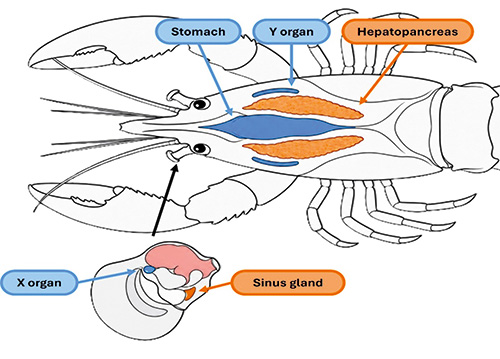
Figure 3: Organs responsible for endocrine regulation of the lobster moulting cycle.
Environmental and husbandry stressors such as elevated temperature, excessive handling, low dissolved oxygen, or disease can substantially increase nutrient demands, subsequently depleting more of internal reserves. For the former, seasonal temperature warming (˜18 °C) accelerates metabolic and enzymatic activity, which can trigger moulting, while cooler periods slow these processes and lengthen intermoult intervals. Extreme temperatures, such as marine heatwaves or rapid swings in ocean temperature, can disrupt the cycle. As the frequency and intensity of these events increase, lobsters may be pushed beyond their thermal tolerance limits, leading to range shifts towards cooler, higher-latitude habitats and consequential changes in population abundance and distribution.
Future directions in moult prediction and precision monitoring
Understanding lobster moult dynamics and triggers provides the foundation for developing adaptive welfare and mitigation strategies, particularly as environmental stressors such as global warming and marine heatwaves occur more prolifically and with greater intensity. More precise tracking of moult timing and physiological markers (e.g., hormonal regulation) across successive moult cycles can improve welfare, survival, and productivity, and support the longterm sustainability of wild and farm populations.
A practical application of this approach is using monitoring systems for realtime, noninvasive behavioural assessment to predict key moultrelated traits such as reduced activity, aggressiveness, feeding cessation, and shelter seeking. This allows detection of animals preparing to moult or moulting, enabling interventions to support their health and welfare and prevent their movement to market until they have completed the process. Realtime monitoring also reduces cannibalism by allowing rapid identification and separation of newly moulted individuals, preventing large-scale mortality and economic losses. These systems could also track water quality and early stress indicators, helping farmers maintain animal health during transport, improve survival, and ensure the lobster reaches the market at their highest quality.
Building climate-resilient and sustainable lobster production systems
The lobster industry will likely face supply volatility, variable catch quality, and higher operating costs in the near future. This is evident in wild lobster fisheries that already show signs of climate-related disruptions, including shifts in moulting and spawning timing, altered migration patterns, and declines in stock productivity (Reid et al., 2026). Investing in restocking and aquaculture hatcheries is essential to protect and strengthen population diversity, sustain stock recruitment, and ensure reliable wild seed stock supply to local fisheries and future aquaculture operations. For the latter, strain selection can strengthen key traits, enhancing growth, development, disease resistance, and stable moulting rhythms (Moran et al., 2023).
Alongside these approaches, improved nutritional strategies offer considerable opportunities to support lobster health and production. Because moultrelated nutrient declines are linked to reduced energy availability (Yuan et al., 2022), prioritising nutritional support in aquaculture systems is essential. Functional ingredients such as cholesterol (incl. supporting moulthormone ecdysteroid production, bile salt conjugation, and regulating membrane fluidity), nucleotides, phospholipids, glycosaminoglycans, protein, and essential amino acids potentially mitigate moultdriven energy loss and support stable metabolism, effective moulting, and better welfare (Iheanacho et al., 2025). Supplying selective nucleotides and glycosaminoglycans could enhance adaptive immunity, support cuticle protein and chitin production, and reduce muscle loss from moultinduced atrophy. It should be noted that these interventions must be tailored to the target species and life stage, and optimised to maximise nutritional value and animal health, particularly during the pre-harvest period and throughout distribution to market.
Stanley Iheanacho, Inga Roman,
Alex Wan, University of Galway, Ireland
References
Iheanacho, S., Hornburg, S.C., Schulz, C., and Kaiser, F. (2025). Knowledge gaps concerning bioactive compounds in fish feed. Reviews in Aquaculture, 17: e70009. https://doi.org/10.1111/raq.70009
Mergelsberg, S.T., Ulrich, R.N., Xiao, S., and Dove, P.M. (2019). Composition systematics in the exoskeleton of the American lobster, Homarus americanus and implications for Malacostraca. Frontiers in Earth Sciences, 7:69. https://doi.org/10.3389/feart.2019.00069.
Moran, M.N., Jones, D.B., Jensen, S.A., Marcoli, R., and Jerry, D.R. (2024). Optimising commercial traits through gene editing in aquaculture: Strategies for accelerating genetic improvement. Reviews in Aquaculture, 16(3): 1127-1159. https://10.1111/raq.12889
Mykles, D.L. (2021). Signalling pathways that regulate the crustacean moulting gland. Frontiers in Endocrinology. 12:674711. https://doi: 10.3389/fendo.2021.674711
Reid, G., Flaherty, M., Lewis-McCrea, L., Wilson, T., Lucatelli, D., and Cunningham, J. (2026). Considering climate-driven weather implications on lobster harvesting effort in Nova Scotia. Marine Policy, 184, 106936. https://doi.org/10.1016/j.marpol.2025.106936
Yuan, Y., Jin, M., Fang, F., Tocher, D.R., Betancor, M.B., Jiao, L., Hong, Y. and Zhou, Q. (2022) New insight into the moulting and growth in crustaceans: regulation of energy homeostasis through lipid nutrition. Frontiers in Marine Sciences, 9:914590. https://doi.org/10.3389/fmars.2022.914590.