This article was featured in Eurofish Magazine 6 2026.

The fish farming industry is famously reliant on fishmeal, given its high nutritional value and easy digestibility. To produce fishmeal, small wild-caught fish like anchovy are harvested in large quantities in many countries, with Peru being the biggest supplier with around 20% of the world’s fishmeal raw material. In the search for sustainable alternatives, substitutes often struggle to match the nutritional properties of fishmeal. Researchers from the University of Queensland, Australia, recently succeeded in overcoming this challenge, by developing a new technology that converts organic waste into biogas, which can be used to grow a high-protein alternative to fishmeal.
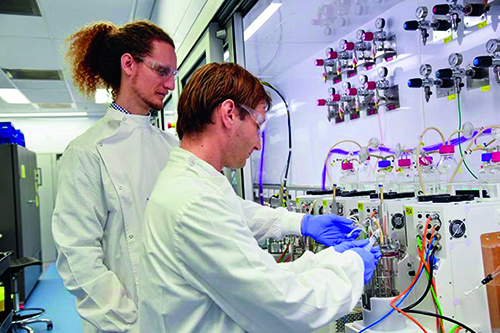
Carbon dioxide and methane are naturally produced when organic waste is broken down by microorganisms in an oxygen-free environment. Utilising these gases, the fermentation technology then uses a process called “anaerobic digestion” to grow protein-rich cells. When harvested, the cells can be processed into a high-protein ingredient (single-cell protein), that shares similar properties to fishmeal. There is no indication that the grown protein ingredient can replace fishmeal entirely, but studies have shown that microbial single-cell proteins can replace up to 75 per cent of fishmeal in barramundi diets. For now, the research group around Dr. James Heffernan and Dr. Lars Puiman plans to trial the product at a pilot scale next, ahead of testing on aquaculture feeds. Still, the research already showcases the potential of circular approaches for fish feed solutions, both making use of organic waste and reducing emissions.