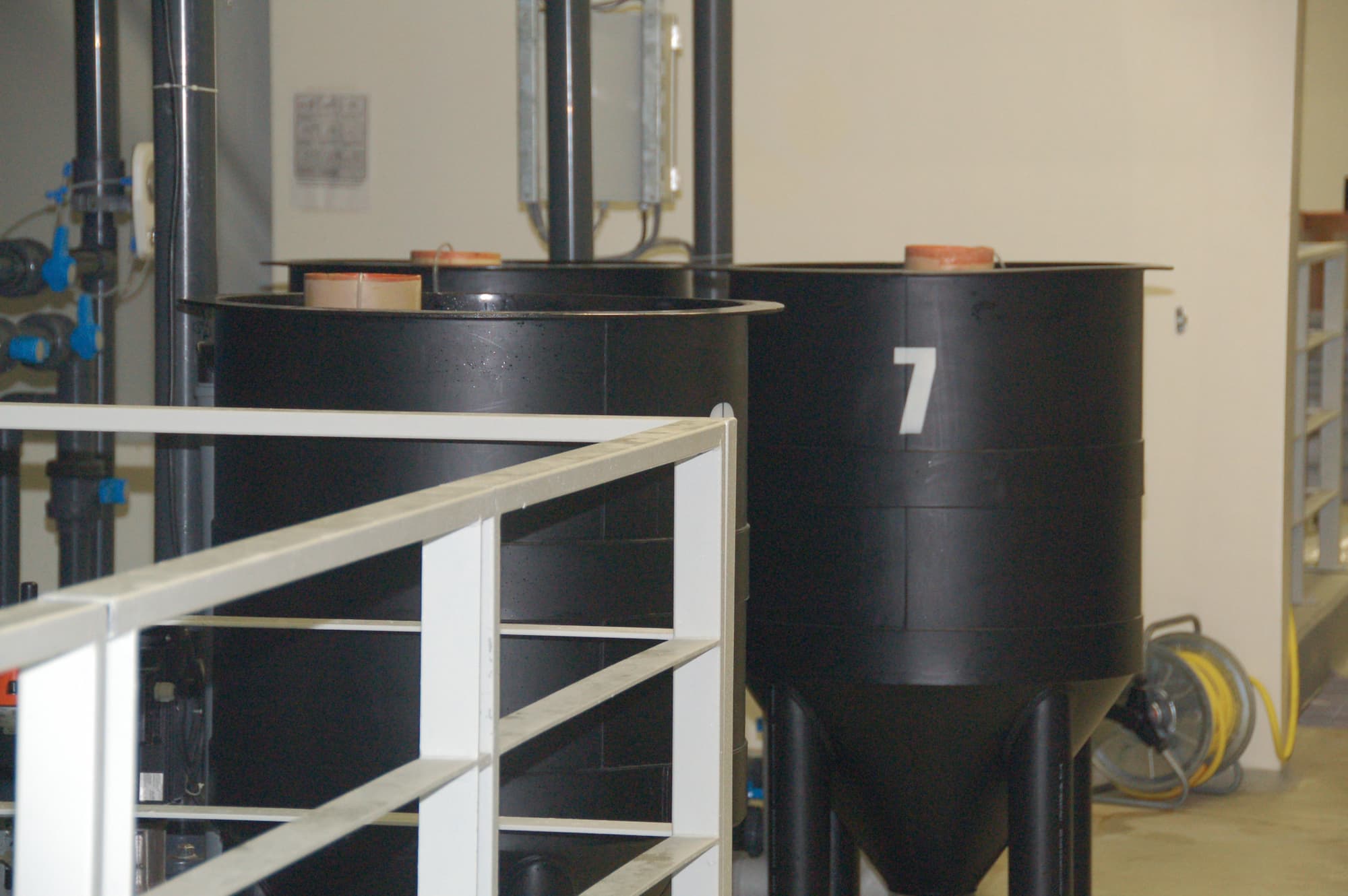
Cromaris, the largest Croatian producer of seabass and seabream has completely renovated its hatchery to double the production of fry of these two species.

Located in the town of Nin in the vicinity of Zadar the new hatchery, when it reaches full capacity, will produce at least twice as much as the old facility. The new hatchery will include two pre-growing units one at the hatchery site and the other at the company’s cage farm facility in Lamjana bay. The hatchery will ultimately result in the production of 30-35m fry weighing 5-7 g, half each of seabass and seabream. The new hatchery, in addition, will be working with some other species including common dentex (Dentex dentex), and meagre (Argyrosomus regius). Production of fry for these latter species is still at the experimental level and will not exceed some 300,000 individuals.
Production is doubled using the same site
A two-fold expansion in the production volume is not just an issue of doubling everything within the hatchery. To start with the available area stayed more or less the same so the use of space had to be made much more efficient, says Gordana Šarušić, the hatchery manager. One of the ways of doing this was to replace the circular tanks in the old hatchery with Foster-Lucas tanks that, like raceways, have a length to width ratio of more than 5, but unlike raceways have rounded ends. As in circular tanks, the circular ends enable rapid interior currents driven by the renewal water entering the tank, but the ratio of water surface to floor space is higher than with circular tanks. Foster-Lucas tanks allow a greater volume of biomass per cubic m than with other designs. The renovated hatchery has been divided into separated units, a weaning unit, nursery I, and nursery II, depending on the size of the fish. Each unit has its own independent recirculation system, which makes for a more flexible, efficient, and less risky production.
The distributed recirculation systems benefit the health and reduce the mortality of the young fish, which is the primary purpose of the renovated hatchery. We have combined new procedures with improved technology and our own experience and knowledge to create this new hatchery, says Ms Šarušić. Although there are still issues that crop up now and then as with any new venture, these help to fine tune the system so that it functions optimally. In the initial stages external consultants were used in the design and some of the implementation of the ideas for the new hatchery. More importantly, the people who manage the hatchery all agree that being open to other ideas, cooperating with external experts, and drawing on outside sources of experience and knowledge, are very important prerequisites to have a well-functioning hatchery.
New facility can have parallel organic and conventional production
Currently, part of the company’s production is organic seabass and seabream using organic fry sourced externally. If demand for organic fish increases the new hatchery has all the requirements in place to produce organic and conventional fry in parallel, such as separate storage and use of organic feed. Other requirements including physical separation of the different species and different generations are more or less standard practice in any intensive hatchery production and so are followed by default.
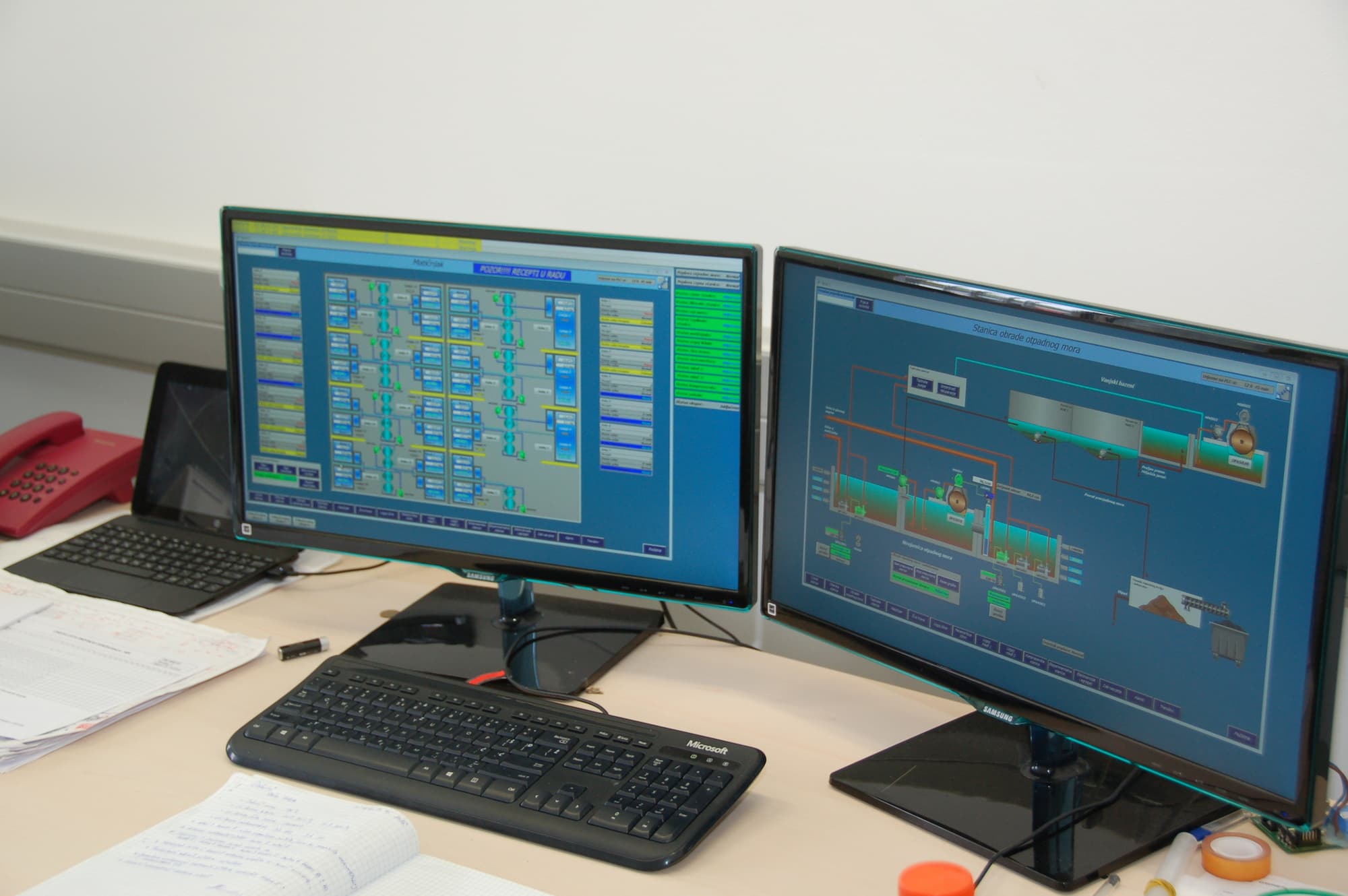
Once the hatchery is performing at peak capacity it will have five staggered production cycles for each species. By manipulating water temperature and photoperiod groups of broodstock are conditioned to spawn at different times of the year to ensure a year round production. Starting in October the fish spawn to February so that the fry can go into the cages from February to the end of June or July. The period from when the eggs hatch to the time the fry are introduced to the sea cages is about 180 days. The hatchery is also currently running a genetics programme that seeks to improve the quality of the broodstock. This will be intensified in the future, says Lana Vidović, the chief technologist, to produce fry which are more resistant to disease and which show faster growth rates. Recirculation systems have the advantage that since all the parameters can be controlled it is possible to reduce the risk of disease, but even so it is vital to monitor the system and step in immediately in case of an incident so as to prevent the problem from spreading and jeopardising the entire production. At the hatchery the inlet water temperature varies significantly depending on the season with the result that that water has to be heated in winter and cooled in summer to reach the optimal temperature of 19 degrees. By recirculating most of the water the hatchery can not only control the system, but also save energy.
|
|
Seabream reared using green-water technology
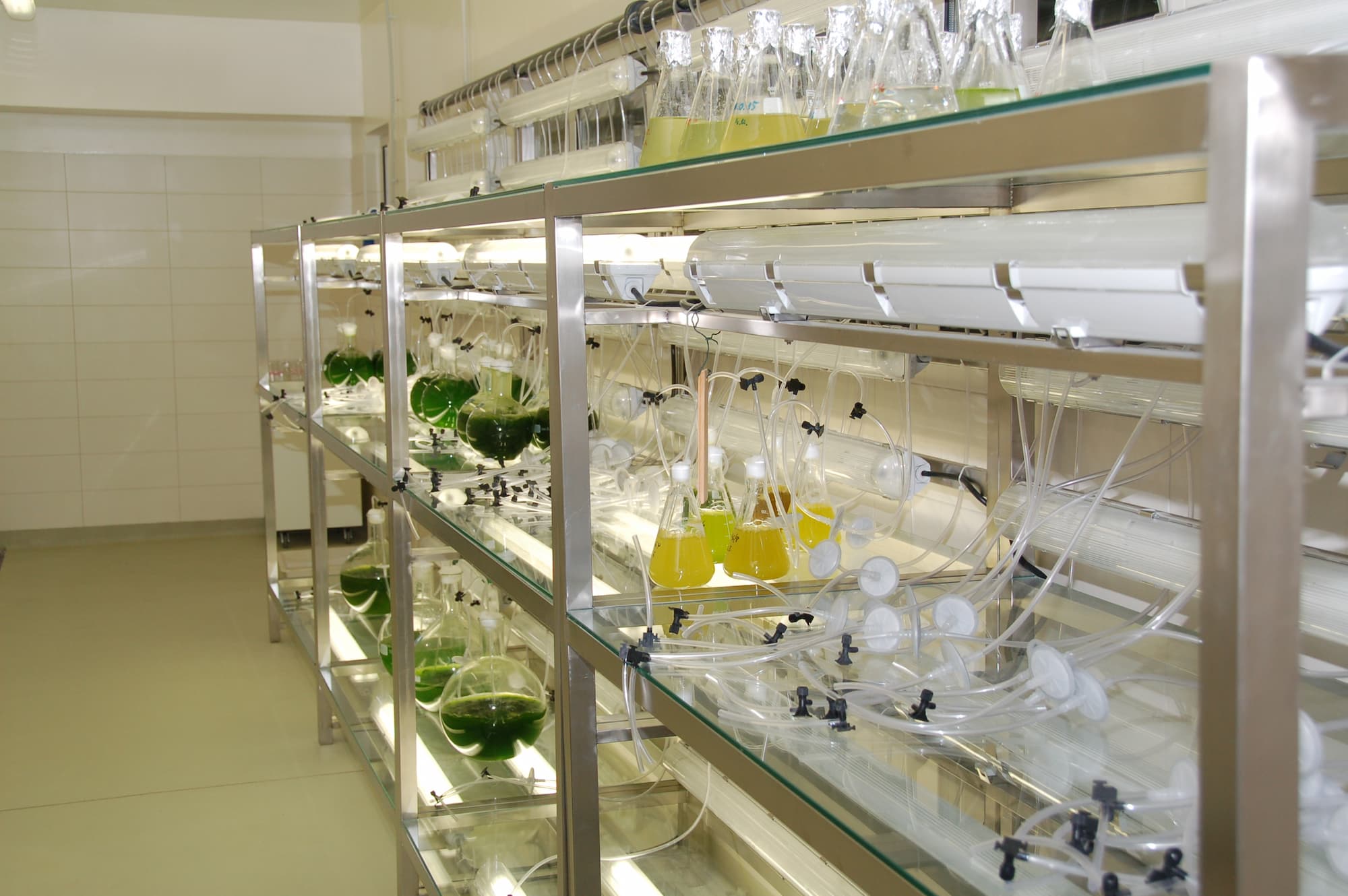
Looking after the larvae is like caring for a human baby. They are given a diet of live feed eight times a day, a process that is monitored by a technician, who makes sure that the larvae are actually feeding and that they are healthy. Seabass and seabream larvae are treated differently says Ms Vidović. For the seabream larvae green-water technology is used involving the production of phytoplankton (Nannochloropsis). This has a three-fold purpose: to feed the larvae directly; to provide a substrate for the growth of rotifers (microscopic aquatic zooplankton) which are then fed to the larvae; and to maintain a healthy environment in the larval tanks thanks to its bacteriostatic properties. Seabass larvae on the other hand are reared on artemia (tiny crustaceans). Live feed units are heavy on manpower and many hatcheries dispense with them in favour of freeze dried feed which is far easier to manage. But others find that the results are better with live feed and so prefer to invest in this production.
The eggs are co
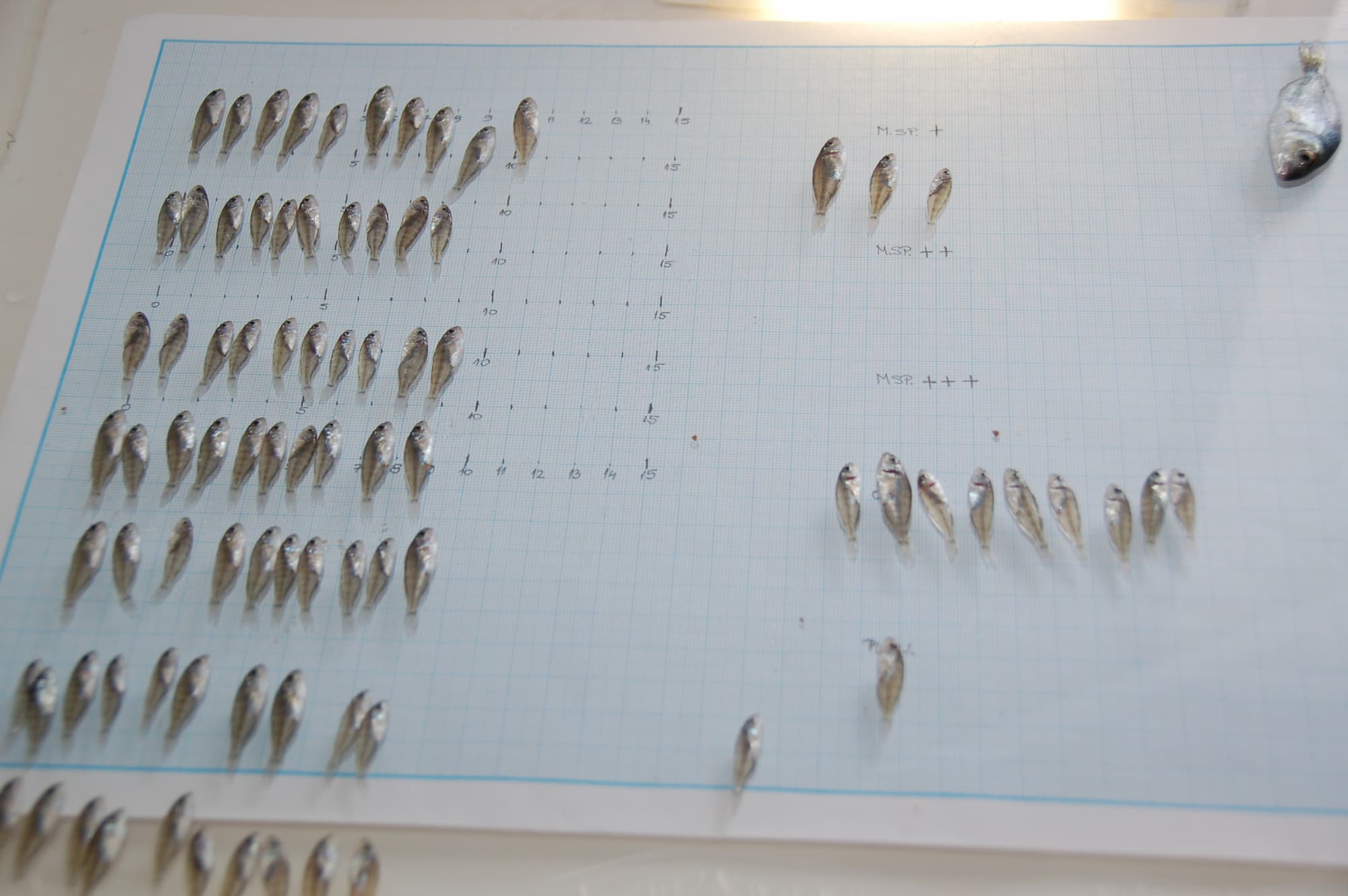
llected from the broodstock and placed in incubators for 4-5 days. After this the larvae are moved to a succession of units – larval units, weaning units, nursery I, and nursery II – each for about 35 days resulting in fry of 5-7 g, which are then placed in sea cages. At regular intervals the fish are sorted by size. When they are very small this is done manually, but later when they are bigger and stronger it is done using machines – graders, pumps, counters, etc. Sorting is critical to keep mortality levels reasonable. Typical survival rates at a seabass/seabream hatchery are around 35-40% and one of the chief causes of mortality is cannibalism. This is exacerbated by size differences, so grading the fish regularly has a direct influence on mortality rates. The fish are graded also to ensure that the fry are as uniform a size as possible when they enter the sea cages as this optimises growth on the farm. Bigger fish also bite smaller fish, which may not kill but cause damage that is vulnerable to infections and is yet another reason to maintain as uniform a size of fish in a tank as possible. At every stage of growth samples are taken at regular intervals to check for illnesses and deformities, which could be brought on by nutritional deficiencies (operculum deformities), by unclean water surfaces (swim bladder problems), or by genetic illnesses or even too high water flow rates (spinal curvature). Closely monitoring the larvae particularly while feeding them is one way of keeping these potential problems at bay.
| Cromaris | |
|
Hatchery Nin Tel.: +385 23 265250 |
Hatchery Manager: Gordana Šarušić, gordana.sarusic@cromaris.hr Production: 30-35m 5-7 g fry, half each of seabass and seabream, |
A hatchery encompasses a complex of physical, chemical and biological processes that need to be carefully monitored and adjusted to ensure the health and wellbeing of living creatures when they are at their most vulnerable. Managing this calls for a combination of human and technological resources among others that Cromaris has successfully deployed to create a facility of which both the company and the wider Croatian fish farming sector can be proud.