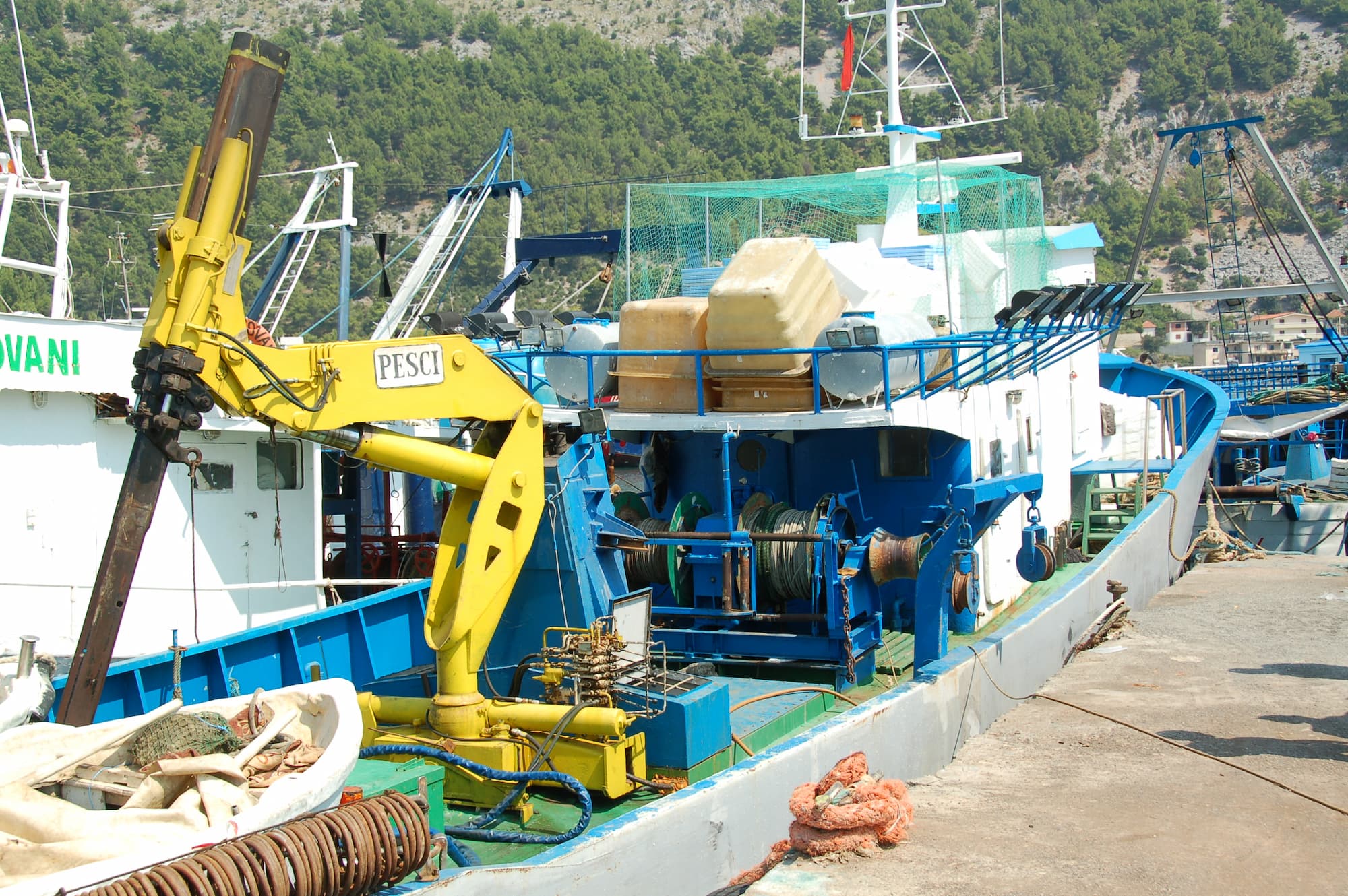
A pelagic fishing vessel in Shengjin harbour, the third largest in Albania. Pelagic vessels usually fish with lights and purse seines targeting anchovies and sardines.

The Albanian fisheries and aquaculture sector is diverse. It comprises a marine fishery, an inland fishery, freshwater aquaculture and marine aquaculture. In addition, there is a processing industry that uses domestic raw materials as well as imports to supply local and overseas markets.
The diversity of the sector in Albania owes much to the rich endowment of water resources the country is blessed with. It has a coastline of 418 km divided between the Adriatic Sea in the north and the Ionian Sea in the south (150 km). The coast also features 10,000 ha of lagoons that are used for the cultivation of fish and shellfish. In addition there is an extensive network of rivers (11 main rivers), lakes (1,210 km2), artificial lakes (7,000 ha), and reservoirs (2,700 ha).
Unreported catches colour landing figures
These assets support different fisheries and fish farming industries. Marine capture fishing is based at the country’s four ports Durres, Vlore, Shengjin, and Sarande and fishing is either industrial or artisanal depending on the type of gear that is used. Purse seins and trawls are considered industrial gear, while everything else including, hooks, gill nets, trammel nets, and fixed nets is considered artisanal. Both types of fisheries are commercial, that is, for economic purposes. The fishing fleet comprises 553 vessels almost all of which are distributed at the four ports with 38.5% in Durres, 34.4% in Vlore, 13.7% in Sarande and 11.6% in Shengjin. The vessels in general are old and poorly maintained, though a few have been refurbished. Marine fish catches including from the sea, coastal waters and the lagoons amounted to 3,690 tonnes in 2014, a modest increase of 2.5% over the previous year. However, unreported landings, which are estimated at 25-30%, mean that statistical data need to be treated with caution. Total catches have been increasing slightly each year since 2011, reflecting increases in catches from the sea and the coast. Output from the lagoons has been more unstable with significant increases in 2012, but declines in the two subsequent years. Catches from the sea amount to approximately three quarters of the total marine catches, while those from the coast contribute about a fifth.
The marine fishery is aimed at both small pelagics and demersal species. Among the industrial fishers, the small pelagics, anchovies and sardines are caught with purse seines usually using lights on board the vessel to attract the fish, while trawls are used to catch demersal species. The pelagic fish is usually sold to processors in Albania who salt or marinade the fish, but it is also exported. Some of the pelagic vessels are also used to fish tuna, which are then transported to fattening cages and ultimately sold to Japan. The demersal species include a wide range of finfish (hake, mullet, bogue, and sole); cephalopods (octopus, squid), and crustaceans (caramote prawn, deep-water rose shrimp). Some of this fish is processed locally, but much of it is exported.
Fishing illegally with impunity
Catches from internal waters, lakes, rivers, reservoirs, also increased over the five-year period to 2014, both in absolute terms and as a proportion of the total. Among the most caught freshwater species are carps (common, crucian, silver) as well as bleak, mullets and roach. The three biggest lakes are the Lake Ohrid, the major and minor Prespa Lakes, which are interlinked, and the Lake Shkoder. In the Lake Ohrid, for example, bleak and carp are the most popular species after koran (Salmo letnica), an endemic fish similar to trout. Inland waters are plagued by illegal fishing chiefly due to poor enforcement. For the Lake Ohrid 159 licences are issued, which cover a vessel and a crew of two and entitle the fishers to target a particular part of the lake. Leonard Manellari, a fisheries inspector, says that due to its popularity the koran is fished indiscriminately. Both registered and poachers take undersized specimens using nets with a mesh size smaller than allowed. The way it works is that the fisherman will work with two gears, hooks as well as nets with illegal mesh size. If he is checked by an inspector he gets rid of the illegal net and appears to be fishing only with legal gear. The only time fisheries control is effective is the period from 1 December to 1 March when all fishing is prohibited and any gear found on the lake can be seized or destroyed and fishermen found on the lake can be apprehended.
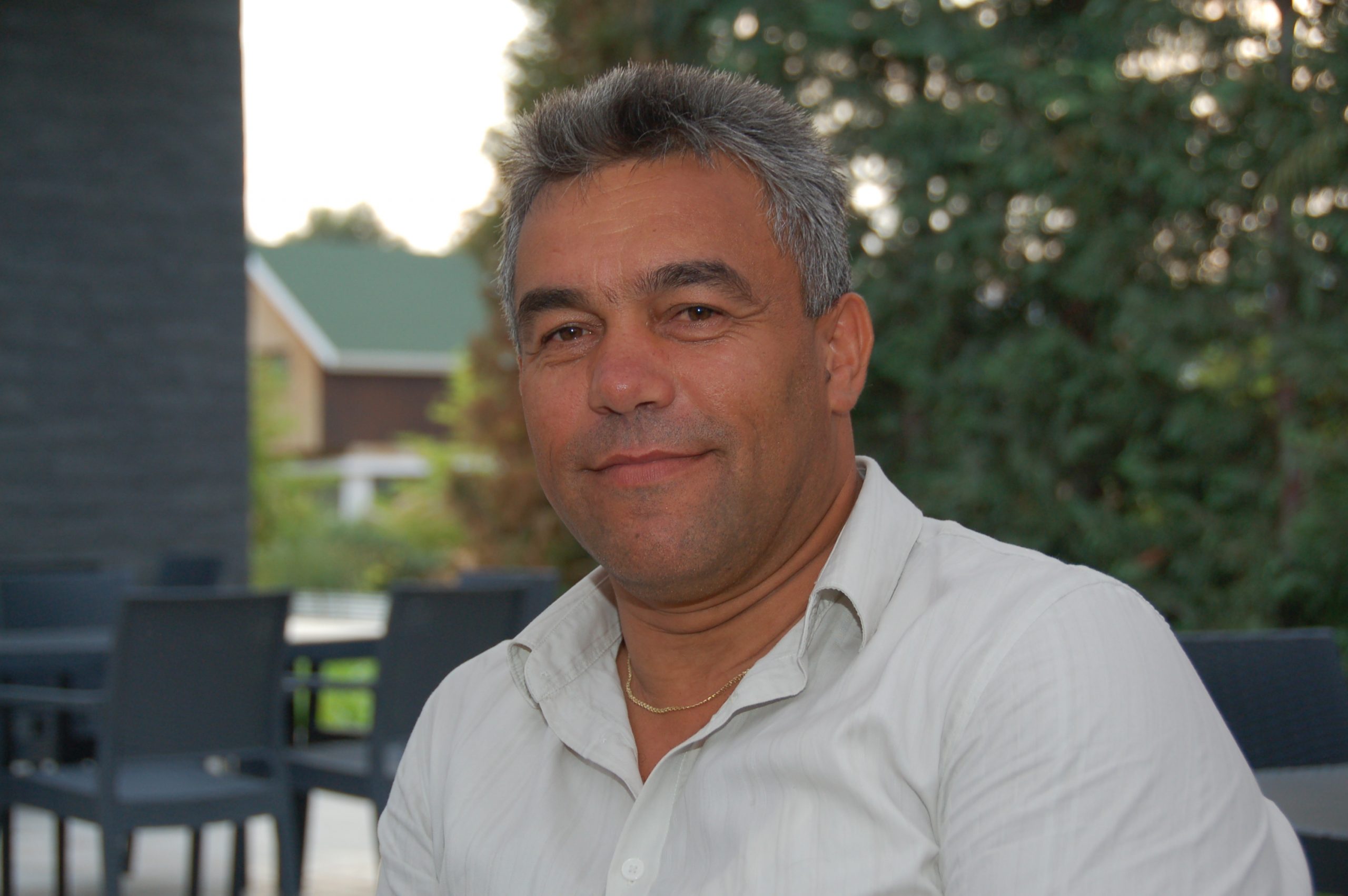
For the rest of the year, the control is carried out routinely, about once a week. More is difficult because the inspectors do not have the requisite fuel at their disposal. In fact often they are given fuel by the fishing association which has an interest in reducing the amount of illegal fishing in the lake. The control is principally at the point of capture rather than further down the chain. The fish is landed at several points around the lake and it is not possible to monitor them all, says Mr Manellari. Undersized fish in the market does get seized, but only in the period when fishing is banned and when there are several inspectors and rangers at hand to carry out this task. Part of the problem seems to be that the fishery management organisation is not as powerful as it is in other parts of the country. There is no central point where the catches are brought, nor does the Ohrid Lake FMO (fisheries management organisation) oversee prices, sales, and distribution as is the case with other FMOs. Some of this is due to the FMO itself, which seems to be a weaker organisation than the one, for example, running the Shkoder Lake fishery, but it is also due to a lack of support from the administration. It is worth noting however that of the 13 FMOs that were established with World Bank support in 2002, only five are still active including the one at Ohrid Lake. Mr Manellari estimates that illegal fishing amounts to about 25% of the legitimate catch.
Attempts to reduce poaching
The problems associated with policing the industry are not new and essentially can be traced back to a general lack of effective governance of the sector, a point underscored in the draft fisheries strategy prepared by three consultants (Poseidon, Particip, a
nd Hydra) earlier this year. It can partly be attributed to the sector’s administration bouncing between ministries creating unpredictable working conditions and a sense of frustration among the staff responsible for implementing policy. In particular the report points out that there are 22 fisheries inspectors, which is too few to provide effective monitoring and they are unevenly distributed across the country. Edmond Panariti, Minister of Agriculture, Rural Development and Water Resources, who is responsible for fisheries acknowledges the problem. The ministry has initiated steps to stem illegal fishing such as establishing a network of sensors to detect blasting (one way in which illegal fishing is practised), and developing closer coordination between fisheries inspectors and the police, but requests for more personnel are pending in the prime minister’s office.
| Fish and seafood production in Albania (tonnes) | |||||
| 2010 | 2011 | 2012 | 2013 | 2014 | |
| Marine | 2,128 | 2,287 | 2,374 | 2,681 | 2,780 |
| Coastal | 677 | 395 | 506 | 640 | 700 |
| Lagoon | 122 | 229 | 369 | 278 | 210 |
| Internal waters | 1,160 | 1,793 | 1,670 | 1,770 | 2,050 |
| Aquaculture | 709 | 1,304 | 1,250 | 1,585 | 700 |
| Mollusc farming | 1,410 | 1,300 | 760 | 750 | 1,500 |
| Total | 6,817 | 7,308 | 6,929 | 7,713 | 7,580 |
The health of the lake has improved with the construction of a landfill that diverts some of the nutrients that were ending up in the lake. This has resulted in a change to the structure of the catch over the years although the total has more or less remained the same. Bleak, and crucian carp have decreased because being the first species in the alimentary chain, they rely on the organic matter in the lake. As this declines so do the numbers of these fish. On the other hand the lower quantities of organic matter entering the lake have also made the water clearer, which is more attractive for tourists. Another change has been the number of koran eggs collected during the reproductive phase and the catches of koran, which have both increased. In the peak season catches of koran increased so much that there was a glut on the market and prices fell by half.
Mussel production increases
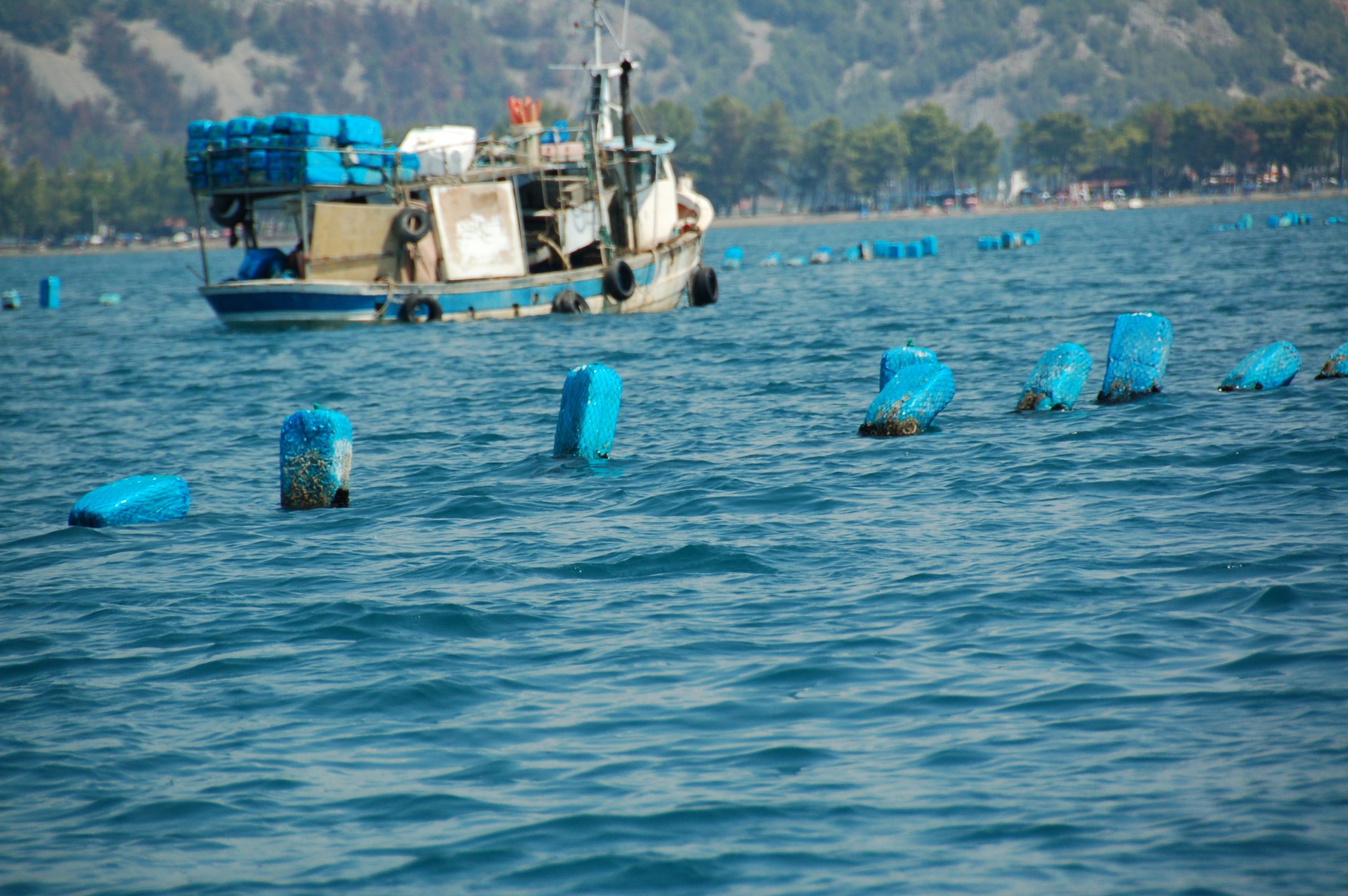
The aquaculture industry can be divided into marine farming and freshwater cultivation. Marine finfish species are essentially two, seabass and seabream which are grown in cages. There is also a significant production of rope-grown mussels that are farmed in the Butrinti lagoon and in the water off Shengjin port. Mussel production doubled to 1,500 tonnes in 2014 which roughly brought it back to the level of 2010. Mussel farming has been practised in Albania since the 60s with volumes ranging from 2,000 to 5,000 tonnes per year. Mussels from Albania were even exported to the EU until the mid-nineties when problems with disease resulted in an EU ban that has not been lifted since. The production is therefore sold locally with some exports to neighbouring countries. But the inability of the mussel industry to have the ban lifted is a symptom of deeper underlying problems in the industry. The mussel farming industry is concentrated in the Butrinti Lagoon where around 25 producers are growing mussels. According to Riccardo Germano, an Italian consultant, part of the problem is that the 25 producers are not organised in to an association. This means that they are all competing with each other and as a result lower the price of the mussels to the point where they do not have enough left over to invest. This creates a downward spiral of limited production, indifferent quality, and low prices, out of which it is hard to break. The water in the Butrinti Lagoon is classified as B grade, which requires all the mussels to undergo a period of purification called depuration before they can be exported to the EU. The depuration centre was established some years ago, but has been used only infrequently since then. Apart from the non-functional depuration centre there are capacity problems that prevent the EU from lifting the ban. Exports to the EU are contingent upon a robust system of recall that will ensure that products found to be hazardous can be traced and removed from sales channels quickly and efficiently. In addition the safety of products must be demonstrated with reliable and accurate laboratory analysis of the relevant parameters. In Albania this infrastructure is not yet in place making the lifting of the ban impossible. A group of students from Harvard University, who studied the problem found that inspectors who were supposed to enforce the law and monitor compliance with the depuration requirement would often let things slide, while central authorities attributed the lack of depuration to the volume of production, which was too small to make it profitable to depurate.
Producers should organise for better prices
According to Mr Germano producers need to organise themselves to start getting a higher price for their product. He acknowledges however the resistance there is to working together. For many Albanians working together is associated with the communist regime and so they want nothing to do with it. They cannot envisage talking together let alone developing a common sales and marketing strategy. On the other hand producers in other countries, such as the Baltic States, have managed to move beyond their visceral dislike of collaborating and have started working together realising the advantages that it can bring. If it can happen in those countries it should also be possible in Albania. Mussels from the Butrinti Lagoon are the only mussels on the market for a few months in the year, says Mr Germano, and the producers should exploit this to get a better price. They also need to invest in building a brand. These efforts would enable them to invest in better production technology thereby increasing the output. Increased production volumes would in turn be an argument to invest in the testing, tracking and tracing infrastructure that would allow the EU to lift its ban as the costs involved could be spread over a larger volume of product. A withdrawal of the ban would in turn would be an incentive to produce more as export markets open up. It may thus be possible to convert a vicious circle into a virtuous one.
Seabass and seabream main farmed finfish
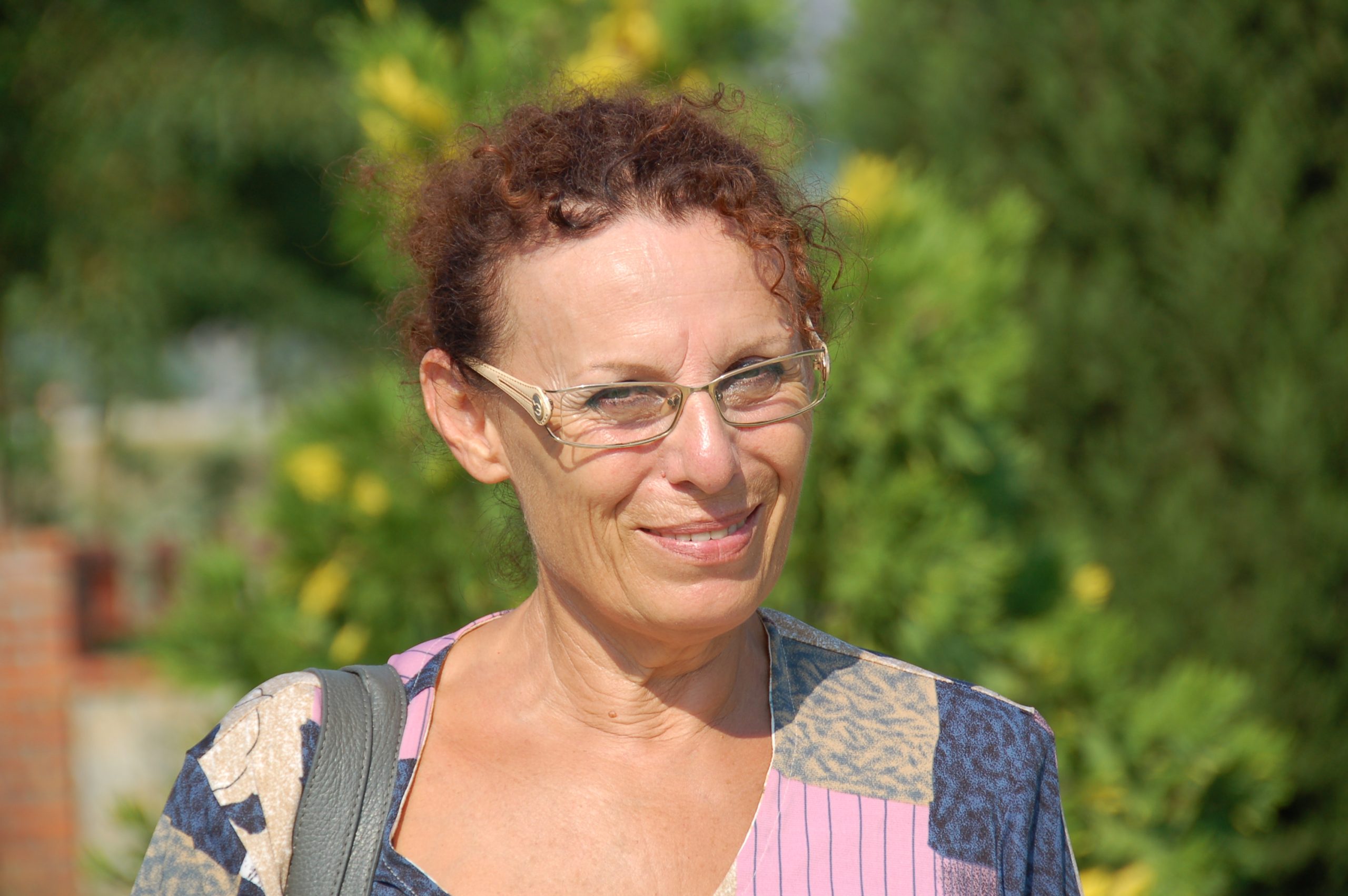
The farming of seabass and seabream in cages started about 12 years ago and reached a level of 500 tonnes of seabream and 170 tonnes of seabass in 2013 (FAO). While seabass volumes have remained more or less consistent since 2009 output of seabream has increased from 370 tonnes. A major Turkish producer of seabass and seabream is considering investing in Albania. If this project takes off it is likely to significantly boost production. Currently, says Mimoza Cobani from the Ministry of Agriculture, domestic production covers about 40% of the demand. Other finfish that are farmed include rainbow trout and carps. Trout is typically farmed in raceways in small to medium family-run establishments that sell their production on the local market. Water for the farm is drawn either from a river or spring or a reservoir. Many of the trout farmers are found in the hills in the south western part of the country, but farms have also been established in the north and east. Production in 2013 was 250 tonnes.
New standards for lagoon production
The eight coastal lagoons have a combined area of about 10,000 ha. Of these the Butrinti Lagoon is the deepest (ca. 11 m) and with the most stable environment. The others are more shallow (ca. 1 m) and have seasonal and even daily variations in their physical parameters, temperature, salinity, degree of silting, as they have narrow connections to the sea that allow water to flow in and out due to the action of the tides and the wind and which can get blocked. All the coastal lagoons are delicate water bodies that at the same time play a very important role in erosion prevention, flood control, and also support fisheries for a number of valuable species including seabass, seabream, eel and mullets. The sensitive nature of the lagoons is among the reasons why the Ministry of
Agriculture, Rural Development and Water Resources is encouraging users, both farmers and fishers, to subscribe to new standards of production that will protect the lagoon environment and possibly increase output. Production from the lagoons amounted to about 200 tonnes in 2014, down from 370 tonnes in 2012 a decline that could be due to overfishing, poor management of the lagoons, or the impact of neighbouring land use. This figure does not include the mussel production from the Butrinti Lagoon.
Salted anchovies, mainstay of seafood exports
Albania has a fish and seafood processing industry that produces for the domestic market as well as for export. The raw material used by processors is locally caught demersal and pelagic wild fish, in addition to imports, the most important of which are semi-processed anchovies, cuttlefish and squid, as well as, shrimps and prawns. The main source of imports are Spain, Croatia, Italy and Greece, but companies also import from Latin America and Asia. Anchovies, whether caught locally or imported, are typically processed, packaged and exported as there is no market for them in Albania. They are Albania’s most important seafood export both in terms of volume and value. Italy, Spain, Greece, Serbia and Macedonia are the primary destinations for Albanian exports. Processing companies are usually located close to one of the main ports to facilitate logistics. Companies either have their own fishing vessels or have contracts with fishermen to secure their supplies of local raw materials.
The Albanian fisheries and aquaculture sector faces a number of challenges. These include the need to strengthen policy development and implementation, build infrastructure in harbours, establish and enforce quality and environmental standards particularly with regard to mussel cultivation. Enforcement by fisheries inspectors as well as systematic data collection are also areas where efforts and investments are needed. On the other hand the sector can also legitimately claim to be moving forward. Consumption of fish and seafood in Albania is increasing, several companies are successfully exporting their products, while others are planning to start, some foreign companies see potential in investing in Albania, and, perhaps above all, as an EU candidate country the administration is committed to fulfilling its obligations.