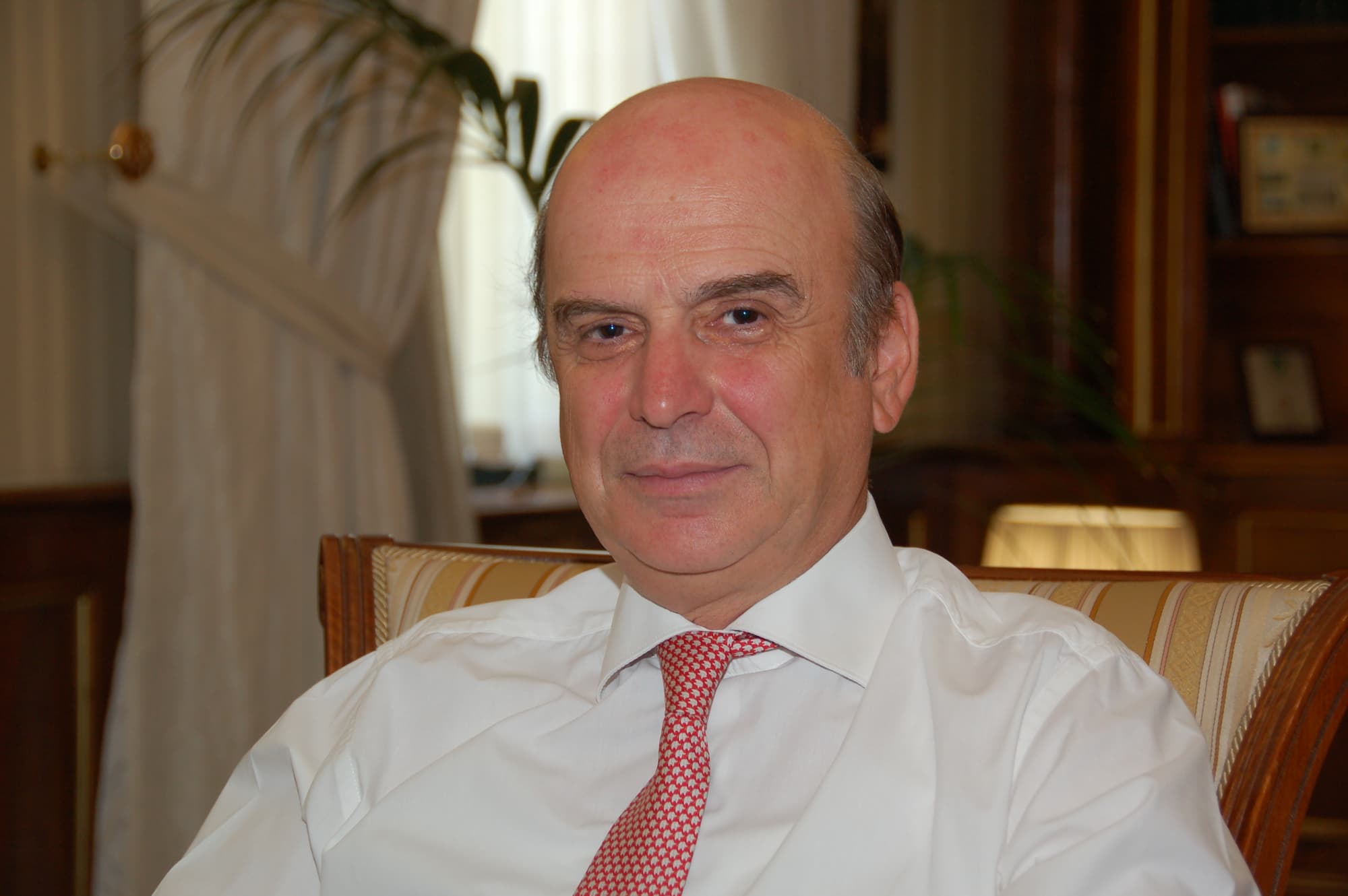
Professor Edmond Panariti, Albania’s Minister of Agriculture, Rural Development and Water Resources

Although a career academic, Professor Edmond Panariti, is no stranger to politics having served in the Tirana municipality before becoming first Minister of Foreign Affairs in 2012 and a year later Minister of Agriculture, Rural Development and Water Resources, a position he has held since. As the person ultimately responsible for the administration of the fisheries sector in Albania, Professor Panariti has several ideas to increase productivity and efficiency.
Three years ago the Fishery Management Organisation at Lake Shkodra complained about the problem of illegal fishing. What improvements have there been in the situation since then and what efforts are being made by the administration to improve it, not only in Lake Shkodra, but more generally?
This issue has attracted my attention since I have been here at the ministry. In the last two years we have experienced a dramatic decrease of illegal fishing, whether by blasting or by other means. However, we are also establishing monitoring systems with acoustic sensors in high risk areas so that blasting can be identified immediately and reported to the competent authorities. Now the project is ready, we are looking for some sources of finance, but I do not foresee a problem because the overall cost of the project is not that big.
The sensors are linked with a central monitoring station that informs the Fishing Inspectorate, but also the police if there is an incident. Blasting is a criminal offence because these explosives apart from destroying the environment and illegally killing fish are also life threatening for others in the vicinity.
Another important step was the ban on the collection of dateri shell mussels, a bivalve, the collection of which causes massive damage to rocks and corals as divers use hammers and chisels to retrieve them. The ban is strictly monitored and the monitoring extends also to restaurants. If they are caught serving the product they are fined and can even be closed down. So these are more or less some of the measures that we are right now taking against illegal fishing.
According to the sector the problem is not so much the lack of legislation as the inability to enforce it. Has this improved?
This is absolutely right. That is why I think enforcement is not simply something which can be dealt with by the Fishing Inspectorate, but also that the police should be involved. We need concerted action involving different authorities to be successful. So I have approached the Ministry of Interior to ensure the police are also involved in cases of blasting or other illegal fishing methods.
These steps are certainly important, but they take effect only after an incident. What about the day-to-day enforcement, where fisheries inspectors go out and monitor what is happening and make their presence felt in the fishing community, so that the risk of an incident is reduced?
Yes, we need to increase the number of fishing inspectors so that they can cope with the monitoring activities under which they are charged by law. That is why I have requested the prime minister for more human resources for the Fisheries Inspectorate to deal with all these issues. Inspectors have to monitor the fishing practices, the kind of instruments (fishing gears?) that the fishermen use, whether they are law abiding, what kind of standards is put in place in order to ensure that fishing reserves will be protected and the environment safeguarded.
We normally issues banning orders for fishing, in periods when there is reproductive activity. However, it is not enough to issue the order; it is also a question of executing it, of monitoring whether it is respected. There are two sides to this story: first we need to train and to have competent authorities that ensure that this ban is respected; on the one hand we need also to make fishermen aware that destroying the fishery reserves by fishing during the ban is not in their interests. That is why we have to work in two directions: better training for the inspectors and boosting awareness among fishermen that it is in their interests to protect the species, the environment, and to respect the ban.
This information, this awareness creation for the fishermen, making them aware that this is damaging for their own future and the future of the stocks and so on, what sort of…
In this respect we are trying to restart a school for fishermen in Lezhë in the Shengjin area, where fishermen and other professionals dealing with fisheries will be trained in different aspects of fishing including sustainability, best practices, and the importance of respecting the environment. I anticipate that we will get support from the EU and also from France to establish this school. France is going to assist Albania with several fish-related projects, such as creating wholesale markets for fish, building docks for repairing vessels, and establishing the necessary standards which need to be adopted by the vessels.
Albania has been a candidate country for the EU since the middle of last year. How far has your ministry come with aligning domestic legislation with EU requirements?
As a matter of fact we are very advanced in adopting legislation; transposing EU paragraphs and directives into our legislation is not complicated and from that perspective things are progressing well, but the problem is ensuring the capacities to implement these directives.
However, we need to be careful to ensure a grace period, so that the fishermen can also increase their capacities and invest in creating the appropriate structures that will allow EU directives to be implemented. Of course there will be a deadline, which the fishermen will have to respect if they want to stay in business. But the grace period will allow the EU directives to be gradually implemented at all levels of the sector, the vessels, the distribution and the industry.
What are the main objectives of the recently developed strategy for the Albanian fishery sector and what are your priorities?
We have finished preparing the Fishery Strategy for Albania, in the framework of a EUROPEAID contract. Once approved by the Government, it should represent a commitment by the government to a course of action, but I do not like the word strategy; I prefer action plan. This is how I see things, an action plan with clear cut objectives. As a matter of fact we have some short term objectives. First, regarding the mussels, which Albania has been banned from exporting since 1995. We would like to resume this export. It is something which now we know can be attributed to bad management of the Butrinti Lagoon. All the legislative aspects are in place, such as EU directives for monitoring the quality of water, for the quality and safety of mussels etc. What is now hindering exports is bad management of the lagoon; we are trying to change that. I have alerted all those people who are actually using the lagoon for collecting mussels that if they want to go on with this activity they have to respect a set of standards
. They need to ensure the health of the lagoon, they have to monitor the quality of water, they need to send all their production to the depuration centre, and all these terms will be part of a contract which they have to respect if they wish to continue their activity.
We intend to open a new tender for which everyone can apply, but only the ones who are able to demonstrate that they can respect the new standards of management, which are not only economic but also environmental, will benefit, while the rest will be out of business. Observing these standards is important also because this is a tourist area and we want to preserve the environment here and ensure a sustainable production. The contractors will also have to invest in a new depuration centre with more capacity than the existing one and all the mussels that come from the lagoon will first have to be depurated as the water in the lagoon is classified B. With this new management regime I am optimistic that we will be able to call for an inspection from the EU, from DG Sanco to determine whether we can be permitted to export.
Another ambition of mine is to get the industry that is processing anchovies and sardines to use the domestic catches of these species rather than imports. I am also interested in stimulating the aquaculture industry to augment the domestic supply of fish as volumes from capture fisheries are unlikely to increase.
We also need to establish wholesale markets for fish and seafood and we are starting with one in Lezhë and another in Durres. These markets should function transparently if they are to work properly, setting prices for the fish and providing an organised offer for retailers and other buyers. Fisheries Management Organisations play a role here as their members catch the fish and supply the market.