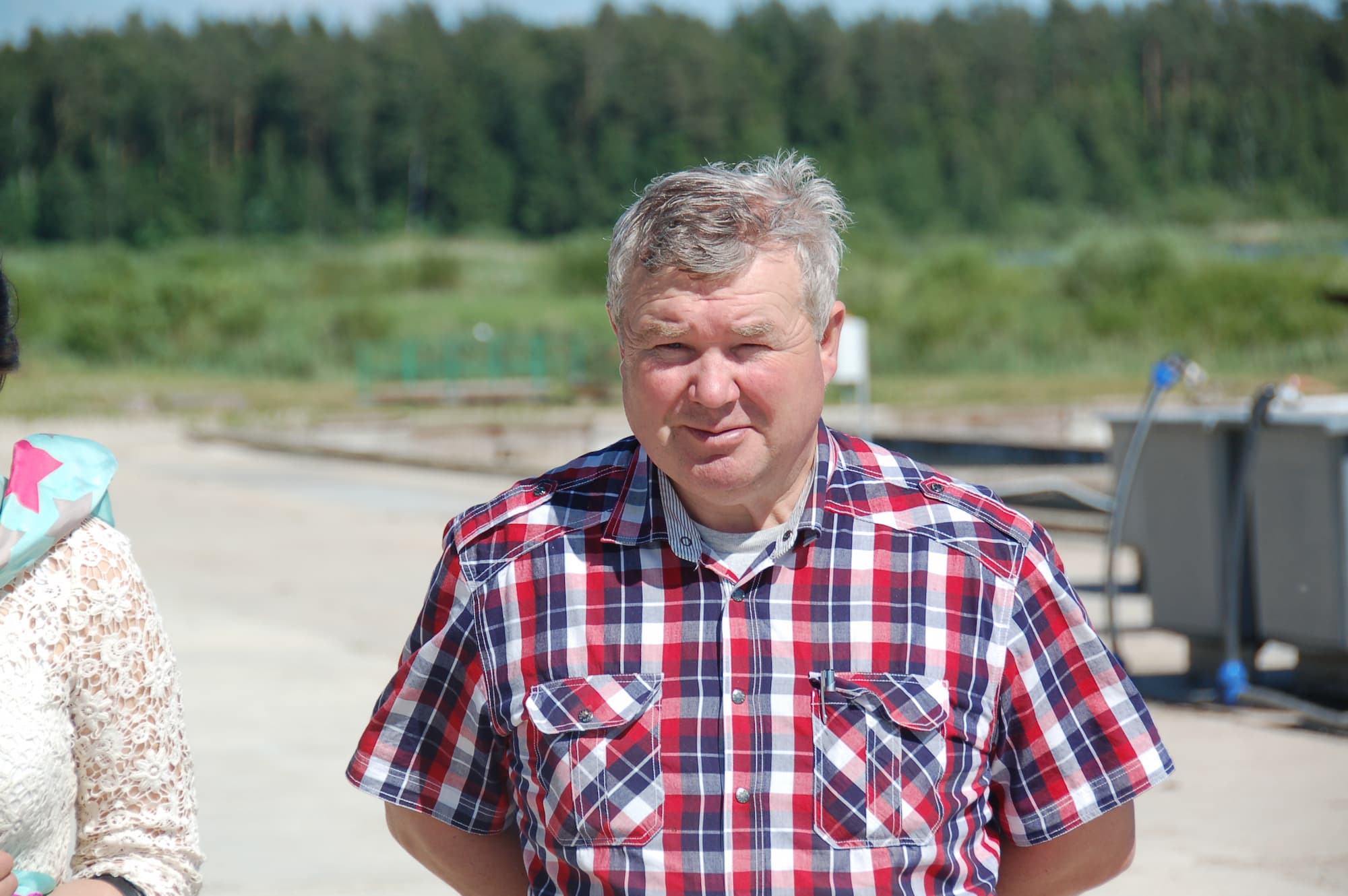
Algirdas Siukscius, Director of Vasaknos

Lithuanian aquaculture production is predominantly common carp, which amounts to about nine tenths of the output. The remainder comprises a number of species including rainbow trout, other carp varieties, sturgeon, eel, and catfish that are grown in different production systems. Further down the value chain sales of live fish are being replaced with more value-added products in response to changes in consumer demand.
The Zarasai district in eastern Lithuania along the border with Latvia is known as Lithuania’s lake district with over 300 lakes and ponds and eight rivers. Four of the country’s biggest lakes are in the district as well as 20 man-made water bodies contributing to a total water surface in the district of 166 sq. km. The abundant water is reflected in the diversity of aquatic life found in Zarasai. In terms of fish, 28 species inhabit the water bodies in the district. The abundance of water has made Zarasai an optimal site for the fish farming company Vasaknos, which draws water from one of the rivers to breed two species, rainbow trout and sturgeon.
More value addition and greater product variety
Vasaknos has been rearing these species for many years, says Algirdas Siukscius, the director, taking water from the river using it on the farm and finally returning it to the river again. Like most fish farms in Lithuania the production was sold live for local consumption until the European Fisheries Fund, the forerunner to the European Maritime and Fisheries Fund, offered a route to a greater variety of products with a higher degree of value addition through its support for Fisheries Local Action Groups (FLAGs). These groups brought together representatives from companies, NGOs, local administrations, and other interested parties to formulate a development plan for the area that included concrete measures to improve the local economy. Under this programme, Vasaknos, as a member of the Zarasai and Visaginas region FLAG, implemented two projects. We decided to put up a small processing line, says Mr Siukscius, to fillet the fish, as well as installing equipment to package and freeze it. Although it is the most important company in the region, with over 40 employees, Vasaknos could not get support for its expansion plans unless it was part of the FLAG.
For the FLAG the projects were interesting because they boosted employment in the region, which was one of the ambitions of the FLAG strategy. The company has 480 ha of carp ponds, and also breeds trout and sturgeon in raceways. The water feeding the raceways is drawn from the Sventoji river and thanks to the geography of the terrain all the water flows through the farm with the force of gravity. We do not have to pump the water, says Mr Siukscius, which is a major advantage as it saves on investments in pumps and on the running cost of electricity. The projects called for an investment of about 400,000 euro of which less than a quarter was support from the European Fisheries Fund while the rest was invested by the company. Implementation of the two projects was completed at the start of this year and all the new equipment has been tested and has been used in the production for the last three months. Each year the company produces 500 tonnes of carp and 100 tonnes each of sturgeon and of trout. Before the installation of the new machinery, the company was selling its production fresh and live. Because consumption of live carp in Lithuania is quite low, most of the production was exported to Poland, which was not a very profitable market thanks to competition from local producers. It was in part these circumstances that compelled Mr Siukscius to consider adding more value to his production. Within Lithuania live carp was losing popularity because of the lack of convenience. Now, however, with the new machinery, Vasaknos can fillet the carp, cut the small bones that are present in the fillet, and supply a ready-to-cook product.
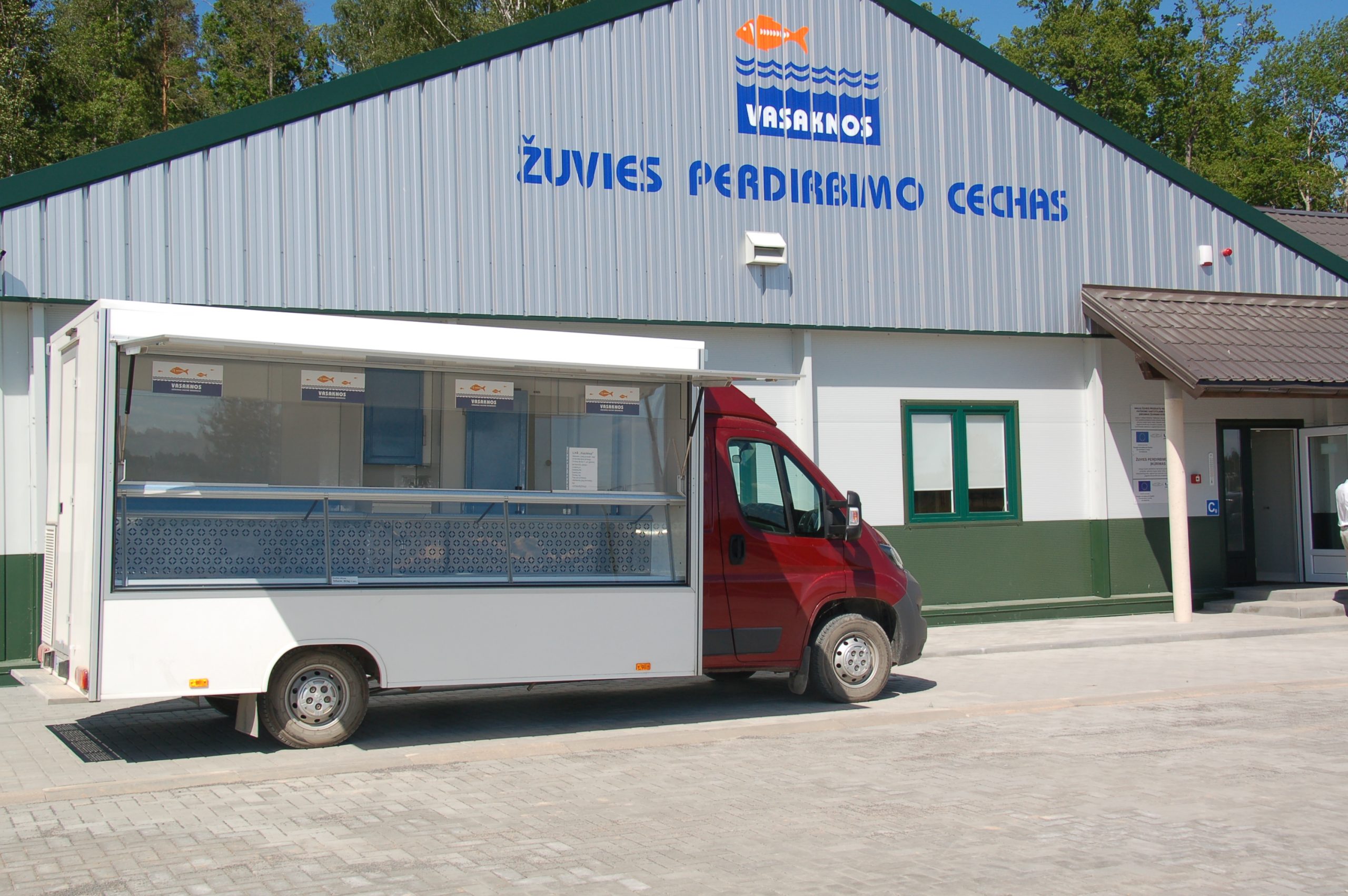
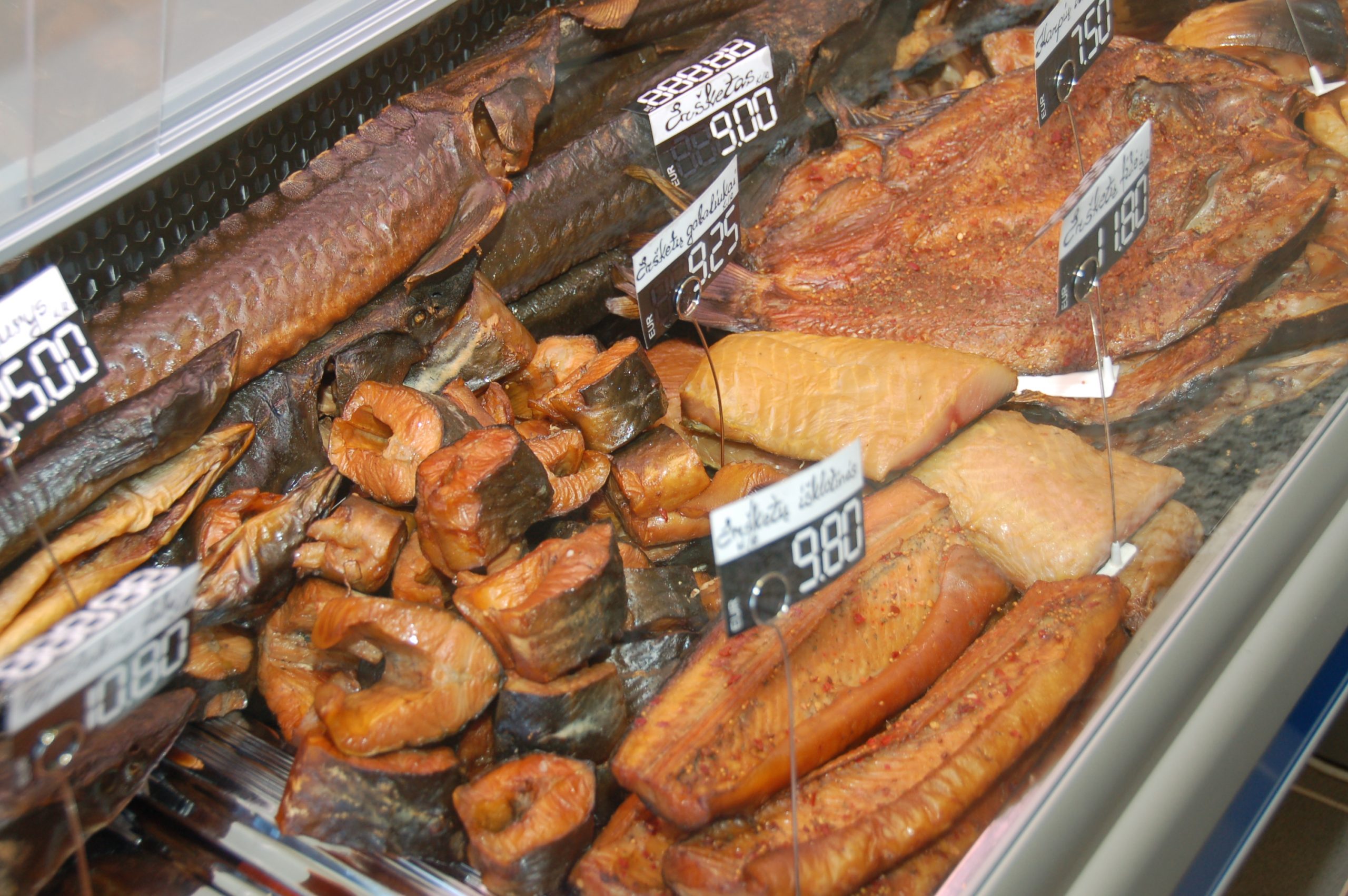
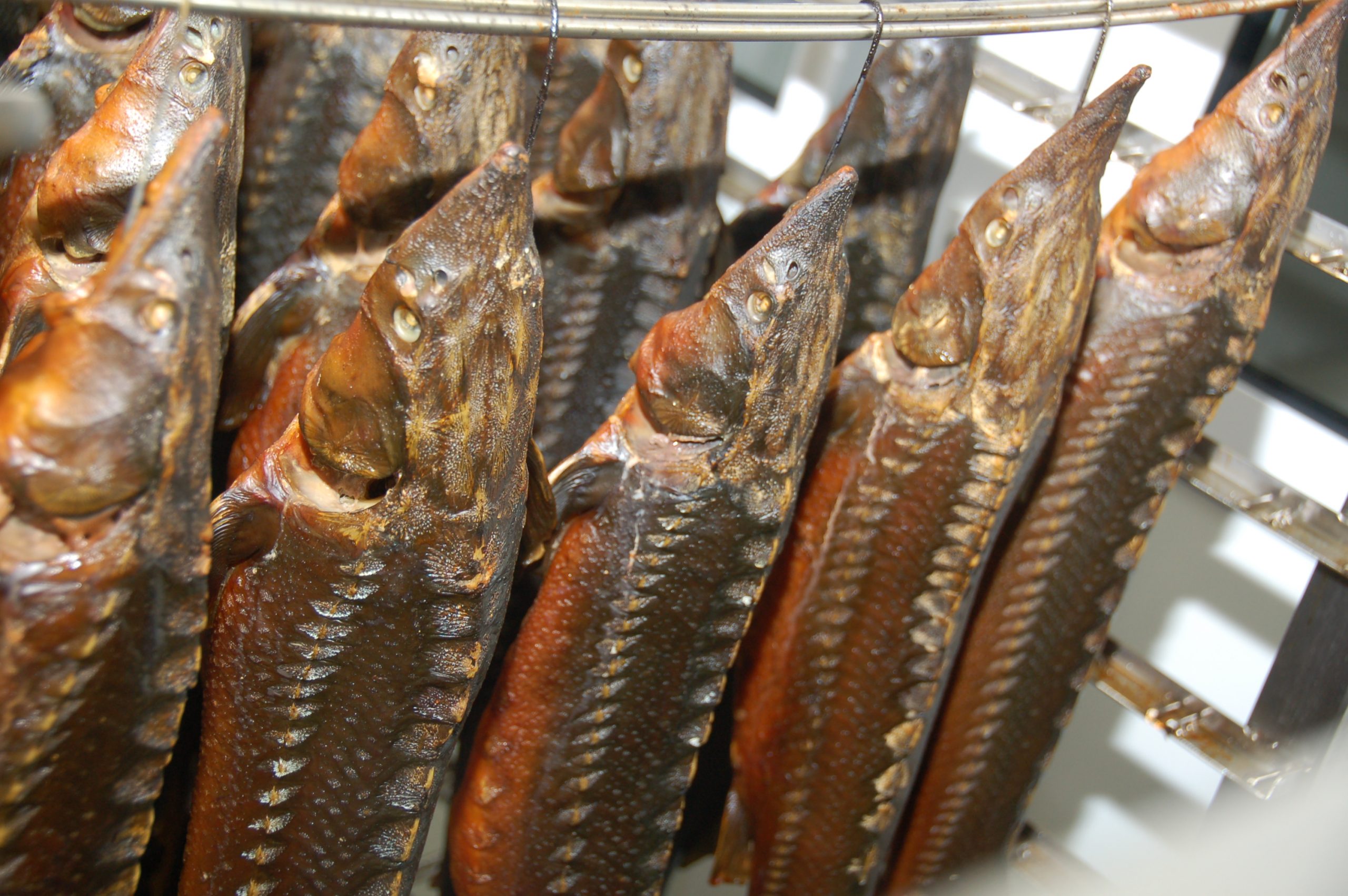
The company’s distribution strategy is to use mobile shops which can be parked at convenient places – fresh produce markets, areas where people congregate such as matches or concerts – and sell the production. We do not want to enter into agreements with the retail chains yet, says Mr Siukscius, as their margins make the fish too expensive. If we take care of the sales and distribution we can offer the same product, but at a lower price. This is a development we have also seen in Poland. In addition our production is still too small to be interesting for a supermarket, which needs large volumes. Vasaknos also has smoking units where different fish, trout, sturgeon, vendace, carp etc, are smoked whole, or as steaks or fillets. Currently the processing facility is processing about 600-700 kg of fish a day, but the processing activity only started three months ago and distribution channels are still being developed. Currently the smoked fish is produced exclusively from fresh raw material as the production has not yet reached the level when the volumes of raw material are so large that it needs to be frozen. But in anticipation of the day when this will be necessary the company has built freezers to store the raw material. The fish (trout, sturgeon, and carp) is de-scaled, headed, gutted and washed mechanically. It then proceeds to a machine that fillets it and removes the centre bone. All the waste is sold for the production of mink feed.
| Vasaknos | |
|
Zarasai District Tel./Fax: +370 385 56165 Director: Mr Algirdas Siukscius | Activities: Farming, processing Farmed production: Carp (500 t), rainbow trout (100 t), sturgeon (100 t) Processed products: Hot and cold smoked fish Packaging: Vacuum packaged, MAP Current processed volumes: 600 kg (raw materials) per day Markets: Lithuania Fleet: Mobile shop Employees: 41 |
Because of the small bones that are found in carp fillets these pieces go through yet another machine that cuts these bones into almost unnoticeable pieces. Today the company produces mainly smoked products, though it can also produce vacuum-packaged, and modified atmosphere items. Before smoking the fish is soaked overnight in a salt solution and then rinsed and finally laid on trolleys that go into the smoking ovens. Products are both hot-smoked and, since the last week, also cold-smoked. Hot smoking is more efficient as it takes only four hours, while cold smoking takes at least 12 hours. After the smoking the fish is allowed to cool before being packaged. Vasaknos is still selling small volumes of its original products, but now instead of whole live, it is headed fish, which, for the consumer, is much is easier to deal with.