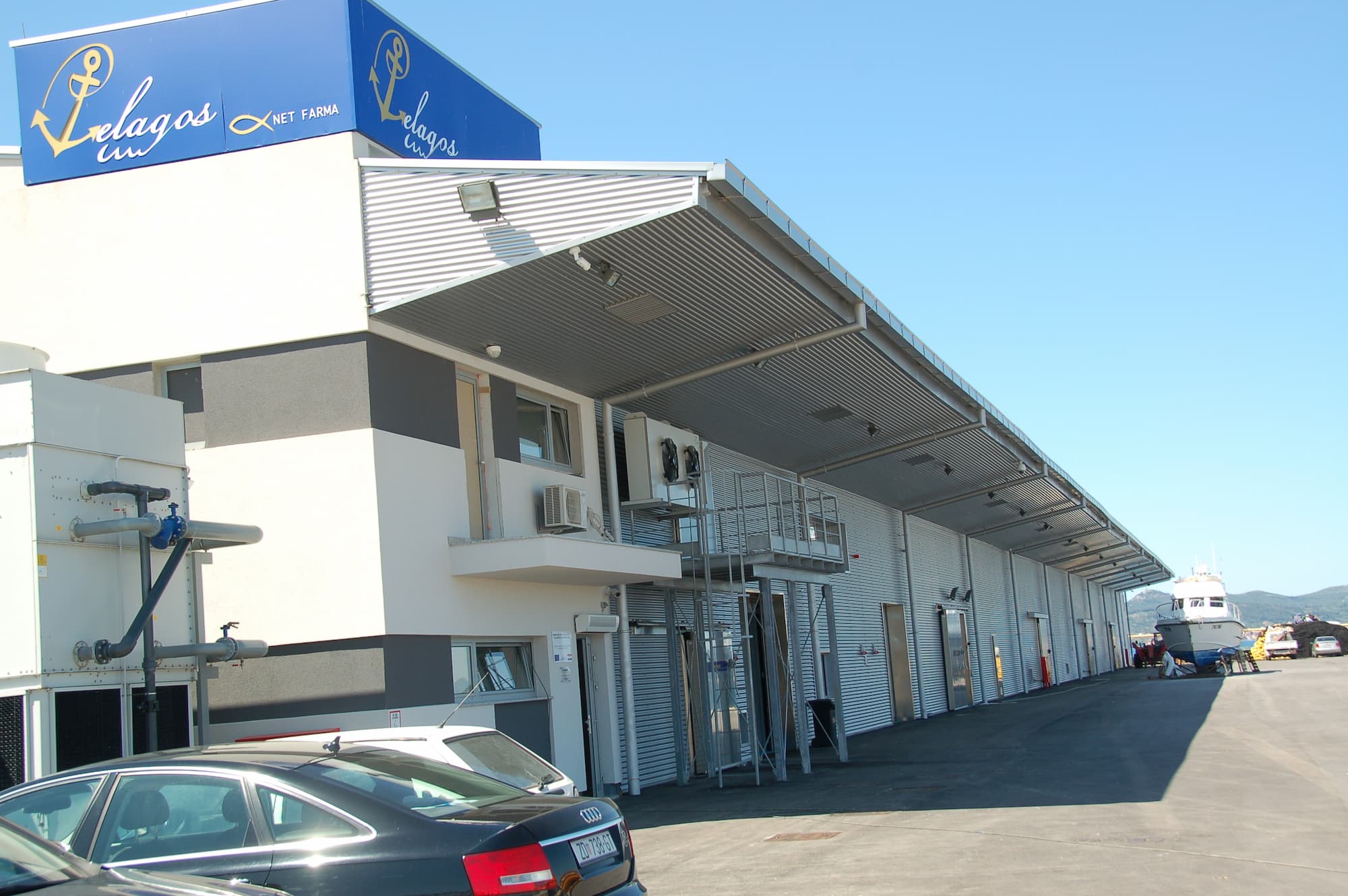
A new cold store to hold the frozen small pelagic feed for the tuna was completed at the end of last year.

The capture-based aquaculture (fattening) of bluefin tuna (Thunnus thynnus) is a well-developed activity in the Mediterranean.
Encouraged by the seemingly insatiable demand for the fish in Japan companies in several countries around the Mediterranean, including Spain, Malta, Italy, Turkey, and Croatia capture wild tuna, fatten the fish in cages and harvest them when they reach a certain weight for export to Japan.
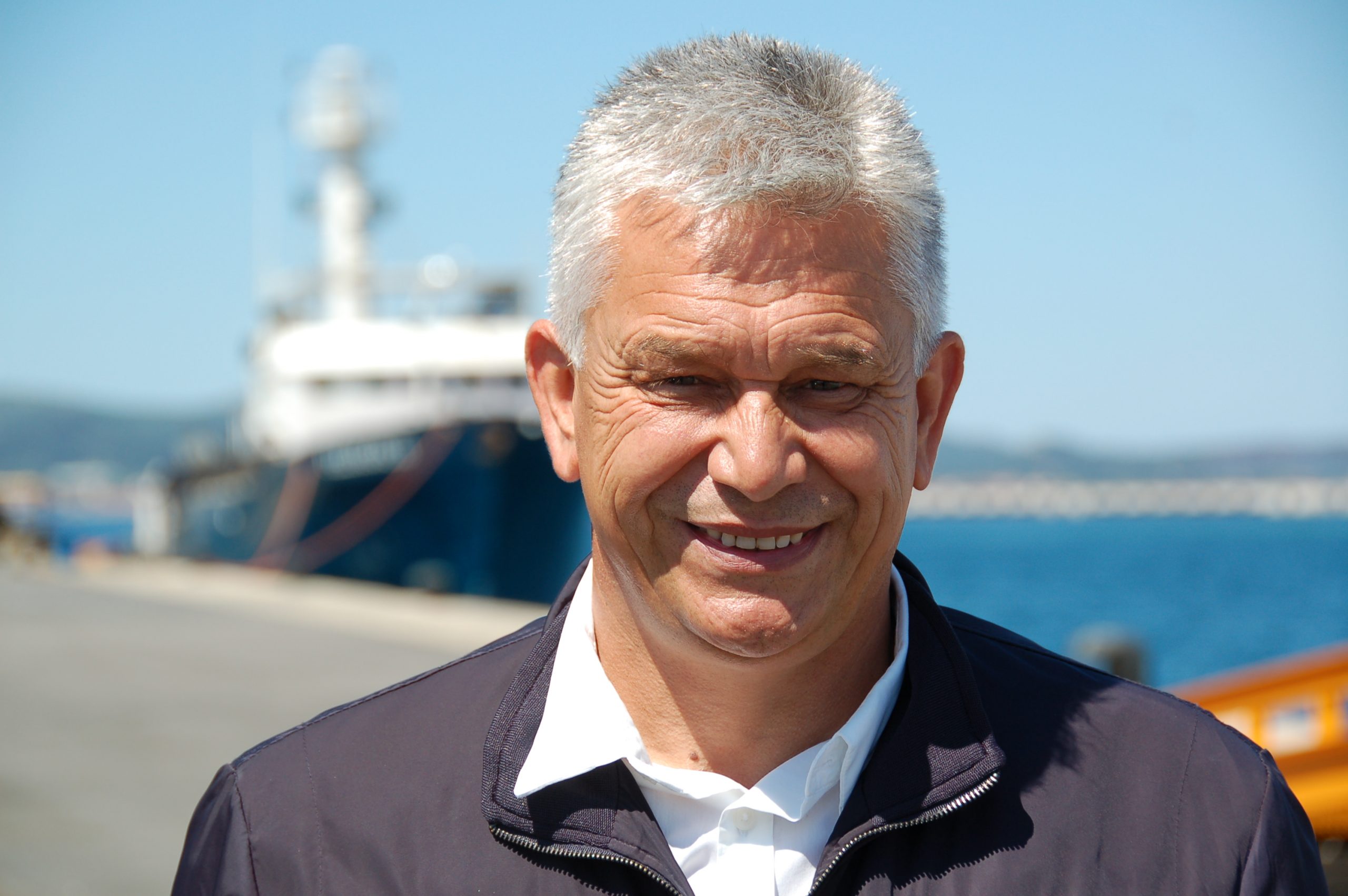
Recovery plan and strict control revives tuna stocks
The bluefin tuna fishery is regulated by the International Commission for the Conservation of Atlantic Tunas (ICCAT) to which the EU is a contracting party. The fishery has a checkered history with stocks falling to levels that triggered the adoption of a recovery plan for the species in the Mediterranean and the Eastern Atlantic in the latter half of the 2000s. The plan has subsequently been tightened several times with the addition of increasingly stringent control measures. These seem to have had an impact because in 2014 a positive stock assessment by ICCAT scientists resulted in a 20% increase in quotas per year for the next three years (2015-2017).

Croatia currently has four companies involved in the tuna fattening business. Pelagos Net Farma is based in Biograd some 30 km away from Zadar, where the company has just completed the construction of a storage facility for the frozen small pelagic fish that it uses to feed the tuna it farms. Pelagos has also benefited from the increase in quotas, which went up from 86 tonnes in 2015 to 100 in 2016. Nenad Horvat, the director of Pelagos Net Farma explains that tuna fattening companies are limited not only by the quota but also the effort, as fishing this quota is restricted to a 30-day window between 26 May and 24 June. Tuna are typically caught using purse seines with minor quantities of fish caught with tuna traps. As tuna tend to school by size the purse seine is a very efficient method of catching the fish and, importantly, is the only way to transfer the captured fish to the transport cages that are used to move the fish to the final on-growing cages. ICCAT rules stipulate that the fish have to be over 8 kg in weight (or 75 cm) when they are captured, and have to be grown to a minimum of 30 kg before they can be sold.
Fish grown to a minimum of 50 kg
At Pelagos Net Farma the fish are grown for a minimum of 18 months and sometimes even 30, says Mr Horvat. This means that the fish that are caught in the 2016 season will be sold at the end of 2017 or the beginning of 2018 at which point the expected weight will be over 50 kg. Most of the fish we capture are around 10 kg in weight because the schools that we target usually comprise fish of around this weight, Mr Horvat explains. This time of the year is the spawning season and most of the adult fish are leaving the Adriatic Sea to spawn in the Balearic Sea, the South Tyrrhenian Sea, and in the southern Mediterranean. The young fish that are targeted by the Croatian vessels tend to congregate in the waters around the island of Jabuka some 50 nautical miles from Zadar. The company was established in 2013 and Mr Horvat joined it from a demersal fish catching and processing company. Pelagos owns two fishing vessels the Pelagos 1 and the Pelagos 2, which fish for tuna during the season and over the rest of the year they target the small pelagic fish that is used to feed the tuna. In the season when anchovy prices are twice that of sardine’s, any anchovies caught by these vessels are sold to processors rather than used as bait for the tuna. However, in part of December and all of January there is blanket ban on fishing for sardines as this is the spawning period.

Since its inception Pelagos has gradually increased its tuna quota each year. Starting with 36 tonnes in 2013, which it bought from the market, it moved to 65, then 86 and this year will be 100 tonnes. Production is growing no doubt, says Mr Horvat, but in the meanwhile prices are falling too as the market responds to the availability of larger volumes of tuna. Pelagos has just completed the construction of a new cold store of 3,600 sq. m with a current capacity of just over 1,600 tonnes. The freezing equipment, some of which comes from Denmark, has a capacity of 80 tonnes in a twelve-hour shift with temperatures reaching -45 degrees. The entire system was put together by a local company using equipment from around Europe. One of the engineers maintaining the system calls it one of the best he knows. The gas used for the freezing is carbon dioxide, a more environmentally friendly refrigerant than the currently used alternatives. However, carbon dioxide systems due to their greater complexity and the higher pressures at which they operate tend to be more expensive. The environmental benefit was one of the main reasons behind choosing this system and the project received support from the European funds, which was also helpful.
The company does not just rely on its own vessels for the small pelagic feed for the tuna, but also imports about a fifth of its requirement. This is mainly herring which is chosen because of its high fat content, and is imported from Sweden.
Results of environmental impact assessment awaited
Pelagos Net Farma’s cage facilities are located some 12 nautical miles from Zadar. Today Pelagos has eight cages at the site and is waiting for the conclusion of an environmental impact assessment (EIA) being carried out by the state after which if there are no objections the number will increase to 12. The company has a license for 600 tonnes of tuna for its farm per year and if all goes well with the EIA, there is a theoretical possibility to increase this to 1,500 tonnes. But being able to produce that volume depends primarily on how the tuna capture quotas evolve. For the moment, says Mr Horvat, we can produce some 500 tonnes and next year perhaps some 20% more. Companies catching tuna in order to fatten it are very clos
ely monitored. During the fishing season independent observers on board the vessel monitor the capture and transfer of the fish. The fishing operation has to be approved by the authorities and cameras record the fish transferring and counting procedures. The Croatian quota is 551 tonnes and over 90% is distributed between four purse seining companies while the rest is for hand lines and angling. These companies tend to collaborate to some extent as there are common interests, for example, in the sustainability of the stock. Pelagos cooperates particularly closely with Jadran Tuna as the two companies share owners.
| Pelagos Net Farma | |
|
Vukovarska 86 Tel.: +385 99 2731180 Director: Nenad Horvat | Quota: 100 tonnes Farm capacity: 600 tonnes Net cages: 8 Cold store capacity: 1,600 tonnes Purse seiners: 2 (40 m and 31 m) Employees: 43 |
The recovery plan for bluefin tuna seems to be working which is good news for the tuna stock and by extension also for the companies that are fattening the fish. The challenge now is to counter the fall in prices that the increased supply of tuna brings, perhaps with greater value addition, new markets, or improved service.