The proximity of the fishing grounds means that fish is landed very fresh and can be processed or frozen immediately.

Small pelagics are an important component of the Croatian fishery and processing sector. Sardines and anchovies are the main small pelagic species that are caught and processed into a variety of products intended for the domestic market as well as for export.
A number of Croatian companies are involved in the production and processing of sardines and anchovies from the Adriatic, fish which connoisseurs find quite different from similar species in other parts of the Mediterranean or the Atlantic. These are often caught and processed the same day, typically salted or marinated, to give a product that has all the benefits of being produced from fish that was caught a few hours before it is processed.
Raw material from three to four vessels
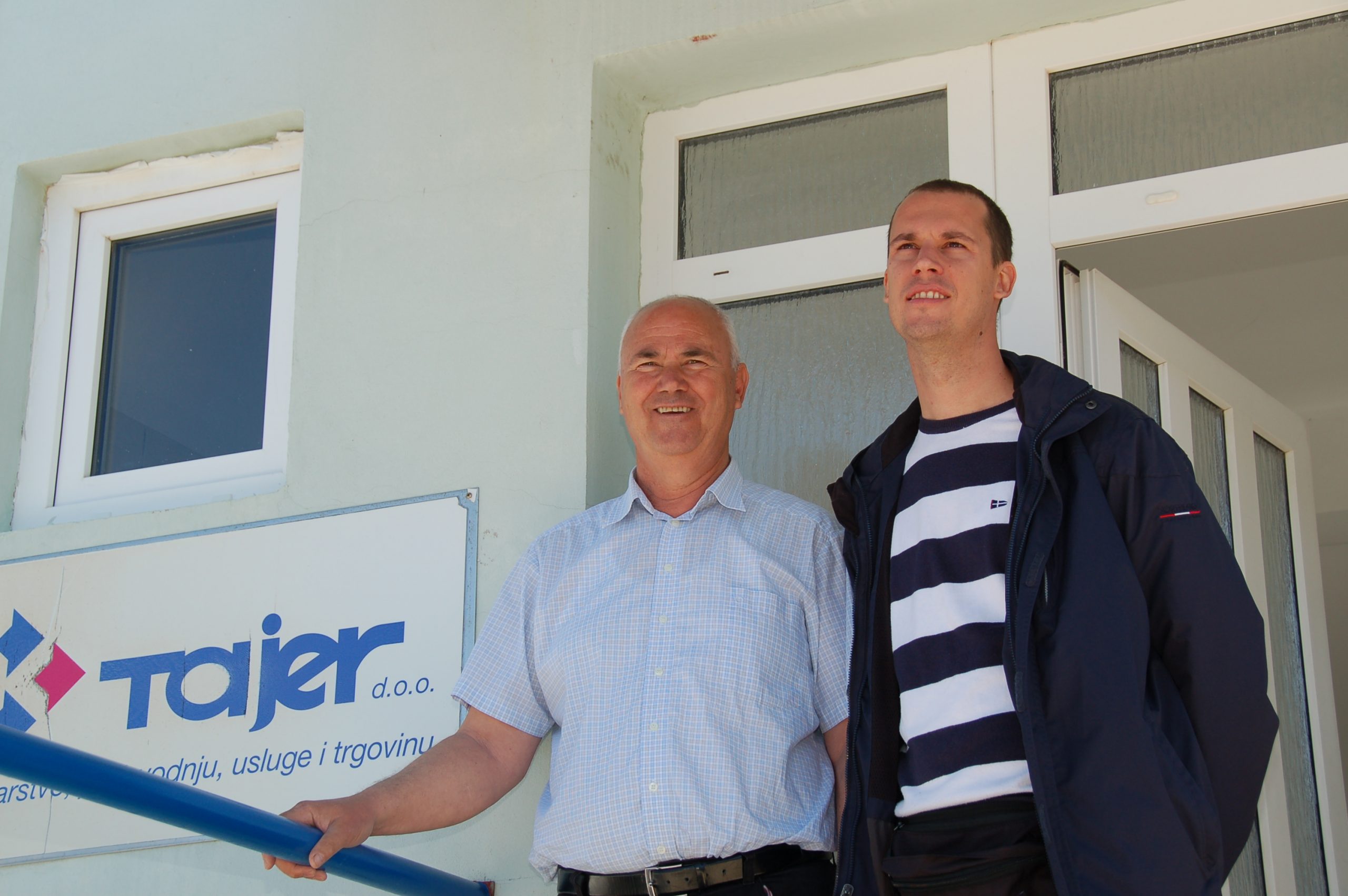
Tajer is one of the companies on this market. Started by Zeljko Spralja, a serial entrepreneur in 1991 the company started in the local fish trading business before establishing a processing facility in 2008. Today the company has grown too big for its current premises and is now in the process of building a bigger facility to expand the production. Tajer owns one vessel that supplies the processing plant with raw material. This supply is augmented with catches from three or four other vessels with which the company has agreements. The catches are mostly of anchovies, and the volumes have been going up so that Tajer no longer has the space to store the product and is therefore planning to move its operations to an industrial estate, Policnik, some 15 km inland from Zadar.
The new facility will also allow the company to freeze and store the raw material that does not get processed when it is landed. Currently, with the maximum capacity, we only work during the anchovy season, a period of three to four months, processing fresh fish, says Mr Ivos. Fishing for small pelagics is influenced by the moonlight. Vessels are equipped with lamps that aggregate the fish at night making them easier to catch. This however works only when there is little or no moonlight. This fact combined with the closed seasons when the fish are spawning substantially reduce the number days that fish can be caught to a relatively brief period. Being able to store the fish is necessary for a processor to work independent of the fishing season. The new facility will enable us to freeze and store the larger amounts of the raw material so that we can process fish and supply our customers all year around. The plan is ultimately to move all the activities from the old facility to the new one.
Salted anchovies can only be manually filleted
Tajer is very much a family owned business. Mr Ivos has two sons, one of whom works on board the company’s vessel while the other is the production manager in the processing facility and, he confides, when they are interested in something then I get interested too. The new processing facility is being built with the assistance of a consultant, Dr Neven Bosnic, who has many years of experience in the small pelagics processing business. One of the products being made at the factory is fillets of salted anchovies. The anchovies are placed in barrels with salt and allowed to mature for three to four months. The fish are then removed from the barrels and filleted by hand as the salting and maturation process leaves the fish too delicate to be processed mechanically. Over nine tenths of the production is based on anchovies with the balance produced from sardines. Salting involves first grading the fish and then placing the largest fish between layers of salt, and is therefore a good way of rapidly treating large quantities of fish as the fish are salted whole round. The bigger size of fish to be salted is partly because the process results in a greater loss of mass. If the fish are small already at the outset, by the end of the process they would have shrunk to the point where filleting them would become difficult.
The company makes two kinds of marinated fish, one for export and one for the domestic market, the latter under its own brand. Fish that are marinated are generally smaller than those that are salted, and the marinating process is a shorter one than the salting. In general, the company salts the catches in the late spring and summer, the smaller anchovies are frozen, and when there is no fresh fish the company makes marinated fish from the frozen anchovies.
Several factors influence market
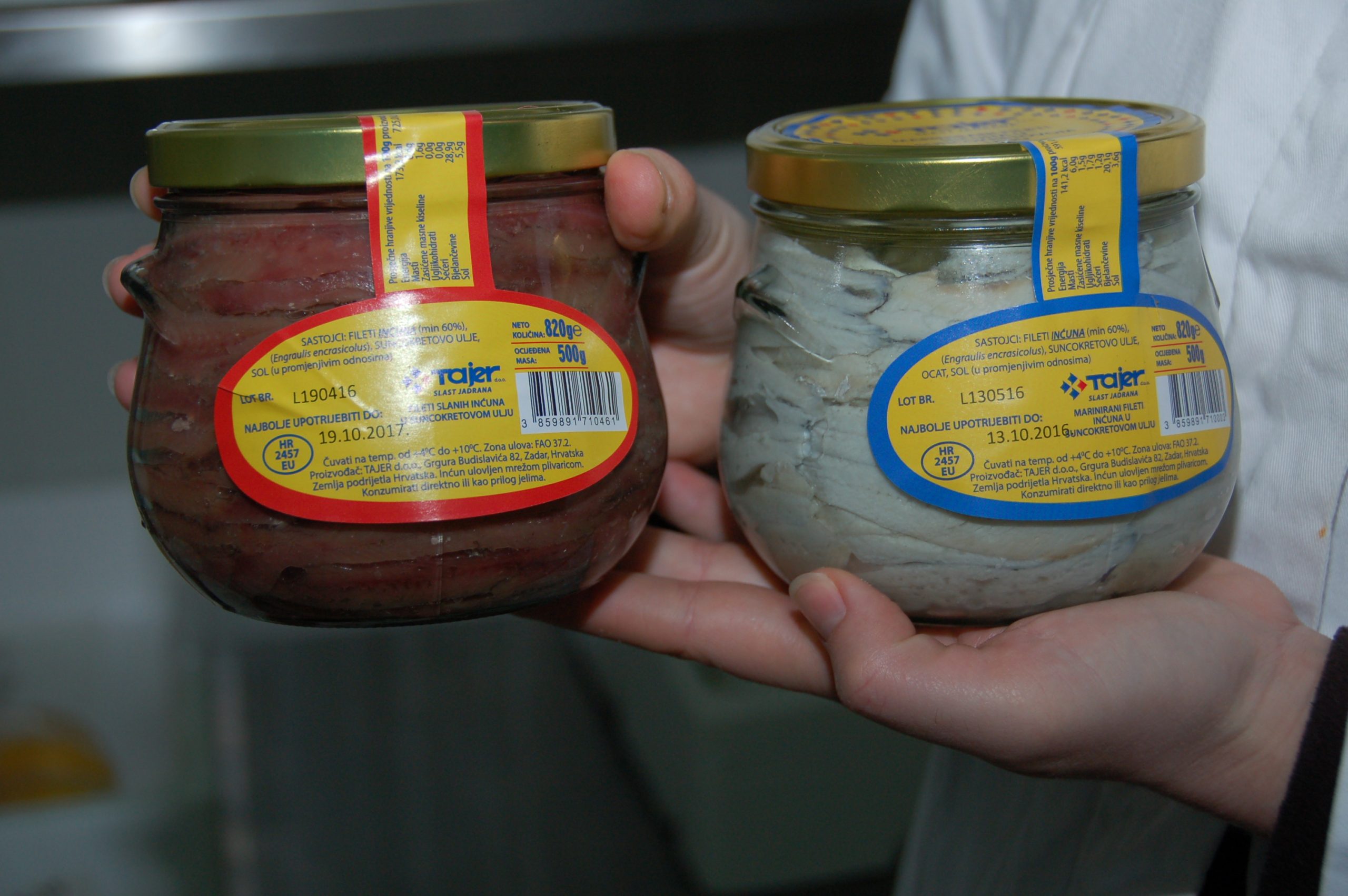
The length of time the fish stays in the salt depends on the temperature and the season. Normally when the fish is salted in the spring, it matures for four months. But if it is salted in late spring or early autumn it will only mature by May or June the following year. A rough calculation is that a one degree drop in temperature results in a 2-3% longer maturing period. In the winter the temperature is 6-8 degrees and the fish almost does not mature at all. This means that the maturation process can be prolonged or shortened by tweaking the temperature, which in turn allows the production to coincide with market demand. There is of course a trade-off; a longer maturing period at lower temperatures generally means a higher quality product. Market demand for this product tends to fluctuate with the catch, which varies from area to area. The fishing grounds off Zadar, says Dr Bosnic, are among the most productive in the whole of the northern Mediterranean, but developments in catches in Spain, southern Italy, Morocco and even to some extent in distant Argentina, Peru, Chile and China, also have an impact on the market in Croatia. In Croatia the annual production of salted anchovies is based on 9-15,000 tonnes of fresh fish, a volume, which though by no means small, corresponds to annual raw material requirements of the largest Mediterranean companies. It is therefore no surprise that what happens on these markets has an influence on Croatia.
Over the years Tajer’s product portfolio has been growing, says Jelena Dusevic, who is responsible for the production and is a biotechnologist by education, who has been with Tajer for eight years. The volume of salted anchovies has increased, marinated anchovies are being produced too – mainly for the Italian market, and the company has also started manufacturing salted anchovies in cans. In addition, the freezing capacity has been increased so the company has gained a foothold in the market for frozen anchovies. The additional capacity is for individually quick frozen (IQF) fish which can be sold as bait to the tuna farming i
ndustry but can also be sold to the canning industry in countries like Spain and Italy.
Tourists could provide a new market
| Tajer | |
|
Grgura Budislavica 82 Tel.: +385 23 221 499 Members of Board: Mirko Ivos and Zeljko Spralja |
Activities: Fishing, processing Fishing vessels: 1 Raw materials: Anchovies, sardines |
At Tajer, intitially the focus was on the local market, but as production started to increase the company began exploring other market avenues, starting with Spain and Italy. Once the new factory is up and running the company will look into the production of other fish such as sardines as the window for processing anchovies from fresh fish is very short. Sardines are also a typical Croatian product, the focus on anchovies has been driven by the demand from abroad, but the Croatian market for fish is small and concentrated on the coasts, says Mr Ivos. On the other hand, Croatia is a popular destination for tourists in the summer and Mr Ivos considers this a potential market for Tajer’s products. The new factory will also allow the company to experiment with new ideas and new products some of which will be based on sardines and will be marketed to the tourists.