This article was featured in Eurofish Magazine 2 2026.

The most significant trade show for fish, seafood, and processing equipment in Germany brought together senior buyers and sellers and encouraged a healthy exchange between purveyors of traditional and novel products and services
for the sector.
From 22 to 24 February 2026, Messe Bremen hosted the 20th edition of fish international, Germany’s main trade fair for the fish and seafood sector. Running in parallel was the 7th GASTRO IVENT, the regional marketplace for the gastronomy, hotel, and catering industry. A combined ticket gave visitors access to both events across three halls, reflecting the organisers’ view that food innovation and out-of-home consumption represent a growing area of overlap between the two sectors.
The fair covered the breadth of the seafood supply chain, from aquaculture and wild capture fisheries to processing, packaging, and retail. Sustainability featured prominently across many stands, both in terms of sourcing and in packaging solutions, the latter being increasingly shaped by incoming EU legislation. Algae-based products presented another visible theme, pointing to a category that is gradually moving from niche to mainstream in the German market. International pavilions from Galicia, Denmark and India, as well as a delegation from Fiji, reflected the global dimension of the German seafood import market.
Three days full of science, policy and industry input
The accompanying expert forum provided content that was of central importance to the industry. Structured around three themes across the three days, it addressed questions that are currently front of mind for the German seafood industry. The first day focused on new EU regulatory requirements, with particular attention to packaging and packaging waste regulation and what it will mean in practice for companies operating in the sector. The second day turned to the domestic market, examining how seafood consumption patterns in Germany are shifting and what this means for product development and retail strategy. The third day looked further ahead, exploring how fish supply chains can be made more resilient and reliable in the face of environmental and geopolitical pressures. Sessions were open to all ticket holders and built around panel discussions, with active participation from the floor. At the Bremerhaven stand, the “Fischereihafenfunk” format offered a complementary series of conversations between researchers and industry practitioners on science-industry topics.
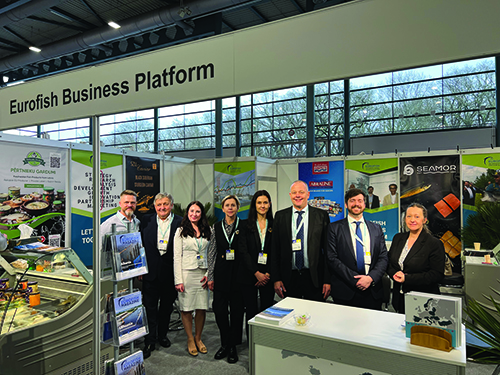
Eurofish attended with its own stand, hosting SIA VLAKON from Latvia, UAB Šalčininkų Žuvininkystės Ūkis from Lithuania, as well as Abramczyk and Seamor from Poland. Supporting member country companies at international trade fairs is one of the practical benefits Eurofish offers its members, helping producers connect with buyers and distributors in markets where they may not yet have an established presence. The next edition of fish international is expected
in 2028.