This article was featured in Eurofish Magazine 2 2026.

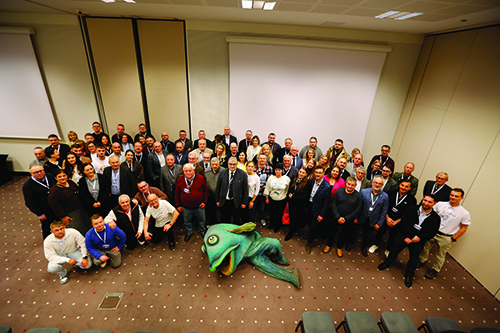
On the banks of the frozen Vistula River in Toruń, the hometown of astronomer Nicolaus Copernicus, the 31st annual traditional national carp conference was held from 11 to 13 February 2026.
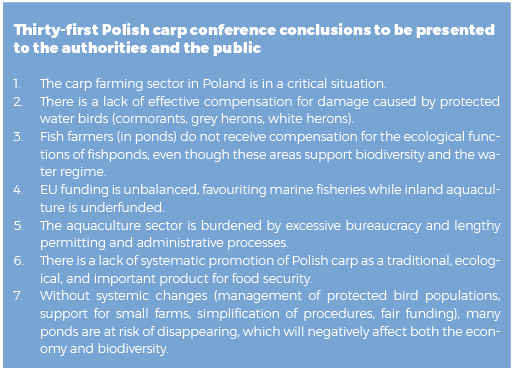
Traditionally organised in Poznan by the Polish Fisheries Association (PFA), an effective organisation with around 650 members, the XXXI Polish Carp Conference drew over 250 participants (more than 70% of them fish farmers, as well as public officials, academics, and businesses), and 13 different companies presented their products. In recent years, this annual event has been held in different locations in Poland and this year it came to Toruń. The subtitle of this year’s conference was “carp as a market commodity” (Karp jako produkt rynkowy).
Status of European support mechanisms explained
This year’s first three presentations focused on information about the drawdown and use of Eurofunds. The obligations of applicants after the completion of EU projects were mentioned, as well as alternative sources of financing for aquaculture (Dariusz Nieć). In his presentation, Jarosław Król introduced the concept of “One Health,” which integrates the health of the environment, people, and animals. The current Eurofund programme for fisheries was also reviewed, including what still needs to be drawn down and, in particular, what can be expected in the new programming period after 2028 (Adam Sudyk). The second block of lectures was devoted to the popularisation of aquaculture, education and support mechanisms. Prof. Dorota Fopp-Bayat from UWM Olsztyn presented the “Edu Fish” project, which involves three Polish institutions providing fisheries education: West Pomeranian University of Technology in Szczecin
(WPUTS – leader), University of Warmia and Mazury in Olsztyn, and a combined school in Sierakowo (secondary school). The project aims to make work in the fisheries sector more attractive to the younger generation. It provides material and financial support to schools and students during their studies and will run until the end of August 2029. This was followed by two lectures by guests from the Czech Republic. Ivan Šútovský from Rybnikářství Pohořelice, a.s. presented the company’s activities in fish sales and focused on the ceremonial harvest of the Vrkoč pond. Ján Regenda from FFPW SBU described the subsidies and compensation paid to aquaculture sector in the Czech Republic.
Wednesday evening was devoted to a gala meeting. During a joint dinner, Adam Szarek from Stobno was crowned “Fisherman of the Year 2025.” Since 1990, he has been building his own farm, which today operates over 60 hectares of ponds. He breeds a wide range of fish, which he also processes and sells as part of his family business. He received the award for his lifelong work respecting tradition, but also for his use of modern technologies and his contribution to the development of Polish aquaculture. After the award of prizes for photography and gastronomy came a long evening of social conversation, dancing, and tasting the fish specialties that had been presented in the gastronomic competition.
Speakers analyse different aspects of the market for carp
Thursday, the second day of the conference, began with the first block of lectures entitled “Carp Market Analysis.” Marek Trella (IRS-PIB Olsztyn) presented statistical figures on Polish aquaculture for 2024. Tomasz Kulikowski (MIR – PIB Gdynia) then spoke about the economic situation of carp aquaculture in 2024. This was followed by the eagerly awaited lecture by Andrzej Lirski, the doyen of Polish pond aquaculture. In his lecture, he sought to answer the question of whether carp is expensive or cheap. The last contribution in this section was presented by Grzegorz Mech (YouGov), who introduced six different market groups and types of people buying fish based on data from Polish YouGov. This was followed by a block of two legal lectures on poaching (Wojciech Radecki) and pond construction (Daria Danecka). After lunch, there were presentations devoted to climate change, the microbiome, and fish nutrition. The last contribution to Thursday’s program was a presentation by Anna Prętka (Fundacja Jeden Uniwersytet), who addressed the issues and risks of presenting carp farming and sales on social media. This contribution was very important in view of the need to address the younger generation using platforms and a language that is familiar to them. It is necessary to effectively overcome the generation gap between the current generation of fish farmers and young people (future fish consumers).
Carp can be prepared in ways that suit all tastes
The final discussion on the day’s program was followed by a gastronomic show—cooking fish in public and with the involvement of the public! Chef Jakub Kuroń was not afraid to take on more than 10 volunteers, who, under his supervision, prepared modern and tasty dishes from such a traditional fish as carp. We tasted tortillas with smoked carp spread, Asian wok with carp meat, and carp soup with carp meatballs. A very powerful and tasty experience! This is the right way to the heart of today’s consumer. People need to be shown that carp is not just a traditional Christmas dish but can be eaten all year round!
Friday morning’s program consisted of three lectures, the first of which presented the sensory apparatus of carp and their method of food intake (Dobrochna Adamek-Urbańska – SGGW). Piotr Eljasik (WPUTS) presented how aquaculture is perceived by people in different parts of the world, while Sławomir Lisiecki (WPUTS) concluded the conference with a presentation on ways to strengthen the resilience of pond aquaculture in the context of climate change. Most of the 23 papers presented are also included in the conference proceedings, which were published in Polish.
Ján Regenda, University of South Bohemia in
České Budějovice, regenda@frov.jcu.cz