This article was featured in Eurofish Magazine 2 2026.

Aquaculture continues to expand globally, and the environmental sustainability of production systems, resource efficiency, and their contribution to food security have become increasingly prominent. Within this transformation process, bivalve species occupying low trophic levels, requiring no external feed inputs, and capable of being produced within the natural food web have gained growing attention.
In Türkiye, mussel farming represents one of the most noteworthy national examples of this international focus on low trophic level production. Mussels are not merely an alternative production commodity; rather, they constitute a strategic production field characterised by high environmental compatibility, a relatively low carbon footprint, economic scalability, and significant socio-economic contributions to coastal regions. Considering Türkiye’s experience in marine aquaculture, its technical capacity, and its investment infrastructure, the mussel sector holds substantial development potential when supported by planned and strategic growth policies.
Sectoral development process and current capacity
Mussel farming in Türkiye has gained remarkable momentum over the past decade. Production, which stood at only
3 tons in 2015, reached 11,320 tons by 2024. This growth has progressed in parallel with the clarification of licensing procedures, the strengthening of the investment climate, and the standardisation of production techniques. Today, there are approximately 60 mussel farming facilities across Türkiye with a combined annual production capacity of around 70,000 tons. Although actual production remains below projected capacity, this indicates a significant growth margin for the sector. Through area-based planning and gradual production increases, existing capacity can be utilised more efficiently. Considering that total aquaculture production has exceeded 577,000 tons, mussels still represent a relatively small share of overall output. However, their low input requirements, comparatively manageable investment costs, and growing market demand position mussels as a scalable and strategically important sub-sector within the broader aquaculture industry.
In Türkiye, mussel farming is largely carried out along the Marmara and Aegean coasts. The majority of production takes place in the Sea of Marmara, particularly in the provinces of Balıkesir, Bursa, Çanakkale, and Yalova. In the Aegean Sea, facilities are located in İzmir, Muğla, and Balıkesir, while in the Black Sea region, production is carried out in Sinop province. These regions provide favorable conditions for mussel farming in terms of salinity, current regimes, plankton productivity, and logistical accessibility. The coastal areas of the Sea of Marmara, in particular, possess characteristics that support production within the natural food web. During site selection, factors such as water circulation, depth, suspended solids concentration, and environmental sensitivities are carefully considered.
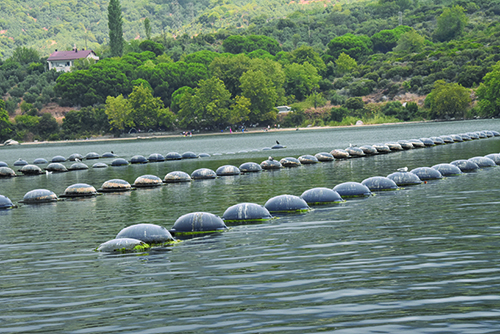
Longlines are the most common method of production
Mussel farming in Türkiye is entirely based on the Mediterranean mussel (Mytilus galloprovincialis). Production is predominantly carried out using longline systems. In this system, mussels attach and grow on collector ropes suspended from main lines positioned parallel to the sea surface. The harvesting period generally ranges between 12 and 18 months, depending on environmental conditions. Once mussels reach the appropriate market size and meat yield, they are harvested using mechanical or semi-mechanical systems and subsequently transferred to depuration and
packaging processes.
As filter-feeding organisms, mussels feed by filtering suspended particles from the water column. Thanks to this characteristic, the production process is directly integrated into the natural nutrient cycle. When implemented through controlled and science-based planning, mussel farming represents a production model that is fully compatible with the ecosystem. Proper site selection, regular environmental monitoring, and strict adherence to carrying capacity limits constitute fundamental principles. In production areas, parameters such as temperature, salinity, dissolved oxygen, and chlorophyll levels are systematically monitored, and planning is carried out accordingly. This approach ensures that production continues within the framework of environmental sustainability principles.
Although climate variability affects marine production systems, mussel farming demonstrates flexibility through an adaptive management approach. Increases in temperature, sudden salinity fluctuations, or changes in plankton composition may influence production performance; however, through regular monitoring and flexible harvesting schedules, risks can be maintained at manageable levels. The adoption of environmentally data-driven decision-making processes enhances the resilience of the sector. Particularly in the Sea of Marmara, a planned approach to production supported by scientific data is gaining increasing importance.
Regular analyses of mussels and water ensure food safety
Food safety is central to mussel farming. In Türkiye, harvesting areas are regularly monitored and classified as A, B, or C. Microbiological and chemical analyses are conducted periodically, and products intended for human consumption undergo depuration processes before being placed on the market. This robust control mechanism strengthens consumer confidence and contributes to the development of the domestic market. At the same time, it establishes a reliable foundation for expanding export potential.
Securing seed supply is critical for the sustainable growth of the sector. In this context, a bivalve hatchery is planned in the Bandırma district of Balıkesir province. This will:
- Ensure the supply of high-quality, disease-free seed,
- Reduce dependence on natural spat collection,
- Improve predictability in production planning,
- Enhance genetic quality and growth performance,
- Strengthen technical knowledge and sectoral expertise.
Through this investment, the production chain will become more controlled and structured, thereby reinforcing
supply continuity.
Mussels are a rich source of high-quality protein, omega-3 fatty acids, vitamins, and minerals. Owing to their feed-free production model, they demonstrate high resource efficiency. With these characteristics, mussels support access to affordable and sustainable marine protein. From Türkiye’s perspective, mussel farming contributes to economic vitality in coastal regions, creates new employment opportunities, and supports the blue economy approach. Its low-carbon production structure and environmental compatibility align the sector with national sustainable development objectives.
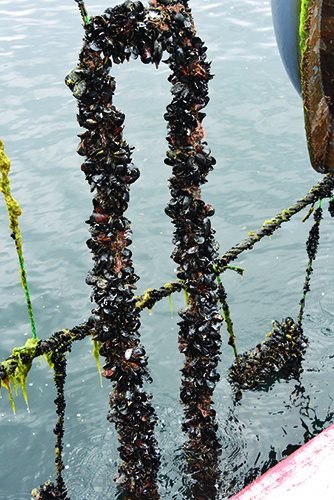
mussels are harvested using mechanical or
semi-mechanical methods.
Mussel farming in Turkey serves as an important example of how aquaculture can evolve into environmentally responsible and economically viable production models. The sector’s rapid development over the past decade demonstrates that mussel farming can grow in a controlled and sustainable manner when supported by clear and predictable regulatory frameworks, appropriate site selection, and science-based management approaches. When evaluated within the perspective of sustainable food systems and the blue economy, mussel farming offers a strategic area of development for Turkey that diversifies aquaculture production and considers environmental responsibility. With proper planning and adaptive management approaches, the sector is expected to make significant contributions to both the development of coastal regions and the sustainable supply of marine protein in the coming years.