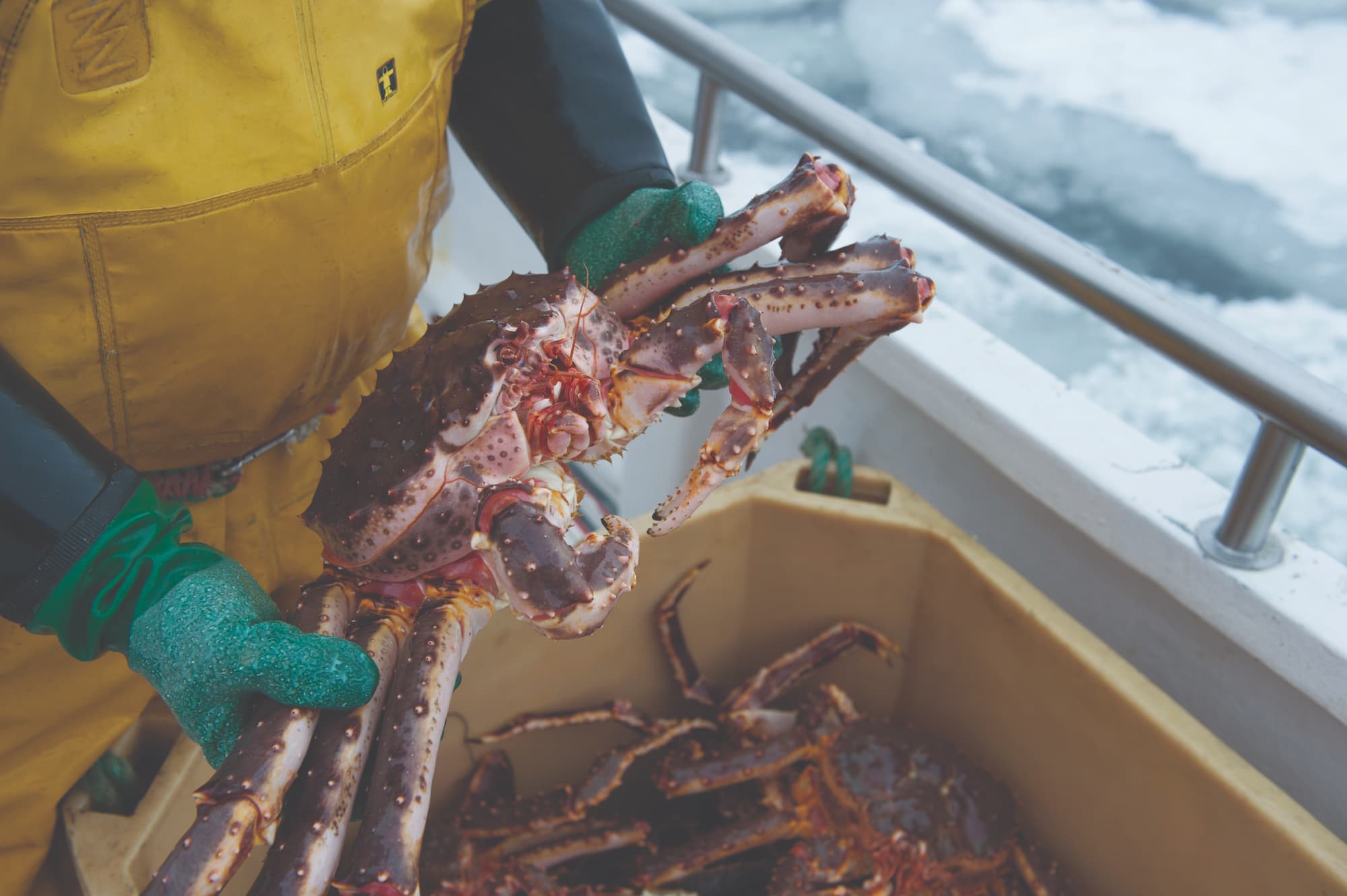
In 2016 Norway changed its quota structure for its king crab fishery.

Russia and the USA are preparing to cooperate in order to fight IUU crab fishing. This may lead to tighter supplies as illegal crab could be removed from the market.
In Russia, the fishing agency, Rosrybolovstvo, has announced that it will auction crab quotas in the middle of January 2016. This will be the first crab quota auction since 2012. The California Department of Fish and Wildlife decided in November 2015 to delay the commercial dungeness crab season. At the same time, they have also decided to close the commercial rock crab fishery, normally open all year, due to the presence of domoic acid.
Harmless for animals yet potentially lethal for humans
According to the California Department of Public Health, the acid is associated with the blooming of a single-celled diatom, Pseudo-nitzschia. The toxin can accumulate in fish and shellfish apparently without causing harm, however if the contaminated animals are consumed by humans, it can prove fatal. The fishery will remain closed until the authorities determine there is no further risk to public health.
In Alaska, the Alaska Fish and Game Department decided to cut the snow crab quota by 40%, to roughly 18,145 tonnes, due to worries about the shrinking biomass of this species. The king crab quota for northern Norway has been increased by 60% for 2016 and 2017, to 2,000 tonnes. It is expected that Russia will also increase its quota considerably, which is likely have an effect on prices.
US crab imports up, while Japan’s crash
World trade in crabs has declined in 2015, after having been on the rise since 2011. In the first three quarters of 2015, world crab imports declined by 15.5% when compared with the same period of 2014 to 200,000 tonnes. Japan, Hong Kong SAR and China registered the sharpest declines in crab imports, while imports into the Republic of Korea and the USA grew slightly. In fact, US crab imports grew by 5%, with all major suppliers registering increases. Canada is still by far the largest supplier, accounting for almost half (48.6%) of US crab imports. Other main suppliers include Argentina, Russia and China.
In Japan, crab imports during the first three quarters declined by as much as 25% compared with the same period in 2014. The major supplier, Russia, accounted for the bulk of the decline, as shipments dropped from 18,700 tonnes during the first nine months of 2014 to just 9,800 tonnes during the same period in 2015. Japanese prices for snow crab from eastern Canada expressed in US dollars went down by 4-5 % during the first half of 2015, according to information from Minato-Tsukiji, an Internet news service operated by a Japanese seafood newspaper. Greater quotas in Alaska and Newfoundland contributed to this price reduction. However, due to the depreciation of the yen, local prices in yen increased by 15-18% compared with the previous season. Prices were thus at record levels. This is also partly due to lower supplies from Russia and strong demand for snow crab in Japan. Demand in the USA has been strong as well and is thought to be linked to greater supplies and lower prices.
Overall, cuts in some crab quotas coupled with efforts to curb illegal crab fishing may lead to a tighter supply situation and consequently higher prices.
©FAO GLOBEFISH