This article was featured in Eurofish Magazine 2 2026.

Herbs and spices help unlock worlds of enjoyment
You do not have to be a vegetarian or vegan to enjoy consuming plants or parts of them. We use them daily in the form of herbs and spices, without which our diet would be rather dull, bland, and unimaginative. Our ancestors already knew that spices taste good and have health-promoting effects. The history of “seasoning” is full of true stories and unproven legends.
Spices inspired people to undertake bold adventures long before Christopher Columbus and Vasco da Gama. In search of pepper, nutmeg, and cinnamon, oceans were crossed, distant lands discovered, and bloody wars fought. Because exotic spices were so valuable, they served as status symbols for rulers and became the source of legends. One such legend claims that Nero allegedly scattered vast amounts of precious saffron on the streets of Rome to celebrate his entry into the city “appropriately.” Pepper was at times so valuable that it was even used as currency. It is said that corrupt judges were occasionally bribed with spices in court. That would be difficult today, as spices are now ubiquitous and most are quite affordable. Their value today is assessed less in financial terms and more in culinary ones, as salt and pepper alone are rarely enough in many kitchens. Seasoning correctly is a key skill in cooking, both for amateurs and professionals. Even boring home cooking can be elevated with spices and transformed into aromatic dishes. Those unfamiliar with the field can turn to spice blends, which can enable even talentless but ambitious hobby cooks to recreate popular classics from Italian or Asian cuisines.
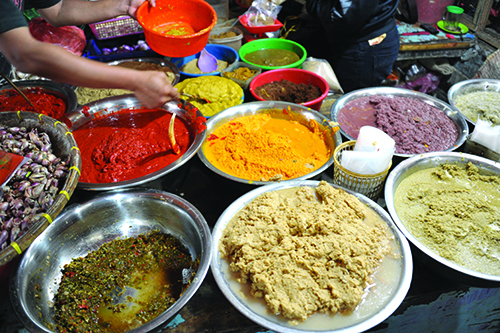
Unlike in northern Europe, spices in Asia are often freshly prepared as pastes or pre-mixed for
cooking and spread an intoxicating aroma in the markets.
Well-seasoned dishes stimulate our taste buds and sometimes even fire up the imagination. With spices, anyone can travel the world without setting foot outside their kitchen. The idea of enhancing the taste of food through seasoning appears to go back a long way. Historians believe that, as early as the Stone Age—certainly since the Neolithic Revolution that began in our regions six to eight thousand years ago—food was refined with salt and pungent mustard spices. According to an accepted theory, early humans wrapped pieces of fish and meat in leaves for protection and later discovered that the wrapping positively altered the aroma and taste of the contents. If true, hunters and gatherers may have been greater gourmets than we imagine. It was not a big leap from such accidental discoveries to the deliberate use of herbs and spices. Over time, people learned which herbs and spices best suited which foods. Initially, local spices were understandably used. In what is now Turkey, capers were already in use 6,750 years ago. In the tomb of Pharaoh Amenhotep II, traces of dill have been found; in Tutankhamun’s, garlic. In the western Baltic region, garlic mustard likely flavoured fish and game three to four thousand years ago, as evidenced by residues of the slightly peppery, garlic-tasting herb. Sumerian clay tablets from the 3rd millennium BC list several aromatic spice plants, including thyme.
Access to spices brought power and wealth
Spices were not only used to season food, but also frequently served as medicinal remedies and religious offerings. The New Testament mentions the “religious tithe,” which includes “a tenth of your spices—mint, dill, and cumin” (Matthew 23:23). Today, spices are absolutely ubiquitous—even in space: in 1982, spices were integrated into the astronaut diet of the US Space Shuttle programme.
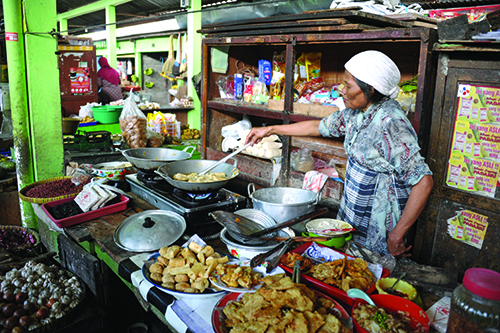
Even at market stalls and small street-side food stands, spices are an essential element of every proper dish.
Etymologically, the word “Gewürz” (spice) is said to derive from the Middle High German “wurz,” meaning root. This is plausible, as spices are almost exclusively of botanical origin. However, it is also a simplification, since the flavouring effect often does not come from the root alone but from other plant parts that contain the essential oils responsible for their characteristic taste and smell. They are used fresh, dried, or otherwise processed, either pure or in spice blends. In some plants, such as caraway, cinnamon, and nutmeg, multiple parts may be used as spices.
Classification of common spices by plant origin
Plant part – Spices (selection):
Roots, rhizomes, bulbs – Onion, garlic, turmeric, ginger, galangal, horseradish, wasabi
Bark – Cinnamon, cassia
Leaves – Bay leaf, lime leaves
Buds, flowers, floral parts – Cloves, saffron, capers
Seeds – Fennel, mustard, nutmeg, black pepper, caraway, anise, juniper berries
Fruits – Cayenne pepper, Chimayo pepper
Resin – Asafoetida (devil’s dung)
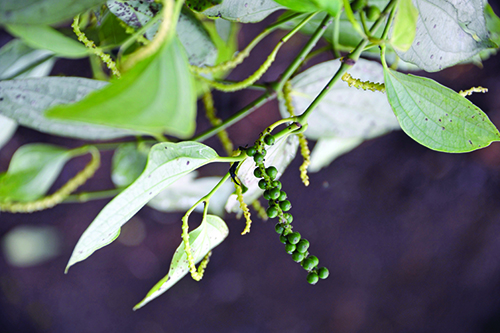
Despite the wide variety, pepper still tops the list of the most popular spices.
Europe imported some 88,000 tonnes of pepper in 2024.
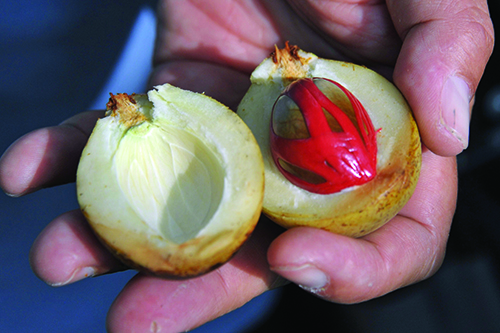
Mace, cinnabar red when fresh, impresses with its fine, spicy scent and aroma.
However, it is not a flower but the seed covering that encases the nutmeg.
The bold claim that the demand for and trade in spices significantly influenced the course of history is not at all exaggerated. Spices were valuable, and the search for their sources led to the creation of the first international trade routes. There was fierce competition for dominance in the global spice trade, which changed hands multiple times. Initially dominated by Arab merchants, the trade was taken over by Venetian intermediaries, who held a monopoly from the 8th to the 15th century. The Portuguese later assumed control, with Vasco da Gama’s 1498 voyage opening the direct sea route to India’s spice riches. This marked the start of direct trade between Europe and Southeast Asia. The Portuguese reign was short-lived, as the Dutch took over at the end of the century. With outposts on the Moluccas, Java, Mauritius, and other “Spice Islands,” the Dutch East India Company controlled markets for cloves and nutmeg. The Portuguese retained dominance only in the cinnamon trade. In the mid-17th century, the British East India Company gained exclusive control of trade with India, which remains the world’s main spice supplier, meeting nearly three-quarters of global demand.
Price drop through expansion of cultivation areas
Black pepper (Piper nigrum), once considered the “king” or “mother” of all spices, is still a standard seasoning used in almost every dish. The derogatory nickname “Pfeffersack” for wealthy Hanseatic spice traders dates from the 13th century. Although many new spices have emerged since, pepper has remained significant. Columbus’s discovery of the “New World” introduced allspice, chilli, and especially vanilla to Europe. Colonial powers jealously guarded their monopolies on valuable spices like pepper, nutmeg, cloves, and cardamom. Export of seeds and cuttings was strictly forbidden, often punishable by death. Nonetheless, smuggling occurred, and cultivation spread to other regions with similar climates. As production increased, so did supply, and prices fell. In the late Middle Ages, when the Portuguese took over trade from the Arabs, only about 1,000 tonnes of pepper and the same amount of cinnamon, ginger, and other spices reached Western Europe annually. By 2019, EU countries imported 379,000 tonnes from non-EU states. The global spice trade exceeded two million tonnes, with India still the main supplier, followed by Bangladesh, Turkey, China, Pakistan, Iran, and Nepal.
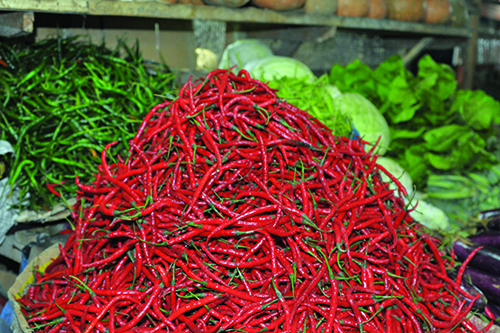
Chillies come in various levels of pungency (Scoville scale) worldwide.
While Europeans are sparing in their use of chilli, the pods are an inevitable element in Asian cuisines.
Even though market prices have dropped significantly over the centuries, the spice trade remains profitable. A 1393 document states that a pound of nutmeg was worth “seven fat oxen.” In the early Middle Ages, before the Crusades, only the wealthy could afford exotic flavours. A pound of saffron equalled the price of a horse; two pounds of mace, a cow; and a pound of ginger, a sheep. Today, prices are far lower, although some spices still command high prices. Saffron, often cited as the world’s most expensive spice, costs €10,000 to €15,000/kg. The Aji Charapita, a rare, pea-sized chilli from the Amazon, can reach $25,000/kg.
Black pepper, once worth its weight in gold—equivalent today to about €80,000/kg—is now far cheaper. As of September 2024, black pepper from Vietnam, the world’s top producer at over 220,000 tonnes annually, cost just over $6,500 per tonne. Complaints about supermarket prices of €30–€40/kg seem almost understandable. However, global and retail prices depend not only on the product, quantity, freshness, or processing but also on standards defined by the International Organization for Standardization. ISO series 67.220.10 covers spices and seasonings, while 67.220.20 applies to food additives. These standards are important because spices are sold fresh or dried, whole, crushed, chopped, rubbed, ground, and sometimes as concentrates or extracts. Their flavour depends not only on their chemical composition but especially on their volatile organic compounds (VOCs), which define their specific aroma.
Spices often credited with miraculous healing powers
VOCs can oxidise upon air contact, altering their properties. Grinding increases surface area, leading to faster evaporation and oxidation. To preserve flavour, spices are best stored whole and protected from light, to be ground as needed. Whole dried spices usually last around two years, while ground ones often lose potency after six months. Some flavour compounds are water-soluble, others fat-soluble, so spices should be added early during cooking to fully develop their aromas. Whether a spice is added at the beginning, near the end, or only during serving indicates the cook’s knowledge and culinary finesse. In contrast, herbs are usually added late or sprinkled over the finished dish, like parsley.
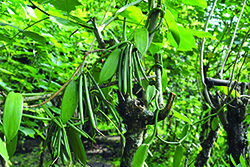
The highly aromatic vanillin in vanilla is found in some varieties not only in the pulp but also in the pod.
Fish fillet with vanilla sauce may sound unusual, but it is recommended online.
Many theories circulate about the functions and effects of spices, some supported by evidence, others not. A common but doubtful claim is that spices preserved meat or masked spoiled flavours in the Middle Ages. Spices’ preservative effect is minor compared to salt, which was widely used. Those who could afford expensive spices likely did not need to eat spoiled meat. However, spices were believed to have healing properties. Juniper and rosemary were burned to ward off plague and other diseases. While it is unclear how effective this was, it is now proven that cinnamon, oregano, garlic, and other spices have antimicrobial effects.
Fish is hard to imagine without spices
This does not protect them from microbial contamination. A 2007–2009 FDA study found about 7% of spice shipments to the USA were contaminated with salmonella. However, the FDA saw no urgency, as spices are usually cooked at temperatures that kill pathogens. Between 2018 and 2022, Germany’s LAVES tested 118 samples of frozen herbs and found some contaminated with harmful bacteria, leading to product recalls. As frozen herbs are often used raw in salads and dressings, they are now routinely tested.
Although not all spices suit fish and seafood, they have always been used in such dishes. Mild options include parsley, tarragon, dill, and thyme. Stronger flavours include garlic, onions, celery, cayenne pepper, smoked paprika, ginger, or lemon. Regardless of taste preference, spices should be used sparingly to avoid overpowering the delicate flavour of fish. The same applies to marinades, which typically consist of an acid (e.g., vinegar, wine, citrus), oil (e.g., olive or sesame), and an aromatic agent such as herbs and spices.
Manfred Klinkhardt