This article was featured in Eurofish Magazine 6 2026

Poland, one of the EU’s leading seafood processing nations, is facing expensive raw materials, rising labour costs, and changing consumer expectations. The further development of the sector hinges on extracting greater value from each kilogram of raw material.
Norwegian salmon, North Atlantic herring, and frozen whitefish from distant fishing grounds all often reach consumers in the EU only after passing through a Polish processing plant. Over two decades, Poland has developed a substantial industry producing smoked fish, fillets, marinades, canned products, and convenience foods for supermarket shelves across Europe. Its competitiveness was initially helped by relatively inexpensive labour, but today rests increasingly on extensive supply chains, production capacity, strong logistics, and workers with the skills needed to meet demanding retail specifications.
Labour costs in Poland have risen rapidly in recent years, driven by strong wage growth, including substantial increases in the statutory minimum wage, says Dr Olga Szulecka, deputy head of the Department of Fisheries Economics. This has placed considerable pressure on the operating costs of Polish fish processors and gradually eroded their traditional cost advantage. As a result, Polish companies increasingly need to build their competitiveness on other strengths, including productivity, technological expertise, product quality, efficient logistics, innovation and the ability to create higher-value products, rather than relying primarily on relatively low labour costs.
A few dominant processors followed by a long tail of smaller establishments
According to the Institute of Agricultural and Food Economics – National Research Institute (IAFE-NRI)1, Poland’s processing establishments produced 725 thousand tonnes of fish products for human consumption in 2025, worth PLN 19.6 billion (EUR4.21bn). The European Market Observatory for Fisheries and Aquaculture Products (EUMOFA) identifies Poland as a leading European producer of smoked salmon, while a September 2026 assessment published by the Dutch government’s agricultural network placed the country second in the EU by fish-processing production value in 2023 (the number one is Spain). In October 2025, 226 establishments were authorised to place processed fish products on the EU market, although 17 had suspended operations. Of the 580 companies processing fish and/or shellfish recorded in the REGON business register (which also contains several inactive firms), 78% were very small companies with at most nine employees that likely just served the local market. A further 9% or 53 companies had more than 49 staff including nine with more than 249 staff members. This 9% accounted for over 65% of the production value sold in 2023 according to the IAFE-NRI report. Foreign-controlled businesses, although relatively few, generated around 60% of sector revenue in 2024.
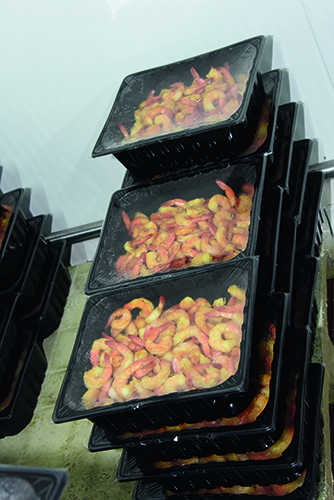
Processors are seeking thinner materials and designs that use less plastic, but fresh and smoked products need effective barriers against moisture and oxygen.
This processing capacity greatly exceeds what Poland’s own fisheries and fish farms can supply. Domestic catches and aquaculture together amounted to 119,600 tonnes in 2025, measured in live weight, while imports of fishery products reached 695,500 tonnes in product weight. These figures demonstrate the industry’s dependence on international sourcing. Tomasz Kulikowski, of the National Marine Fisheries Research Institute in Gdynia, says that the most important species for processors are Norwegian salmon and Atlantic herring.
Baltic herring and Baltic sprat are also important for Polish processors, although their availability has been constrained by reduced catches and competition between different uses of small pelagic fish. This competition is particularly relevant for sprat, which is widely used for fishmeal and fish-oil production. Meanwhile, Atlantic herring prices are influenced by international supply conditions, fishing quotas and demand across European processing markets.
In the case of Polish farmed trout, production is largely stable, says Mr Kulikowski. Further expansion of Polish trout production is constrained by competition from imported trout (mostly from Türkiye, Denmark and Italy). Higher feed and labour costs have also weakened producers’ margins. According to Mr Kulikowski, the prospects for substantial production growth therefore remain uncertain and will depend largely on the industry’s ability to stimulate consumer demand and develop markets for higher-value trout products.
Production of Polish farmed carp too is stable as this has a niche market covering the period over Christmas and Easter. Polish production is some 20,000 tonnes with a further 5,000 tonnes imported mainly from the Czech Republic. If consumption were to spread to the rest of the year, it would encourage an increase in production.
Poland imports large quantities of fish for filleting, smoking, slicing and packing. Norway is its largest individual supplier, particularly of salmon, while other important raw materials are sourced from a wide range of European and non-European countries. Salmon accounted for 38,5% of fishery-product import volume in 2025, and smoked salmon alone represented 40% of the value of Poland’s fish-processing output. Polish expertise in smoking and packaging has made the country an important supplier to European retailers. EUMOFA estimated that Poland accounted for almost half of EU smoked-salmon production in 2023. Exports remain central to the industry’s economics. Fishery-product exports reached PLN 15,3 PLN EUR 3.29 billion in 2025, 5.3% rise in exported volume to 544,100 tonnes. Germany remains the principal customer, particularly for salmon and herring products, although processors are also seeking growth elsewhere in Europe and beyond. They are also introducing products based on new species to the market. Smoked tuna, sturgeon, farmed Asian shrimp, halibut, hoki, and hake are some of the products that can now be found at fishmongers and retailers.
Raw materials under pressure
Małgorzata Pawliszak, president of the Polish Association of Fish Processors, describes raw-material availability and prices as major concerns for manufacturers. She points particularly to mackerel, whose steep price increases have made a traditional smoked product harder to sell profitably. Mr Kulikowski identifies an additional challenge for the herring industry: competition for small pelagic fish from fishmeal and fish-oil producers. When the feed sector can pay more for catches that might otherwise be processed for human consumption, Polish manufacturers face tighter supplies and higher input costs. Polish Baltic catches fell by almost 21% in 2024 to 75,500 tonnes. Sprat accounted for 52,700 tonnes and herring for approximately 15,000 tonnes; flounder landings also declined sharply. The collapse of the eastern and western Baltic cod stocks has already removed a once-important local source of raw material. The effects of lower catches extend beyond processors to fishing vessels and coastal communities. There are some grounds for cautious improvement in pelagic catches. In October 2026, EU fisheries ministers agreed to increase the Baltic-wide catch limits for sprat by 44% and central Baltic herring by 71% for 2027, reflecting improved stock assessments. Nevertheless, targeted cod fishing remains prohibited, with allowances restricted to unavoidable by-catches. Higher quotas for some species do not point to a recovery of the entire Baltic ecosystem, nor do they eliminate processors’ dependence on international supplies.
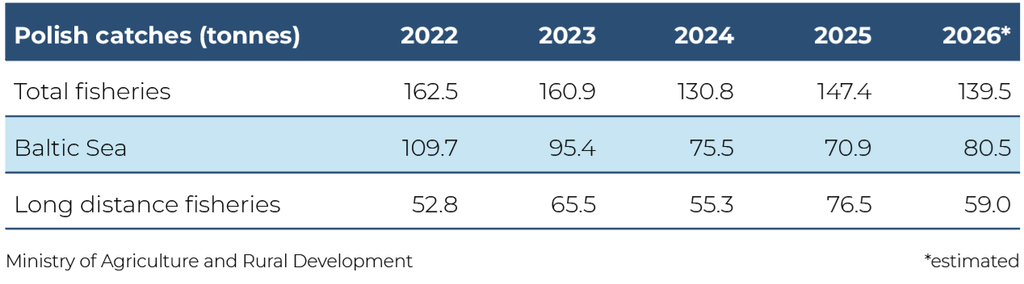
In 2025, Polish Baltic catches declined 12% to 70,900 tonnes, while production from the deep-sea fishery is forecast to increase 30% to 76,500 tonnes. Output from aquaculture is estimated to reach 50,400 tonnes of food fish and crustaceans led by carp and rainbow trout. Much of the carp trade remains concentrated around Christmas, whereas trout is sold year-round in fresh and smoked forms. Producers are increasingly farming larger trout suitable for filleting, bringing them into more direct competition with salmon. Mr Kulikowski and Olga Szulecka emphasise that domestic aquaculture contributes only a small part of the major processors’ raw material, but it is important to local businesses and shorter supply chains.
The cost of remaining competitive
Polish processors face an equally significant challenge inside their factories. The advantage once provided by low wages has narrowed as labour costs have risen. Fish preparation remains labour-intensive, particularly in businesses handling many different species and product formats. Mr Kulikowski estimates that foreign workers make up more than half the workforce when agency staff are included. He cautions that conventional statistics understate this dependence because they generally record only workers employed directly by processors. Moreover, firms compete for workers with other industries, where pay and working conditions may be better, and staff turnover makes training expensive. Mechanisation can relieve some of the pressure, but it rarely removes manual handling altogether as medium-sized processing establishments work with small volumes of many species of different shapes and sizes.
The IAFE-NRI calculated an average net profit margin of 3.42% for the industry in 2024, although results varied substantially among firms. Ms Pawliszak believes that, for some processors, margins have since approached 1%, squeezed by energy, labour, and fish prices, alongside retailers’ resistance to higher selling prices, and fierce competition on the market. At that level of margins, it becomes difficult to invest in new machinery or energy-saving initiatives. She expects the financial pressure to contribute to closures and consolidation among smaller firms, where access to capital and succession planning can be difficult. Greater use of processing by-products may improve profitability. Fish heads, frames, skins, and trimmings can provide material for food products or for recovering oils and proteins, rather than being treated solely as waste. Mr Kulikowski argues that a small improvement in the proportion of usable meat recovered can make a substantial difference when margins are thin. In the Up4Food project (https://sitesv2.anses.fr/en/minisite/up4food/up4food), Dr Szulecka leads a work package that investigates motivators and barriers in the food industry to the use of side-stream ingredients in food production, as well as consumer perceptions of such ingredients in food products. The results of the research show that consumers are both interested in products based on or containing ingredients from food side-streams and are also uneasy about modern technologies and about side streams as a source of nutrients.
Acceptance, she says, is linked to a high sensory quality of the product, reasonable price, and ideally, not being highly processed. Educating and informing consumers about the properties of such products and how they are produced could significantly reduce existing concerns and increase acceptance of new products.
Reducing costs with help from the EMFAF
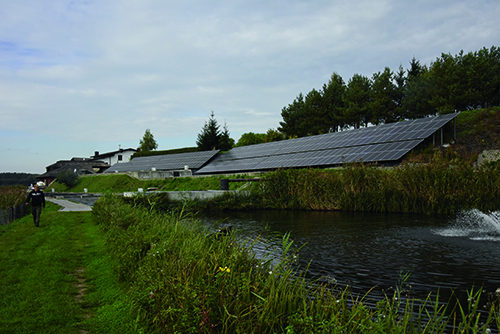
Processors also focus on reducing their energy consumption to lower costs. Cold stores, freezing systems, smoking chambers, and canning operations consume substantial amounts of power and heat. Companies are investing in photovoltaic installations and heat recovery, while improving refrigeration efficiency and wastewater treatment. The EU’s European Maritime, Fisheries and Aquaculture Fund provides investment support, although Mr Kulikowski notes that processing grants are aimed at small and medium-sized enterprises and that demand has exceeded available funding. Packaging is changing too. Processors are seeking thinner materials and designs that use less plastic, but fish presents difficult technical requirements. Fresh and smoked products need effective barriers against moisture and oxygen, as well as reliable protection throughout their shelf life. The EU Packaging and Packaging Waste Regulation began to apply in August 2026, adding urgency to the search for formats that preserve food safety while meeting evolving environmental requirements.
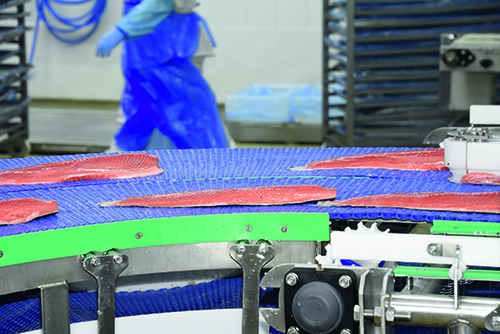
Poland is a leading processor of salmon in the EU and in 2024 smoked salmon alone accounted for 40% of the Polish processing output.
Domestic fish and seafood consumption rose 2% to 13.95 kg per person in 2024 measured in live-weight equivalent, and remained just below 14 kg in 2025, according to the agriculture ministry. The increase was despite a weakening in demand for some traditional species. This is substantially below the EU average (around 24 kg/capita). Meat continues to dominate everyday meals, while fish consumption is particularly strong around Christmas and, to a lesser extent, Lent and Easter. Consumption patterns are changing, however. Mr Kulikowski and Dr Szulecka suggest that older consumers are more familiar with traditional herring, sprats, carp, and smoked fish, whereas younger buyers often favour salmon, prawns, and products requiring little preparation such as sushi. In general, older generations, urban dwellers, and the financially better off consume more fish than younger people, rural residents, and those with modest incomes. The growth of ready-to-eat formats reflects households’ interest in convenience. Mr Kulikowski points out that while from a national economic perspective the contribution from the fisheries industry may not be very large, locally it is significant. Local aquaculture companies, fish traders, shops, and restaurants create a network supplying local consumers with fresh regional produce thereby retaining more value locally.
Focus on value addition to deliver growth
The industry’s next phase will depend on how successfully it combines its established strengths with new sources of value. Polish factories have extensive experience in food safety and in supplying European buyers. Yet an economy based on processing imported fish at competitive prices is vulnerable to supply shocks and rising costs. Better raw-material utilisation, efficient production, and products adapted to changing tastes may be more realistic routes to growth than a substantial increase in volume. How much fish Poland’s seafood processors use is subordinate to how much value they can create from it.