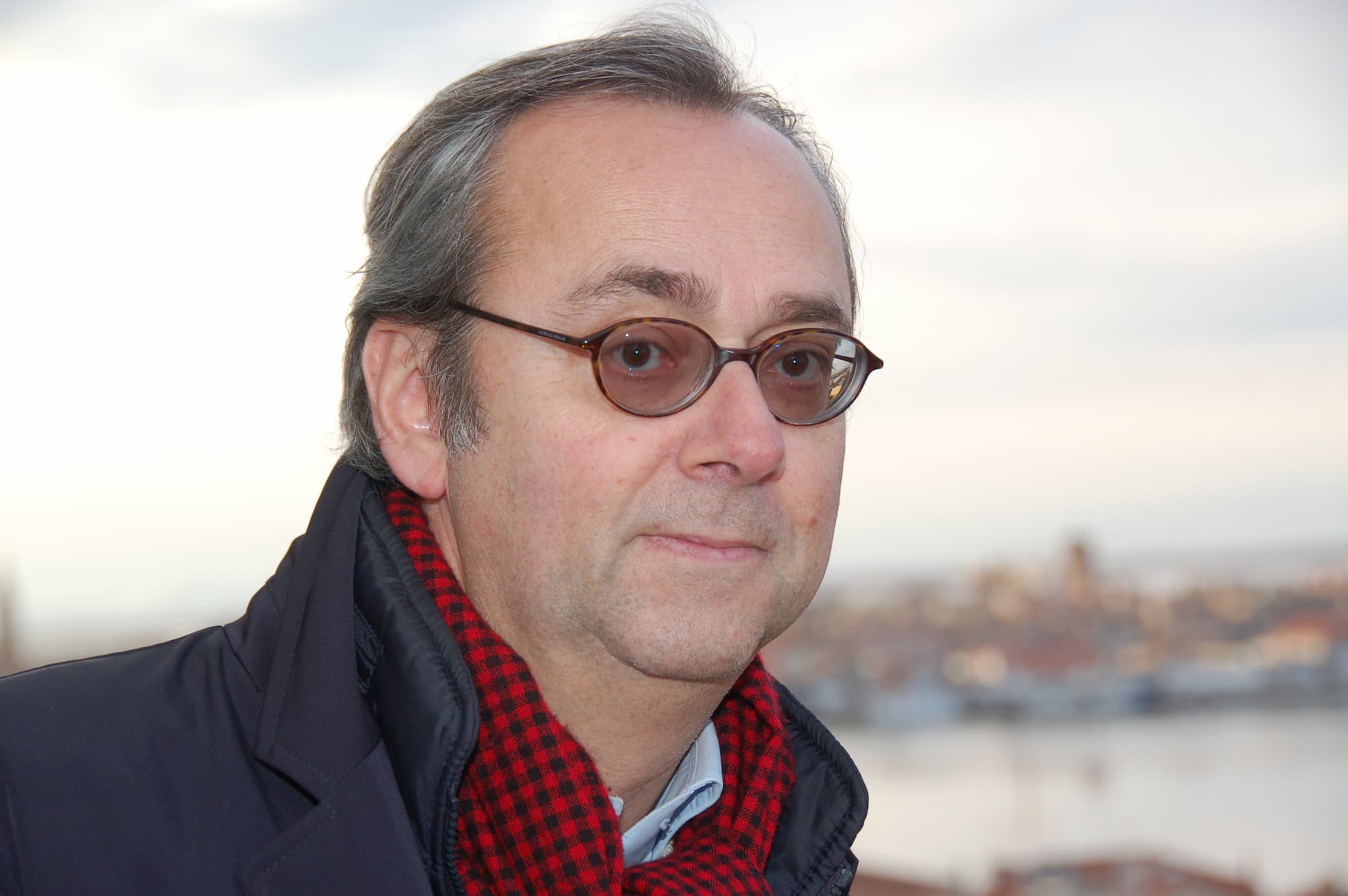
Andrea Venerucci, director of the market in Chioggia

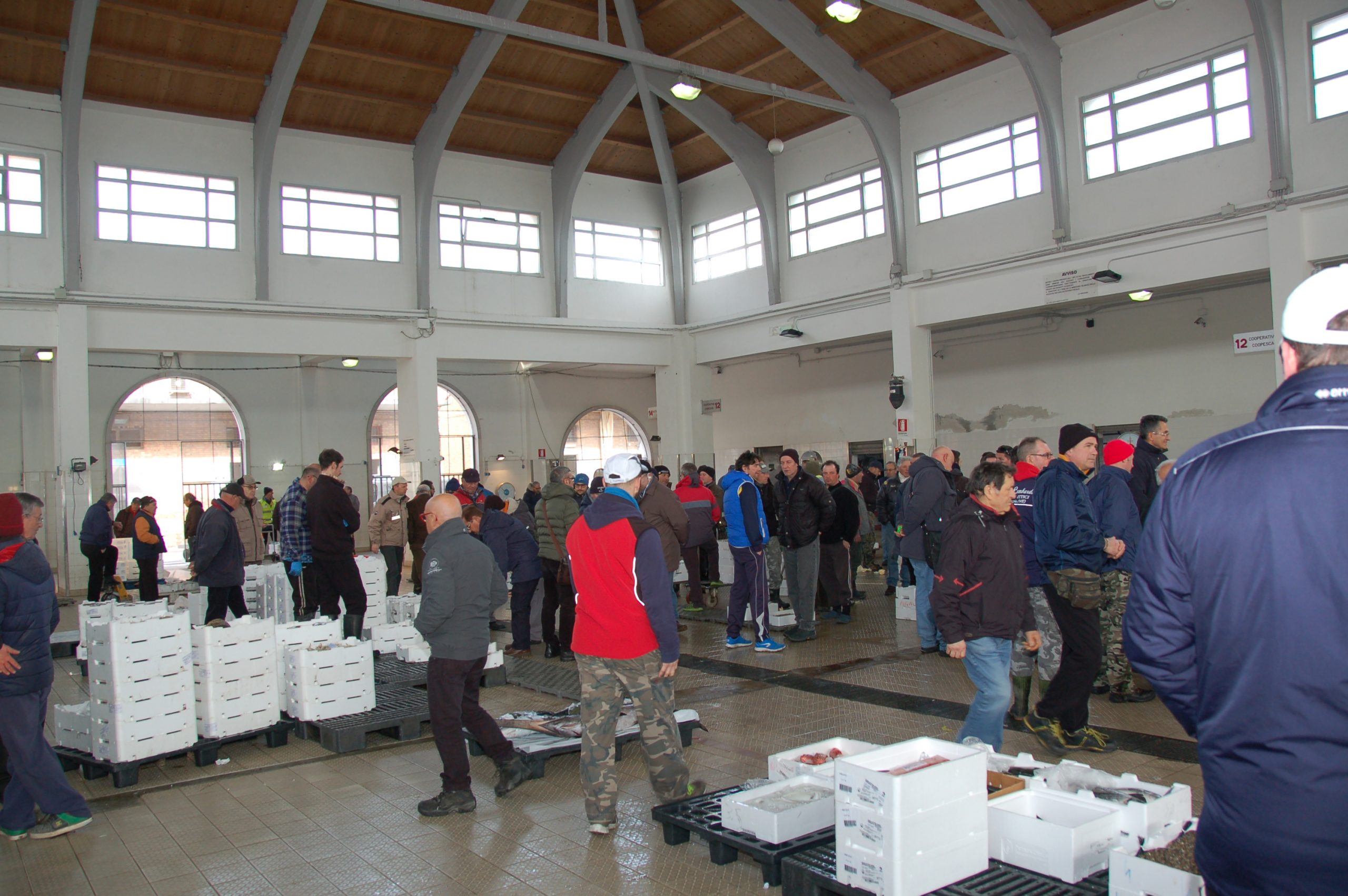
The fish market at Chioggia is one of the biggest in the region. Transport bottlenecks constrain its expansion and the authorities would like to move it to an area that is better connected to the road network.
Chioggia, a port on the east coast of Italy 50 km south of Venice is home to one of the biggest fish markets in the north Adriatic, an area comprised of the three regions Friuli-Venezia Giulia, Veneto, and Emilia-Romagna. In fact, in terms of volumes of fish sold, the Chioggia market is the biggest, but by value the Venice seafood market exceeds it by a significant margin.
Chioggia is a historical fishing port and the seafood market has existed since 1960. It is placed right in the centre of Chioggia, which, as Andrea Venerucci the director of the market, explains is a mixed blessing. The centre of Chioggia is an island, so for the fishing vessels the market is positioned very favourably; the vessels dock a few meters away and within minutes the fish can be brought to the market. Transporting the fish from the market to the highway is another matter however as the trucks have to drive through the town where the roads are very narrow and crowded particularly in summer when there are also vast numbers of tourists. The local municipality would therefore like to move the market to another location that is more favourably positioned with respect to the highway.
Turnover at the market moves higher
Despite having been discussed for several years the market has not yet moved and in the meantime there are other issues that need to be addressed. Between 2010 and 2012 turnover at the market shrank by a fifth to EUR37m while the volume of fish sold decreased by 17% to 9,000 tonnes. Dr Venerucci attributes these developments to problems with the weather, changes in legislation, fuel price increases, the economic crisis, and the reduction in spending power. Since then however the situation has been improving; in 2015 turnover crept up to EUR40m and volumes increased to 13,000 tonnes. If more boats landed their fish at Chioggia it would probably attract more buyers and give the market a boost.
Part of the problem seems to be the extreme fragmentation. The three regions of the north Adriatic have no less than 13 markets – along a distance of some 400 km. Many of them are tiny. The market in Caorle in Veneto had a turnover in 2014 of EUR1m on volumes of 207 tonnes. In total the thirteen markets had a turnover of EUR154m. Remove the two top performers, Venice and Chioggia, and the remaining 11 markets had a combined turnover of EUR60m on volumes of 20,000 tonnes. Apart from the fragmentation, regulations and traditions commit the fishers to selling their catches at their own port’s market even if prices are better at a neighbouring market. Vessels from Chioggia, for example, that land at Ancona send the fish by road to the market in Chioggia to sell it there. Attracting vessels from other countries is not possible as the distances are too great to make it worthwhile for Croatian or Slovenian vessels to land fish at Italian ports. Instead the fish is sent by road to be sold at Italian markets.
Fish is landed within hours of being caught
Improved transport in and out of the market may thus help both the supply to the market and the demand, which explains why Dr Venerucci is keen on shifting the market. Fish sold at Chioggia is also exported, for example, to Germany, as for German buyers Chioggia is three to four hours closer than say, Ancona. The vessels have a tradition of spending less than a day at sea so that the fish is typically landed within a few hours of being caught. This ensures the quality and gives the product a longer shelf life. Some vessels are also investing in ice-making machinery on board while pelagic vessels are starting to use grading machinery to sort the fish with a minimum of manual handling, again to improve the quality of the product.
The market also offers storage facilities as vessel owners sometimes do not immediately sell their fish if they are aware of conditions that may have an impact on prices. For example problems with the weather that prevent vessels from going to sea in other parts of Italy will reduce the amount of fish on the market and increase the price. Similarly, snow in the Appenines can prevent the transport of fish from the east to the west coast thereby increasing the supply and reducing the price on markets in the east. These factors have to be taken into account when deciding when to sell the fish.
The first MSC certification in the Mediterranean by end 2016
Sustainability is an increasingly important issue. At a conference in Catania in February, Giampaolo Buonfiglio the chairman of MEDAC, the Advisory Council for the Mediterranean, noted that of 30 stocks assessed almost all demonstrated severe depletion. In Chioggia, Marco Spinadin, Vice President of Confcooperative, the confederation of Italian cooperatives, says that the fishery for anchovy and sardines in the North Adriatic is expected to be certified to the Marine Stewardship Council standard by the end of 2016. This is currently the only fishery in the Mediterranean that is in assessment and when completed it will be the only Mediterranean fishery to be certified sustainable by the MSC.
The fishermen are also interested in installing vessel monitoring systems (VMS) on board all vessels. Currently it is only required for vessels that are above 15 m in length. This will allow the authorities to monitor the movements of all vessels in real times and see where and when they fish. Thereby, closed seasons and closed areas can be effectively enforced. Regarding the introduction of the discard plan for pelagics since the start of 2015, Mr Spinadin says that in the pelagics sector records of discards are already being maintained in the logbook for four types of pelagics, anchovies, sardines, mackerel, and horse mackerel. The situation in the Mediterranean is likely to improve area by area with better management measures, increased use of technology, and closer collaboration between all the stakeholders.