This article was featured in Eurofish Magazine 1 2026.

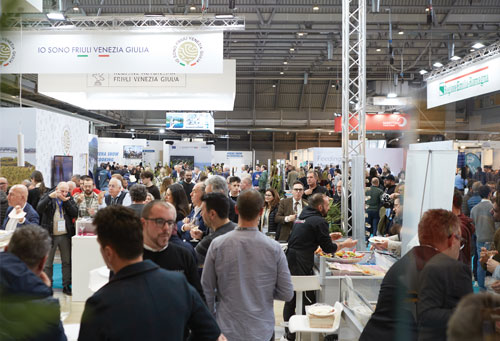
On 18 and 19 February 2026, Pordenone Fiere will once again welcome professionals from across Europe to AquaFarm, the international exhibition and conference dedicated to aquaculture, algaculture, sustainable fishing, and the blue economy.
Now in its ninth edition, AquaFarm has long been a key meeting point for producers, suppliers, scientists, NGOs, and policymakers in aquatic production. This year, however, marks a significant milestone: the launch of AquaFishery, a new thematic area dedicated to small-scale and artisanal fisheries, a sector deeply rooted in Mediterranean tradition yet facing profound economic and environmental transitions.
A natural evolution of AquaFarm
While aquaculture has always been the heart of AquaFarm, the inclusion of small-scale fisheries represents a strategic broadening of its scope. According to Patrizia De Odorico, exhibition manager of Aquafarm, the decision to create a distinct thematic area emerged naturally from the overlap between aquaculture and fisheries. Fishing product categories have always been included within AquaFarm, she explains, so we decided to give these categories a more specific identity, and this led to the idea of creating the new thematic area. Named AquaFishery, this section is not a separate event but a new dimension within the fair, complementing its existing themes. The organisers began developing the concept with the aim of bringing together a wider community of professionals linked by shared supply chains, technologies, and equipment.
For Marco Comelli, Principal Consultant at Studio Comelli, who has been designing and curating AquaFarm’s conference content since its inception, the expansion into small-scale fisheries is both logical and timely. He notes that suppliers of boats, fish processing equipment, nets, and even digital solutions such as weather prediction software, are common to both marine aquaculture and small-scale fishing. Indeed, Mr Comelli emphasises that small-scale fisheries are far from marginal. Small-scale fisheries are actually big fisheries composed of many small fishers, he explains. They are cooperatives, often regional, and together they represent a large and politically significant community. The fair is initially targeting cooperatives that operate along the Adriatic coast—from Friuli Venezia Giulia and Veneto to Emilia-Romagna, Marche, and Puglia. Each cooperative unites numerous small boats, usually operated by one to three fishers. Though individually modest, collectively these fleets represent thousands of fishers—in 2023 they generated a value of EUR158m, nearly a quarter of Italy’s total landed value.
Modern tools for a traditional sector
AquaFishery’s thematic debut will highlight both the traditional character of small-scale fisheries and the growing integration of digital and technological tools in the sector. Mr Comelli points to the increasing adoption of artificial intelligence-based weather forecasting and ocean monitoring systems, used to optimise fishing and farming activities in small coastal zones. These algorithmic systems predict wind, sea flow, and nutrient outpouring, helping both farmers and fishers make better operational decisions, he says. While the small-scale fishing sector is deeply traditional—relying on artisanal techniques such as long lines, nets for small pelagics, and harpoon fishing in the Strait of Messina—it is also seeking modernisation where possible. However, mechanisation is limited by the very nature of artisanal fishing. It is difficult to mechanise small-scale fishing without undermining the essence of the activity, Mr Comelli observes,
The inclusion of small-scale fisheries within AquaFarm reflects a moment of transition and redefinition for the sector. Rising fuel costs, regulatory constraints, and resource depletion have made it increasingly challenging for artisanal fishers to sustain their livelihoods. To adapt, many have diversified their activities. One notable example is fishery tourism—a practice where fishers take tourists out to sea to experience fishing firsthand, followed by meals typically served on board. This has become a valuable source of supplementary income, especially in regions like Veneto, Liguria, and Emilia-Romagna, Mr Comelli finds. Such diversification not only supports fishers economically but also strengthens public awareness of sustainable, local seafood. Moreover, it aligns with broader European goals promoting low-impact fisheries, circular economies, and coastal tourism.
Conference programme includes small-scale fisheries session
AquaFishery will feature its own dedicated programme within the broader AquaFarm conference agenda. Mr Comelli, who coordinates the scientific sessions, has allocated a two-hour session to introduce and explore the small-scale fisheries sector. We will present an overview of the market, regional structures, target species, and distribution methods, he explains. For example, many small-scale fishers supply directly to restaurants and hospitality businesses, creating a short, high-quality value chain between the sea and the table. The conference will include contributions from trade associations, cooperative representatives, researchers, and policymakers, both Italian and European.
Although this is the first edition of AquaFishery, the response from the industry has been encouraging. According to Ms De Odorico, invitations were extended to the entire artisanal and professional fishing sector, with confirmed participation from trade associations, processing companies, equipment manufacturers, net and float producers, boat accessory suppliers, retailers, and research institutes. While exhibitor numbers and visitor statistics will only become clear during the event itself, the organisers expect strong interest, especially given the geographical proximity of many Adriatic fisheries cooperatives. The fair’s design ensures fluid interaction between aquaculture and fishery exhibitors, with no physical separation between the two areas. The layout of AquaFarm 2026 has been redesigned to accommodate this evolution.
Bringing marine activities together under one roof
By incorporating small-scale fisheries, AquaFarm reinforces its role as a comprehensive platform for the blue economy—a field that spans aquaculture, sustainable fishing, marine technologies, and aquatic resource management. The initiative also addresses a gap in Italy’s trade fair landscape. According to Mr Comelli, while there are political or sustainability-focused events related to fishing, there has been no dedicated business-oriented fair for the sector until now. This expansion, therefore, not only serves exhibitors seeking new markets but also helps policymakers, researchers, and producers exchange ideas on artisanal fishing and the issues it faces including lower landings, climate change, and the lack of recruitment. It also underlines Italy’s position as one of Europe’s leading producers of molluscs and a country with a rich coastal fishing heritage.
When AquaFarm opens its doors on 18 February 2026, visitors can expect a fisheries area dedicated to smart forecasting systems, artisanal netmaking, seafood traceability, and cooperative models. Whether it becomes a permanent fixture in future editions will depend on the sector’s response, but the ambition is to give the small-scale fisheries sector a platform to create awareness and a venue where its needs can be discussed. But if the enthusiasm already surrounding AquaFishery is any indication, this initiative could well become a defining feature of AquaFarm’s next decade—one that highlights the interests aquaculture and artisanal fishing have in common, and steering both towards a
more resilient and inclusive future.
AquaFarm 2026 will take place at Pordenone Fiere, Italy, on 18–19 -February 2026. For more information, visit www.aquafarm.show.