This article was featured in Eurofish Magazine 1 2026.

The 2025 edition of the annual conference continued global engagement across the algae community.
AlgaEurope 2025 was jointly organised by the European Algae Biomass Association (EABA) and DLG Benelux, and served as a meeting point for stakeholders spanning science, technology, and industry. Chaired by Jean-Paul Cadoret, the programme featured 24 plenary sessions, 107 speakers, and 116 poster contributions, spanning topics from algae physiology and genetic technologies to biorefinery approaches, production systems, and food, feed, and environmental applications. Alongside the scientific programme, the trade show brought together 20 organisations presenting technologies and services, while site visits to síbiotech provided hands-on insight into production approaches and practical applications. A newly introduced picture contest added a public-facing dimension by highlighting algae’s diversity and ecological role through striking imagery.
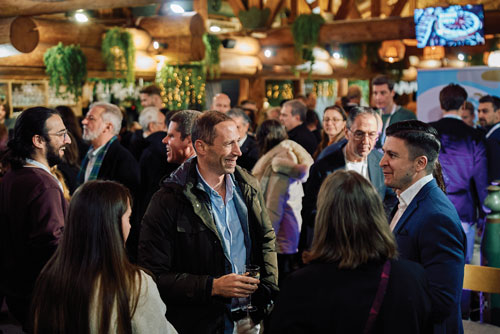
Networking remained a central part of the Riga edition, with informal tastings at the Algae Happy Hour, a conference dinner showcasing Latvian cuisine and folklore, and the AlgaEurope app supporting matchmaking and participant interaction. An award evening recognised achievements across the community, including poster prizes, as well as broader recognition for life and career contributions, impact and action, and youth and outreach.
The European seaweed market
The discussions took place against a European algae market that is still developing. Production remains modest in global terms—totalling 287,390 tonnes or 0,8% of the global total in 2019— and microalgae accounts for only a small share of overall output. While seaweed aquaculture is often seen as a route to meet rising demand for algae biomass, progress in Europe has been relatively slow, with most seaweed still harvested from wild stocks, rather than cultivated. Microalgae production, by contrast, is largely land-based and often relies on photobioreactors. These systems allow tightly controlled cultivation, supporting high-value uses such as food supplements, nutraceuticals, cosmetics, and feed, but they are costly and difficult to scale, which limits their suitability for large-volume production.
At the EU level, policy momentum has strengthened in recent years, with the European Commission’s EU Algae Initiative setting out a strategic framework to develop algae production and associated value chains, running broadly from 2023 to 2027. Overall, the EU supported 219 algae-focused projects between 2014 and 2023 across major funding programmes, with a total contribution of about €559 million. These efforts were mainly aimed at tackling technical and financial barriers but also focused on improving market readiness and competitiveness. The success of these developments will once again be in focus when international stakeholders convene from 8 to 11 December in Valletta, Malta for AlgaEurope 2026.