This article was featured in Eurofish Magazine 4 2026.

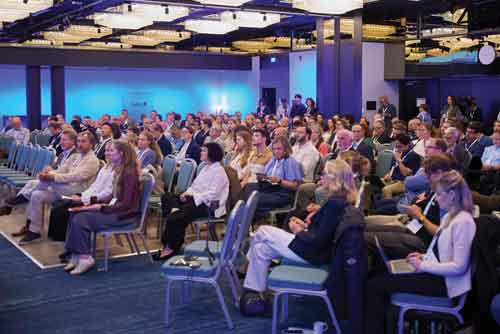
Seagriculture EU 2026 brought together 229 participants from 28 countries in Gothenburg, Sweden, from 16 to 18 June, confirming the event’s role as one of Europe’s key meeting points for the seaweed and algae sector. Held under the theme The European seaweed industry in transition: survival, scale and real impact, the conference reflected a sector that is increasingly focused on delivering on its potential.
The event gathered seaweed producers, researchers, investors, policymakers, technology providers, and innovators from across the blue economy. Over three days, participants discussed how the European seaweed sector can move from promise to practice in a market shaped by climate pressures, changing regulation, and high production costs. They also witnessed ways to realise seaweed’s potential during the site visit hosted by Nordic SeaFarm.
Macro- and microalgae are part of the solution—not a silver bullet
Welcome addresses were delivered by Prof. Katharina Riehn, Vice President at DLG; Margareta Broang, Deputy Lord Mayor of the City of Gothenburg; Renée Bengtsson, President of Region Västra Götaland; and Christer Olausson, CEO of Nordic SeaFarm. A central message running through the conference was that seaweed and algae should not be presented as a universal remedy for today’s environmental and economic challenges, but that they can contribute meaningfully to managing several urgent issues, including climate change, and the transition towards more sustainable materials and food systems. Many presentations explored where algae-based solutions can realistically add value, and what must be done to bring them to market.
In his keynote presentation, Robert Carleke, Innovation Ventures Manager at Inter IKEA Group, outlined how IKEA is exploring seaweed-based materials and their possible applications “from ocean to home.” The example illustrated the increasing interest from large companies in bio-based alternatives but also underlined that seaweed-based products must compete with traditional ones on performance, reliability, cost, and security of supply. While technical challenges such as cultivation systems and processing efficiency remain important, speakers also pointed to barriers such as regulation, financing, and market access. For many companies, the difficulty is not only to produce algae biomass or develop an interesting application, but to produce at scale or to connect with buyers.
Presenting setbacks helps the sector to learn
The relatively small size of the European algae sector also affects how companies position themselves. Several discussions suggested that algae producers are not primarily competing with each other at this stage. Instead, they are competing with other types of solutions already available. The challenge, then, is to demonstrate why an algae-based product offers an advantage. Speakers also addressed many practical issues such as how to define a market, how to avoid overclaiming, how to build trust with customers, and how to secure finance. One session, Epic fails and honest tales: Mistakes that made us, encouraged speakers to share lessons from setbacks in research and business development. Delegates heard how projects could be delayed by high harvesting and processing costs or regulatory uncertainty among other reasons. By discussing failure openly, the session helped to define what the sector needs to grow.
The Seaweed Elevator Pitches also returned, giving researchers, start-ups, and industry professionals the opportunity to present innovative projects and ideas in five-minute formats. The pitches covered areas including food safety, processing technologies, biodiversity solutions, and blue biorefinery development. The event also featured a trade show with a record 19 exhibitors presenting technologies, cultivation systems, processing solutions, and services for the seaweed industry. More than 50 poster presentations showcased scientific research and industry projects, marking it the largest poster contribution in the history of Seagriculture EU.
Site visit combines theory with practice
The excursion to Nordic SeaFarm included a boat visit to the company’s seaweed cultivation site in the Grebbestad archipelago and a tour of the Tjärnö Marine Laboratory, where Nordic SeaFarm was founded. Experts from the University of Gothenburg’s Department of Marine Sciences presented developments in seaweed research linking them with commercial cultivation and practical field experience. Concluding the event, Kuno Jacobs, Managing Director at DLG Markets Benelux, organiser of Seagriculture EU 2026, said that the European seaweed industry continued to grow and mature. He highlighted the importance of stakeholders openly sharing experiences, discussing challenges, and exploring opportunities for collaboration and growth. Algae may not solve every problem, but they can form part of a wider portfolio of solutions for sustainability and the blue economy. The next edition, Seagriculture EU 2027, will take place in Ostend, Belgium, from 15 to 17 June 2027.