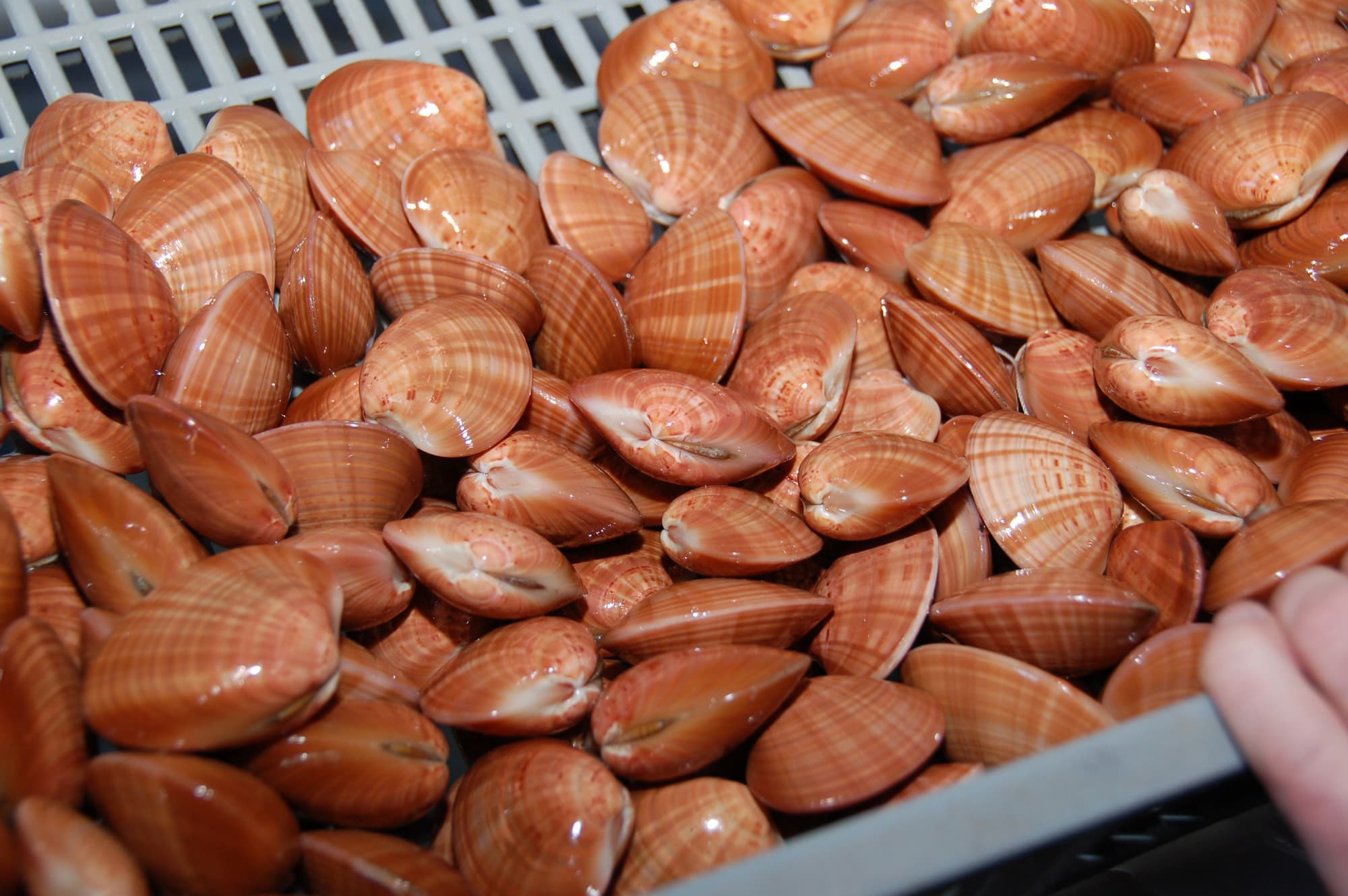
Fasolari are produced in the northern Adriatic, but are consumed mainly in the southern parts of Italy.

The Italian production of fasolari (Callista chione) takes place in the Northern Adriatic waters, falling in the two Italian regions of Friuli Venezia Giulia and Veneto and is managed at compartmental level (sub-regional level) by the Consortia (CO.GE.VO.) of Chioggia, Venice and Monfalcone. Here the system is based on a co-management approach. The system is based on the integration between the management system (Consortia) and the marketing system (POs). The three above mentioned Consortia work in a coordinated manner by adhering to the same PO, named OP I Fasolari.
In the Italian management of clams and similar species, the role of POs has gradually increased over the time. Nevertheless a clear distinction between them and Consortia exist: the latter are responsible of management (mainly, limitation of fishing days and the establishment of maximum daily fishing quantities), while POs help them to match supply with market demands and support them in creating added value. From a management point of view, Consortia have to comply with nationally set limits, but they are free to introduce more restrictive measures if they deem it necessary for safeguarding the resource.
Target species has to be decided every three years
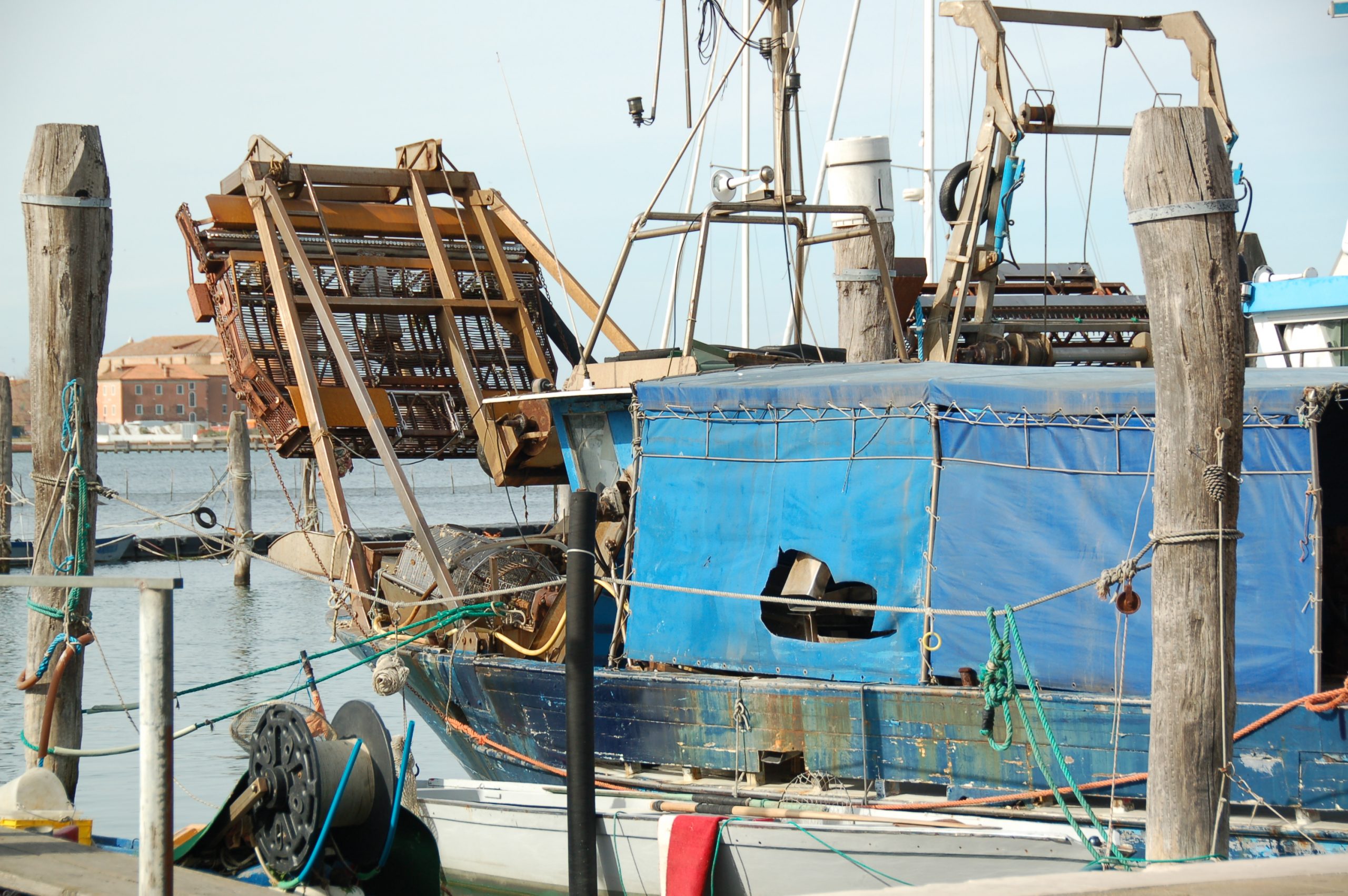
Besides the organizational aspects, it should be noted that the fasolari fishery was originally born as an alternative to the fishery of the main target species of dredges, striped venus clam (Chamelea gallina) – in periods of scarcity of resources and/or as a means to impact the price of striped venus when it is low (to reduce supply, some vessels had to switch to fasolari fishery). Vessels fishing striped venus and smooth clams are, indeed, the same (hydraulic dredges with an average length between 12-18 metres) but they have to decide, each 3 years, if they want to target clams or fasolari for the next period and, hence, adhere to the related PO. The main incentive leading a vessel to switch from clams to fasolari is the price per kilo, which for fasolari is higher and fixed by the PO. It is important also to highlight that the two species (striped venus and smooth clams) are not in competition and substitutable: clams cover a very wide market, from local to national to foreign markets and are generally appreciated by consumers for the ease in preparation for direct consumption.
OP I Fasolari (with the support of NISEA) is working to promote the competitiveness of this fishery. Under the SUCCESS project (www.success.eu, EU project financed under the Horizon 2020 research programme) the fasolari fishery has been selected as case study with the main aim of better understanding how the governance and the marketing structure affect the mechanism of price formation. Indeed, the good integration of management (Consortia) and marketing (POs) structures represents a modern and sustainable approach to fishery covering all the steps along the value chain.

Imports from Croatia cheaper than domestic production
Regarding the production, in 2013 and 2014, the total amount of fasolari landed each year by dredges was around 1,400 tons. The internal consumption of smooth clams is supplied, for a very small percentage (around 5%) by imports of products mainly coming from Croatia (around 1,000 kg per week in the Northern Adriatic regions). The average price per kilo of fasolari is different if looking at the domestic and at the import supply: 4.50 €/kg for the local production, sold, in the first step, from fishermen to the PO platform and 3.50€/kg for imported smooth clams (at least for products coming from Croatia) according to OP I Fasolari.
The overall production – domestic production via PO platform plus imports – is destined for a minimum share to local consumption (around 5%), for another small share (5%) to exports (mainly to France) while the bulk (90%) is destined for the southern Italian regions, mainly Campania and Puglia. Indeed, fasolari are more appreciated in Southern Italy for fresh consumption (mainly raw, especially in Puglia) and especially during the Christmas period. Here consumers’ preferences are mainly driven by a consumer habit related to the products’ processing before consumption. Southern Italian consumers are traditionally more used to subjecting clams to depuration, whereby they are stored in clean seawater for several hours to remove any sand or other impurities they may have accumulated.
Developing a market for fasolari in the northern Adriatic
The OP I Fasolari is devoting some effort in promoting the consumption of fasolari in the Northern Adriatic regions and, in general, for increasing the consumers’ appreciation of the product. This is the main aim of a project currently in progress (financed by the MiPAAF and carried out with the support of NISEA) that will focus on the promotion of fasolari through market valorisation strategies like the environmental sustainability certification (e.g. Friends of the Sea, FoS). The choice of the standard for environmental and sustainability pro-active approach will depend from the feedback that, step by step, will be received by the different stakeholders, first of all from the fishermen adhering to the PO I Fasolari. During the development of the project, a consumer’ survey will be realized in order to investigate on their perceptions in relation to FoS and other certification schemes.
The choice of the most adequate certification scheme and an appropriate marketing scheme will add intangible (and in turn tangible) value to the fasolari production and will be the better way to optimize the energy and efforts of the PO in management and economic terms.
Loretta Malvarosa and Maria Cozzolino
NISEA, Fishery and Aquaculture Research Organisation
Via Irno, 11
84100 Salerno
Tel: +39 089 79 57 75
malvarosa@nisea.eu, cozzolino@nisea.eu
www.nisea.eu