This article was featured in Eurofish Magazine 2 2026.

The river lamprey (Lampetra fluviatilis) is an anadromous, jawless vertebrate that spends its adult life in the sea, then migrates into fresh water to spawn. In Latvia, this migration is not only a biological event but also the basis for a seasonal fishery for a small group of specialist fishers. Processed, the fish is regarded by many Latvians as a delicacy.
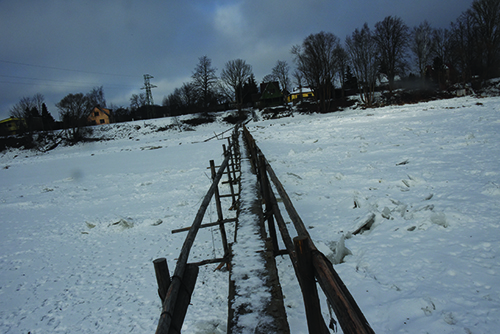
Latvia’s lamprey fishery is concentrated in rivers that drain into the Baltic Sea and the Gulf of Riga including the rivers Salaca, Gauja (including the Carnikava area), Daugava, Irbe, and Venta, plus tributaries where lampreys stage and move upstream. On the Salaca, the fishery still uses a distinctive, labour intensive method that Uldis Rozensteins, a lamprey fisher and small-scale processor, describes as essentially unchanged in principle for more than a century. Fishers work from small wooden bridge-like structures built across part of the river each year, with traps fixed to the structure so migrating lampreys are funnelled into them by the current.
Catches depend on several environmental factors
The fishing season runs from 1 August to 1 February, but the actual fishing can be far shorter because catches depend on environmental factors such as river conditions, rainfall, temperature, and the strength and direction of the wind. On the Salaca, Mr Rozensteins explains that they do not fish around the clock for six straight months: high water and debris can force them to pull traps ashore for days at a time to prevent the whole structure acting like a dam and breaking under pressure. At the other extreme, under-ice fishing is possible but is usually limited because only part of the width of the river can be worked without repeatedly breaking large areas of ice. This reduces effort, and, as fishers themselves acknowledge, allows many lampreys to pass upstream.
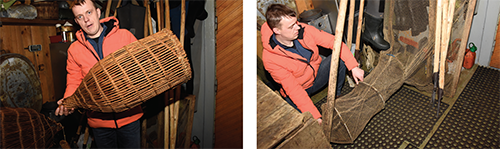
How and where the gear is set reflects both tradition and regulation. In Latvia, specialised lamprey fishing is permitted in 16 rivers, using either lamprey traps or lamprey weirs. The classic weir fishery, described as a unique and ancient technique, now survives in only a few places, notably on the Salaca, Svētupe, and Venta rivers, where fishers rebuild weirs before each season. The Salaca bridges are rebuilt from scratch each year, largely from wood, partly because the structures are too fragile to survive ice and spring floods, and partly because the river’s status and restrictions mean fishers cannot simply replace wood with concrete and steel. Even so, fishers have adapted, for example by, replacing older bindings such as bark with steel wire for durability, and switching from cane basket-like traps to nylon net traps.
Restocking programme contributes to sustainability of fishery
Fishers using the bridge-and-trap method are allowed to block roughly two thirds of the river width with traps, while one third must remain open to permit the passage of other species, and, inevitably, some lampreys. This is important for the sustainability of the fishery, says Mr Rozensteins, who firmly believes that catching everything would quickly undermine future seasons and the activity for future generations. The design of the gear also keeps bycatch low. On the Salaca, the trap opening is small, larger fish can see and avoid the gear, and any occasional bycatch is easy to release because the fish are alive and can be removed by hand. Latvia’s approach to managing the resource combines fishing regulations with restocking. River lamprey is protected under EU and national legislation, and the country has maintained a state restocking programme since 1991, run through the Scientific Institute of Food Safety, Animal Health and Environment (BIOR) and implemented via state fish farms. Each year, Latvia releases around 10 million river lamprey larvae (ammocoetes) into rivers and millions of juveniles of other species as part of its restocking efforts. The programme depends on collaboration with fishers, who catch migrating spawners in autumn; these are held over winter in flow-through systems so they mature naturally, and larvae are later released over kilometres of suitable habitat. In addition to stocking, Latvia has used translocation, moving spawners past barriers such as waterfalls that block migration.
Monitoring is an equally important pillar, not least because lamprey biology complicates standard fish stock assessment. Lampreys spend years as larvae buried in fine sediments, which makes larval surveys a practical way to track populations. BIOR has carried out regular monitoring of ammocoetes since 1998, and it compiles data from fishers’ logbooks to understand trends in catches and the characteristics of the fish taken. BIOR has also used tagging and recapture surveys to estimate population size and fishing gear efficiency. For fishers, however, management is experienced most immediately as weather, water, and timing. Mr Rozensteins describes river levels that can rise dramatically in days, forcing traps to be removed to protect the bridge and to prevent leaf-and-debris build-up that chokes flow through the traps. He also links catch success to wind direction. West and south-west winds blowing from the sea help lampreys sense the river and enter it, while dry autumns, low flow, and more frequent easterlies can suppress runs and push more migration into spring.
Grilled lamprey is highly popular
Economically, the lamprey fishery is small in volume but outsized in importance for those who depend on it. National catches vary year to year and even at the river level, Mr Rozensteins says, on one bridge a bad season might bring three to four tonnes while a very good season around ten tonnes. According to Mr Rozensteins, the number of people involved in the fishery is limited to perhaps 30 to 40 individuals across Latvia, many of them combining it with processing activities and with fishing for other species. The value generated is supported by strong domestic demand around celebrations, such as Christmas, when consumers look for traditional foods. Processing is often close to the fishing grounds. Along the Vidzeme coast, especially the Carnikava area, small family businesses process lamprey using recipes and skills passed down through generations. Carnikava lamprey, baked on charcoal, has won use the EU’s Protected Geographical Indication label since 2015, a recognition of both origin and processing method in the marketplace. After landing, lampreys are typically left for 12 to 24 hours before grilling, with timing adjusted by season and temperature, partly to let the flesh relax so the texture and taste meet expectations. Grilling is commonly done over real charcoal in wood-fired stoves; attempts to replicate the flavour with electricity, he says, do not satisfy customers. Products range from ready-to-eat portions in plastic containers through to lamprey preserved in glass jars. The latter have a longer shelf life making it possible spread sales over a period even when catches arrive in peaks.
Domestic market vies with Latvian diaspora to buy lamprey
One reason lamprey can be processed with comparatively little cleaning is biological timing. Fishers target lamprey during the upstream migration when the animals have stopped feeding, and, as Mr Rozensteins explains, the gut and organs have largely regressed, so the fish do not need to be gutted like eels or larger lamprey species elsewhere. For products in jars, the heads may be retained to add fat during preparation but may then be removed before packaging. Trading patterns reflect both history and current geopolitics. In Soviet times, Mr Rozensteins states, much of the lamprey went to markets such as Moscow and St Petersburg, reinforcing its reputation as a premium product. Today, the market is primarily in Latvia, with some exports to the Latvian diaspora in other parts of the world. In terms of price, his product averages around EUR 34 per kilogram when sold directly, while at retail stores it can reach EUR 44–45 per kilogram, creating incentives both to expand production and to sell through channels such as festivals and on-site tourism. Lamprey festivals in places such as Carnikava and Salacgrīva showcase preparation methods, attract visitors to fishing sites, and keep knowledge alive. Mr Rozensteins has also organised visits where tourists learn the history, see the gear, and taste freshly grilled lamprey, and he notes that the fishing method and related production have received additional recognition as national heritage, adding another layer of protection for the practice. Today, a lamprey fishery alone is insufficient to generate the income necessary to support a small business, but combined with processing and tourism-related activities it is economically viable, says Mr Rozensteins. This ancient tradition has managed to thwart the pressures of changing weather, labour constraints, and the loss of traditional markets to prove that it still has a sustainable future.