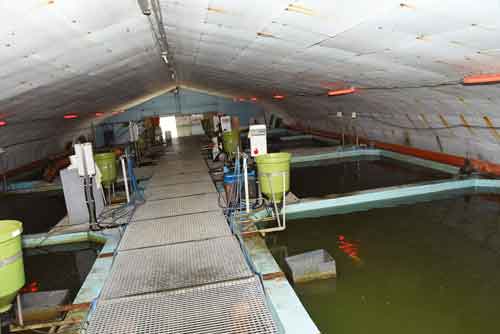
This article was featured in Eurofish Magazine 5 2026.

Artificial intelligence (AI) is in the process of revolutionising aquaculture. Where fish farmers once stood at the pond edge with a measuring device, algorithms now analyse data on water quality, temperature, and animal behaviour in real time. With this information feed costs can be reduced and diseases detected at an early stage, making aquaculture more successful, sustainable, environmentally compatible, and ultimately more profitable.
Since the US company OpenAI enabled access to the ChatGPT chatbot as a new artificial intelligence (AI) tool in 2022, the media have speculated extensively about the possible consequences of this technology. While some spoke enthusiastically about the opportunities, others conjured up more gloomy scenarios. AI, they said, would make some professions redundant and fundamentally change the world of work as we know it. Some concerns appear justified, because the potential of this technology is vast. In the past, developments usually served to solve an existing problem; with AI, the situation is reversed: a revolutionary technology has been developed, and people are now looking at all the areas in which it can be used. And almost all experts agree that aquaculture is among the particularly promising fields of application for AI.
Aquaculture is currently experiencing a veritable explosion of innovation. Around half of all software applications in this sector have been introduced in the past five years. More than half of them use computer vision and image recognition algorithms, and nearly 70 per cent already use deep-learning algorithms. Artificial intelligence is supposedly achieved when, in a conversation, it is no longer possible to distinguish whether an answer comes from a human or a machine. Many ChatGPT answers are clearly formulated and so comprehensive that distinguishing between human and machine is difficult. Not every AI response is correct and coherent, of course, but that is hardly unusual among human interlocutors either. In any case, a great deal of money is currently flowing into equipping aquaculture with AI. Investors see tempting profit opportunities here, because while market prices for fish and seafood are rising, the costs of the new technology are already beginning to fall. The claim that AI is the key to the future of aquaculture is becoming widespread.
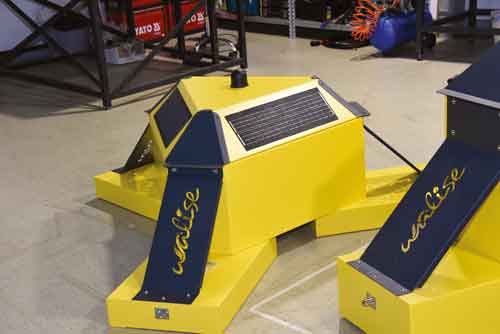
Farming in freshwater earthen ponds, as widely practised in the Czech Repulic, Poland, Romania,
and Hungary among other countries, also benefits from devices that can monitor and analyse water quality.
The use of artificial intelligence in aquaculture, especially machine learning, only began after 2010. In 2015, just one company in ten used AI. Today it is one in two, and the number is steadily growing. Analysts often describe data as the “new oil”. Data are indeed the fuel that keeps algorithms, as the engine, running continuously. From 2010 to 2020, the estimated volume of digital data on Earth increased thirtyfold. This period also corresponds directly with the introduction of AI-driven applications in aquaculture. If data are the new oil, sensors are to AI what boreholes are to the oil industry. Water-quality sensors, cameras, satellite images, and hydroacoustic equipment pump enormous quantities of data into the world every second, which can only be evaluated and managed with intelligent algorithms. More than 75 per cent of aquaculture companies are reportedly already using at least one type of sensor in their daily routines.
What is the secret behind this enormous success? What can AI do that “normal” software cannot? The main difference is probably that AI can be trained to learn from datasets. Its “hunger for data” is enormous. The more data it is fed, the “smarter” AI becomes. On the basis of this increased “intelligence”, it can achieve remarkable results in prediction, automation, and classification. This ability makes AI particularly suitable for aquaculture, with its many complex processes and procedures. AI can make aquaculture more efficient, resource-saving, and environmentally friendly. With the help of data from underwater cameras and sensors, algorithms analyse fish behaviour, estimate biomass, and adjust feed quantities in real time. This preserves water quality, reduces waste, and enables the early detection of diseases or parasites.
More and more useful areas of application
The capabilities of AI are already remarkable, and more are constantly being added. Water-quality data such as oxygen content, pH, and temperatures, where actual and target values are compared, provide rapid support for decision-making. Recorded parameters on growth, biomass, and movement patterns provide indications of possible stress in the species being farmed. Such data are collected with underwater cameras and analysed with the help of image-recognition algorithms. AI is particularly effective, however, in feed and feeding management, which together account for around half of aquaculture operating costs. One third of AI applications are used in this area. This figure is exceeded only by AI-based biomass estimates combined with growth forecasts, which account for 41 per cent. Visual object-recognition technologies make it possible to count the fish in a stock, measure their size, and estimate biomass and growth. Advanced sensor technology combined with AI algorithms detects emerging problems, supports decision-making, and often even provides recommendations for action to avert risks.
One area in which the use of AI quickly pays off is the evaluation of measured oxygen levels in the water. Such measurements are part of the daily routine at almost all aquaculture farms. AI, however, goes beyond merely recording data in real time and identifies trends and patterns in fluctuating values, allowing adverse developments and emerging threats to be predicted. On this basis, the aquaculture producer can take appropriate countermeasures in good time, such as increasing aeration, reducing feeding, or exchanging the water.
Some of the capabilities of artificial intelligence are already extremely remarkable, yet other developments are just starting to gain momentum. AI-supported systems, for example, use underwater cameras and sensors to analyse the feeding behaviour of fish. The algorithm recognises when the animals are satiated and adjusts the amount of feed in real time. This prevents feed wastage and protects the water from unnecessary pollution. Image-recognition systems using machine learning monitor the behaviour, appearance, and swimming patterns of fish. As soon as they detect deviations from normal values that could indicate stress or disease, they raise an alarm, enabling clinical checks and the initiation of necessary treatment. Such early-warning systems are available not only for fish species, but also for shrimp, where, under real-time farm conditions with high stocking densities, they allow early analysis of individual sizes, growth, numbers, mortalities, and stress. This, too, is an important contribution to improved animal welfare in aquaculture.
AI can take over complete farm management
The “supreme discipline” of AI-supported process control is probably autonomous farm management, in which all processes, from monitoring the life cycle of the fish to water quality and animal behaviour, are controlled largely by AI algorithms. For this the entire aquaculture facility must be monitored continuously with sensors and cameras. To create optimum growth conditions, parameters such as oxygen content, pH, and temperature must be regulated autonomously in all ponds and tanks, digital early-warning systems must be installed, and animal behaviour checked for deviations from normal patterns. In terms of sensor and computer technology, all this already appears to be feasible, but the costs would be enormous, jeopardising the economic viability of such operations. Moreover, implementation would require the facility to be largely shielded from external influences such as severe weather, solar radiation, or the supply of surface water. Automatic management concepts are therefore probably most likely to be feasible in recirculating aquaculture systems (RAS).
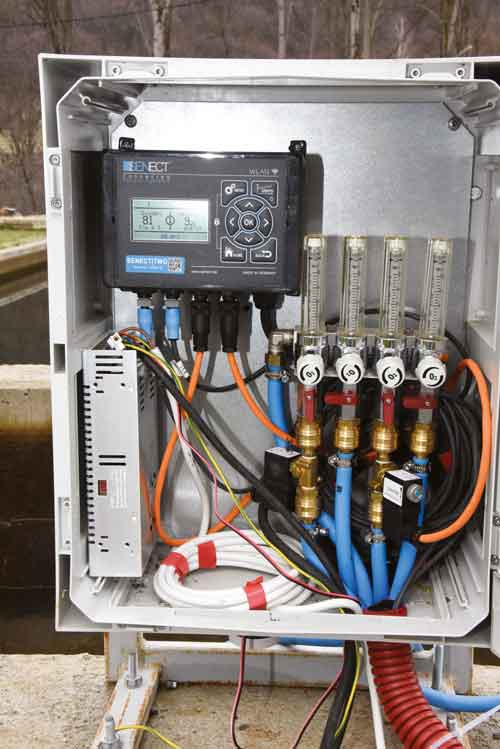
A device that monitors oxygen levels and releases oxygen when thresholds are breached is used here
on a trout farm growing the fish in raceways.
AI-based monitoring programmes provide important information about farmed fish within fractions of a second. Without removing fish from the water, AI technologies such as machine learning and computer vision can use image analysis to estimate fish size, weight, and numbers. On this basis, the programmes then calculate growth rates and feed requirements. If the size distribution of fish in ponds or tanks reaches critical values, grading of the stock is recommended. Everything is aimed at ensuring optimum growth under the prevailing conditions and avoiding fish losses caused by disease. To achieve this, fish behaviour, willingness to feed, and social interactions are monitored continuously and combined with water parameters such as nitrate, nitrite, oxygen, and organic loads. The AI-based monitoring programmes visualise all data in real time, thereby providing a solid basis for controlling and optimising farm operations.
What stands in the way of widespread use
Such advantages are, in fact, convincing arguments for the widespread use of AI technologies in aquaculture practice. While they are already being used increasingly in many companies in major aquaculture nations such as Norway, Canada, and Chile, the introduction of this software elsewhere often still meets with reservations. Asia’s aquaculture sector, for example, produces around 90 per cent of all farmed fish and seafood worldwide, yet has generated only 23 per cent of the technology companies in this sector. Despite the advantages, the introduction of AI applications is often viewed sceptically there. One obstacle is the high purchase and maintenance costs, which are beyond the means of many small-scale producers. AI systems also require a wealth of data, which in turn demands sensors, cameras, and other modern equipment, and staff must be appropriately trained to operate and maintain it. People probably also fear that AI and automation could lead to job losses. However much effort is made locally to create greater awareness of modern technologies, and incentives are sometimes offered for their introduction, AI applications are so far removed from everyday realities and traditional production methods in many developing countries that it may take generations before they actually achieve widespread impact.
Given this situation, can it really be claimed that digital technologies and AI are revolutionising aquaculture, and that they are the future of this sector? Is it really only a matter of time before these innovative technologies are also used on a broad scale in low-income countries? There is no denying that AI has the potential to reshape the aquaculture industry. It offers innovative solutions to challenges that are currently holding back the sector’s development. With AI, aquaculture can become more productive, sustainable, and efficient. There are encouraging signs. Modern technologies are becoming cheaper, sensor costs are falling, and algorithms are getting better all the time. The internet offers more opportunities for online learning, making education and training more accessible and less expensive. This also strengthens the hope that, with these developments, AI can play an increasingly important role in intelligent, data-driven decision-making throughout the aquaculture value chain.
Manfred Klinkhardt