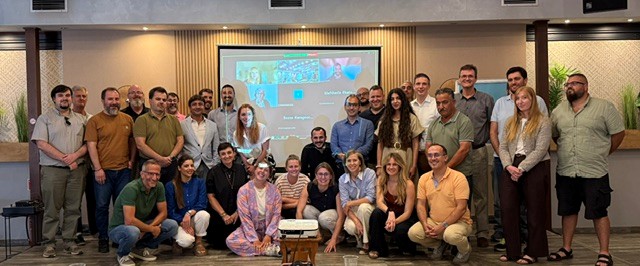
European fisheries are under increasing pressure to deliver sustainability, transparency and compliance while remaining economically viable. Overfishing, discards, bycatch and illegal, unreported and unregulated fishing continue to undermine marine ecosystems and weaken trust in seafood supply chains. Yet fragmented, delayed, or paper-based reporting, widespread among small-scale and recreational fisheries, is the data source for many monitoring, control and surveillance systems.

FIDEL, a Framework for Integrated Data-Driven IntelligEnce in Fisheries Monitoring, ControL and Surveillance, has been designed to address this gap. The project brings together fisheries expertise and digital technologies to support a new generation of fisheries control systems. Its central ambition is to make fisheries data more accurate, interoperable and useful for all stakeholders. Technologies include smart vessel monitoring, satellite surveillance, IoT-enabled gear tags, and electronic logbooks. By combining these and other sources, FIDEL aims to move towards integrated monitoring that can provide a clearer picture of fishing activity from sea to shore. AI-based image recognition will support automatic species identification of target species, bycatch, and sensitive species. Portable DNA-based assays will add another layer of verification, helping to strengthen confidence in landing declarations.
FIDEL will also explore secure data exchange through distributed ledger technologies, creating tamper-proof records and enabling information-sharing between competent authorities. Anomaly detection and pattern recognition will help identify possible irregularities and support near real-time detection of suspicious activity. A central dashboard will allow authorities to cross-check logbooks with landing declarations, sensor data, and environmental information. Moreover, FIDEL places strong emphasis on training and stakeholder engagement. The project will validate its framework through four pilot cases: small-scale artisanal fisheries in Madeira, as an EU Outermost Region; small-scale fisheries in Cyprus; recreational fisheries in Croatia and Hungary; and EU long-distance fisheries in Mauritius and the Indian Ocean. These pilots will allow the project to test its solutions under realistic conditions with fishers, competent authorities and other stakeholders, while assessing usability, scalability and transferability across different fisheries contexts. By linking pilot demonstrations with commercially available reporting solutions, FIDEL aims to accelerate uptake across Europe and beyond.