This article was featured in Eurofish Magazine 4 2026

As the FishEUTrust project comes to an end, it leaves behind a timely contribution to one of the seafood sector’s most important challenges: how to strengthen consumer confidence in fish and seafood by making quality, safety, sustainability, and origin more visible and verifiable.
European fish farming and seafood production are already associated with high product standards, but the sector still faces a trust gap. Consumers increasingly want to know where their food comes from, how it was produced, whether it is safe, and whether the information on labels can be trusted. At the same time, seafood supply chains are complex, often involving several actors between producer and consumer. This can make it difficult to communicate reliable information in a way that is useful for both businesses and the public. FishEUTrust was developed to address this gap.
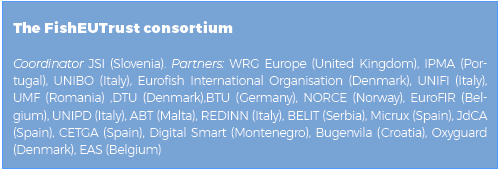
Funded under Horizon Europe’s Farm to Fork mission area, the project brought together 22 partners from 14 countries, including research organisations, technology developers, industry representatives, and communication specialists. Its purpose was not only to develop individual tools, but to connect them into a broader system that can support transparent, traceable, and trusted European seafood supply chains.
From technology to trust
One of the main innovations of FishEUTrust is its integrated approach. Rather than treating traceability, food safety, sustainability, consumer behaviour, and business models as separate issues, the project has worked across these areas at the same time. Trust in seafood depends on whether the information generated by technology is credible and useful to companies, regulators, and consumers.
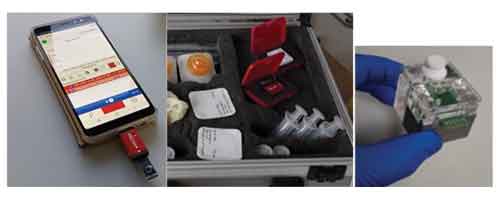
Examples of FishEUTrust developed sensors for strengthening risk-based controls. Left, sensor for detection of pathogenic bacteria or antibiotics enabled through a FishEUTrust developed mobile app. Middle, a sensor kit for detection of marine toxins also enabled through a FishEUTrust developed mobile app. Right, developed sensor based on an electrochemical chemotransistor, which is used for analysis of fish freshness.
The project combined advanced scientific methods with digital tools and practical demonstration activities. These included sensors for monitoring product quality and safety, genomic and isotopic techniques for verifying authenticity and origin, among others. Together, these innovations are intended to make seafood supply chains more transparent from production and processing through to distribution and consumption.
The FishEUTrust digital platform is a modular system designed to support seafood traceability, safety monitoring, nutrition information, and sustainability assessment across the entire value chain. By integrating batch-level lifecycle tracking with data from advanced biosensors, microbiome and isotopic analyses, and aquaculture monitoring systems, the platform enables products to be followed even when they are transformed, split, or merged. The platform was integrated with commercial aquaculture production monitoring solutions, including OxyGuard Cobália, to demonstrate
interoperability with existing industry systems. Its flexible architecture accommodates stakeholders with different levels of digital maturity, while ensuring reliable data management and information exchange. In addition to traceability and safety information, the platform provides nutritional data and sustainability indicators, supporting more informed decision-making. Validated in five FishEUTrust Living Labs across Europe, the platform demonstrates how integrated digital technologies can enhance seafood authenticity, safety, and sustainability while ensuring compliance with emerging EU traceability and food policy requirements.
Sensors and monitoring systems
The development of smart control systems has been one of the most visible areas of innovation in FishEUTrust. Sensors and monitoring tools can provide rapid information on conditions that affect seafood quality and safety, including temperature, water quality, freshness, and the possible presence of contaminants or pathogens. In seafood supply chains, where freshness and correct handling are essential, this kind of real-time or near-real-time information can help companies identify risks earlier and respond more effectively.
FishEUTrust has explored the use of biosensors for detecting biotoxins, antibiotics, and pathogens in seafood products, alongside water-quality sensors. These technologies are relevant both for fish farm management and for monitoring conditions during storage and transport. By connecting such measurements to digital systems, the project shows how quality and safety data can become part of a broader traceability record rather than remaining isolated technical information.
Genomics, authenticity, and product passports
Another important result of FishEUTrust is its work on tools to verify seafood authenticity. Misdescription of species, origin, or production method can damage consumer trust and undermine legitimate operators. To address this, the project has included methods that can help confirm whether a product is what it claims to be and whether the information attached to it is scientifically supported.
The integration of these tools with product passports is especially significant. A product passport can act as a digital record containing key information about a seafood product, including origin and handling. When linked to traceability systems product passports can make information more accessible and more reliable throughout the value chain.
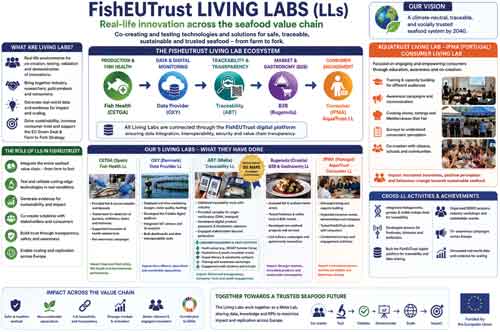
The purpose, outputs, and impacts of the FishEUTrust Living Labs are presented in the infographic.
For consumers, this could mean clearer and more trustworthy information at the point of sale. For businesses, it can support brand value, market access, and compliance. For regulators and policymakers, it can provide a stronger evidence base for monitoring supply chains and supporting sustainable production.
Living Labs as real-world testbeds
FishEUTrust also established five Co-creation Living Labs in the Mediterranean Basin, the North Sea, and the Atlantic Sea. These are practical environments where project partners test and validate solutions with stakeholders to ensure they reflect real user needs.
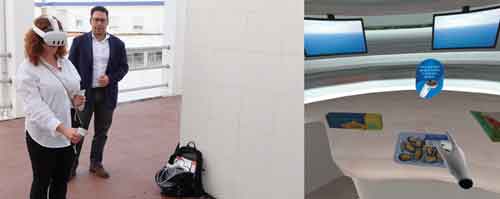
As part of the Consumer engagement UNIBO developed a VR space for consumer research.
Here consumers could be engaged in virtual choice experiments where their preferences toward seafood products will be analysed, considering parameters as specimen, preparation, labelling, and willingness to pay.
The Living Labs enabled the project to study short food supply chains, underused species, cultural and culinary heritage, and consumer engagement activities. They also provided opportunities to examine how new tools might fit into existing business practices.
Consumer engagement and behavioural change
The project also recognised that trust depends not only on the availability of information but on how effectively that information is communicated. FishEUTrust therefore developed and tested a range of consumer-oriented communication and engagement approaches designed to increase awareness, improve understanding of seafood supply chains, and support more informed purchasing behaviour.
Digital tools, enhanced labelling concepts, digital product passports, interactive visualisations, and games (https://feut.belit.co.rs/game/) were used to make information on seafood origin, safety, quality, sustainability and nutritional value more accessible and engaging. Consumer testing demonstrated that easily understandable information can increase confidence in seafood products, particularly when linked to verified scientific evidence and traceability systems. Participants showed strong interest in information related to product origin, production methods, and freshness, among others.
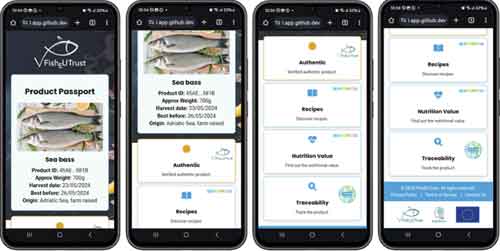
The FishEUTrust developed a digital product passport to better inform consumers and provide comprehensive traceability and data tracking across the seafood supply chain. This is the current working
concept for the digital product passport that will be available at project end.
The project further demonstrated that consumer engagement is most effective when information is tailored to different consumer segments and presented through intuitive and user-friendly formats. Results suggest that future traceability systems should move beyond compliance-driven information provision and focus on delivering clear messages that address consumer concerns and expectations. Educational activities, interactive digital solutions and targeted communication campaigns were identified as important mechanisms for improving public understanding of aquaculture.
By linking consumer-facing communication tools with scientific verification methods and digital traceability technologies, FishEUTrust established an evidence-based framework for consumer engagement. The project demonstrates that trust can be strengthened when transparency, scientific validation and effective communication are combined within a single integrated ecosystem, providing a foundation for future consumer-centred seafood traceability and sustainability initiatives.
A platform for future seafood transparency
The overall result of FishEUTrust is not a single technology, but a connected framework for improving trust in European seafood. As the project ends, its legacy lies in demonstrating that trust must be built across the whole value chain. For the European seafood sector, the project’s message is clear: transparency is becoming a competitive strength. By making product quality, safety, origin, and sustainability easier to verify and communicate, FishEUTrust has helped lay the foundations for seafood supply chains that are not only more traceable, but also more trusted.
Søren E. Schrøder, Eurofish, ses@eurofish.dk