This article was featured in Eurofish Magazine 4 2026.

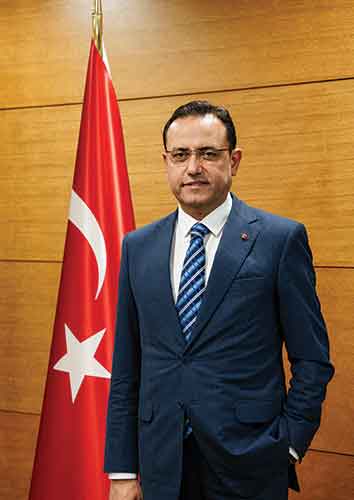
The Turkish fisheries and aquaculture sector, as a rapidly growing industry in terms of both production and exports, not only contributes to the country’s economy but also supports the supply of healthy food on both national and global scales. In 2025, a record production of 1 million 37 thousand metric tonnes—the highest in the country’s history—was achieved. Of this total, 410 thousand metric tonnes came from capture fisheries and 627 thousand metric tonnes from aquaculture, with aquaculture’s share reaching 60 percent. The steady growth in aquaculture production has also been reflected in foreign trade, with 288 thousand metric tonnes of aquatic products exported, valued at $2.3 billion. Ebubekir Gizligider, Vice Minister of the Ministry of Agriculture and Forestry, speaks here about the development of Turkish fisheries and aquaculture sector with a vision for the future.
Türkiye is now Europe’s most important producer of farmed sea bass, sea bream, freshwater trout and, increasingly, Black Sea-raised large rainbow trout (Turkish salmon). Over the next five years, where do you see the most realistic growth coming from: higher volumes of existing species, new species, value-added processing, or stronger branding of Turkish fish on export markets?
For Türkiye, growth in aquaculture is meaningful not only in terms of increased production volume, but also in terms of sustainability, economic value creation, and international competitiveness. In the coming period, we expect growth to come from planned increases in existing species, the development of strategic products such as Turkish Salmon, greater species diversification, stronger value-added processing capacity, and further progress in branding in export markets.
Sea bass, sea bream, and trout will continue to form the backbone of our sector. Turkish Salmon, in particular, has become an important export product thanks to the advantages offered by the Black Sea and the experience of our sector. Our objective is not uncontrolled capacity expansion, but planned growth that safeguards quality, biosecurity, and market stability. In 2024, Türkiye introduced production planning covering sea bass, sea bream, trout, Turkish Salmon, and Mediterranean mussels. These species account for approximately 98 percent of our aquaculture production. In addition, species such as Mediterranean mussels and sturgeon offer significant value-added potential. Our aim is not only to produce more, but also to obtain higher value from every kilogram produced.
Aquaculture has expanded rapidly, but growth could also bring pressure on coastal spaces, the marine and freshwater environments, and relations with tourism and other maritime users. How does the ministry balance further aquaculture development with other conflicting demands?
Aquaculture is one of the most strategic components of Türkiye’s blue economy. However, we do not evaluate this development solely in terms of production growth. Our approach is to ensure that aquaculture develops in harmony with environmental protection, tourism, fisheries, maritime transport, and other sectors using coastal areas.
New production areas are assessed on the basis of scientific studies and the opinions of relevant institutions, while environmental impacts are regularly monitored. Environmental sustainability is at the centre of all our decisions. Water quality, benthic structure, and biodiversity are monitored, and we aim to strengthen environmental performance through digital and advanced monitoring systems. In addition, new approaches such as offshore aquaculture can reduce pressure on coastal areas while offering new opportunities for sustainable growth. Our aim is to develop a model that protects production and the environment together.
Türkiye’s fisheries sector depends heavily on the Black Sea, while the wider region has been affected by war, disrupted logistics, and energy-price volatility. How has the geopolitical situation changed the operating conditions for Turkish fishers, Black Sea fish farmers, and seafood exporters? Are there plans to increase production of Turkish salmon in the Black Sea?
The Black Sea is a strategic region for Türkiye’s fisheries and aquaculture sector. It is an important basin for capture fisheries, particularly anchovy, and is also the main production area for Turkish Salmon. Recent geopolitical developments have affected operating conditions mainly through increases in energy, logistics, feed, transport, and packaging costs. Fishers have faced higher fuel costs, while aquaculture enterprises, processing facilities, and exporters have had to adapt to more challenging supply chain conditions. Nevertheless, Türkiye’s strong processing capacity, logistics infrastructure, and diversified export network have enabled the sector to respond quickly to changing conditions.
Turkish Salmon has become a strategic export product thanks to public policies, private sector investment, and producer experience. We see significant potential in the Black Sea; however, the objective is not uncontrolled expansion. Any increase in salmon production in Türkiye will take place within the production planning framework and in line with environmental carrying capacity, biosecurity, fish health, processing capacity, and market demand.
Türkiye has a large capture fisheries fleet and remains a leading fishing nation in the Mediterranean and Black Sea region. How does the administration intend to improve stock status and reduce pressure on sensitive species, while at the same time ensure that fishing remains economically viable for coastal communities?
Türkiye is one of the leading fishing countries in the Mediterranean and the Black Sea, and fisheries are vital for food security, employment and the livelihoods of coastal communities. Our policy is therefore built on balancing the sustainable use of marine resources with the long-term viability of the fishing sector. To improve stock status and reduce pressure on vulnerable species, we implement science-based management measures in line with our national priorities and our commitments under the GFCM. These include quotas for key stocks, seasonal and area closures, minimum conservation reference sizes, licensing, vessel monitoring, electronic reporting, landing controls and strong monitoring, control and surveillance activities.
These measures are supported by extensive enforcement, with more than 200,000 fisheries inspections conducted annually to combat illegal, unreported and unregulated (IUU) fishing and ensure compliance. We believe that healthy fish stocks and prosperous fishing communities go hand in hand. Through science-based management, effective enforcement and regional cooperation, Türkiye is committed to ensuring that fisheries remain both environmentally sustainable and economically viable.
Climate change is already affecting temperatures of marine and inland waters, accelerating the presence of alien species, increasing disease risks, and causing shifts in the migration patterns of some marine species. Which climate-related changes worry the ministry most? Are mechanisms in place to help fishers and fish farmers adapt? For example, is the ministry encouraging the use of recirculating aquaculture systems for freshwater trout and/or other emerging species?
Climate change is no longer a distant risk; it is a sectoral reality that must be managed today. The main risks include rising temperatures in marine and inland waters, changes in species distribution, invasive species, disease and biosecurity risks, and pressure on water resources. These developments can directly affect both capture fisheries and aquaculture production. In order to adapt to these risks, scientific monitoring, early warning systems, fish health practices, and biosecurity measures are being continuously improved. In addition, recirculating aquaculture systems, aquaponic applications, and other innovative technologies that contribute to more efficient use of water resources are considered important tools for climate change adaptation.
Investments in modern aquaculture technologies are supported under the grant and investment support schemes implemented by our Ministry. In addition, research and development activities on climate change adaptation, new aquaculture technologies, water efficiency, fish health, and alternative production systems are encouraged through R&D support. Our aim is to make the fisheries and aquaculture sector more resilient to climate risks, more efficient in the use of resources, and more sustainable.
Türkiye’s domestic seafood consumption remains modest compared with its production and export capacity. Does the ministry see scope to increase domestic consumption, and, if so, what policies or campaigns are needed to make fish more accessible and attractive to Turkish consumers?
Türkiye has strong production and export capacity; however, there is still potential to increase per capita consumption of fisheries and aquaculture products. In recent years, thanks to awareness-raising and promotional activities carried out in cooperation with our Ministry and sector stakeholders, particularly the Central Union of Aquaculture Producers of Türkiye, annual per capita consumption of aquatic products has reached 8.8 kilograms in 2025. Campaigns involving well-known physicians, academics, and digital media content creators have also made an important contribution to this process. Nevertheless, this figure remains below the world average, and there is still significant potential to increase consumption.
Increasing domestic consumption is important not only for the sector, but also for public health and balanced nutrition. In this context, making fish more accessible and practical for consumers is among our priorities. Filleted, portioned, cleaned, frozen, and ready-to-cook products offer important opportunities, particularly for younger consumers and urban lifestyles. Aquaculture products provide regular supply throughout the year and help reduce seasonal fluctuations in consumption. The development of the cold chain, improved access to inland regions, correct labelling practices, and strengthened consumer confidence are also important. In the coming period, we will continue our efforts with sector stakeholders to further develop a culture of fish consumption.
The sector includes many small-scale fishers and smaller aquaculture operators where output is minor, but the socio-economic importance is significant. How can policy support competitiveness of this part of the sector without weakening rural employment or the social fabric of coastal communities?
Small-scale fishers may have a limited share in total production, but they are highly important in terms of employment, coastal culture, local knowledge, and social cohesion. Small and medium-sized aquaculture enterprises are also valuable for family labour, rural development, and regional economies. The policy approach should not be limited to passive support alone; it should help this segment become more organised, registered, efficient, resilient, and connected to higher-value chains. Cooperatives and producer organisations play a critical role in joint purchasing, joint sales, cold chain development, certification, financing, and marketing.
For small producers, targeted support, insurance, energy and water efficiency, technical advisory services, digitalisation, direct sales, local branding, fisheries tourism, and female and youth entrepreneurship are important.
Marine spatial planning has become more sensitive in the eastern Mediterranean and the Aegean, where countries’ fisheries, aquaculture, shipping, energy, tourism, and security interests all make claims on the area. How should Türkiye protect its sectoral interests while maintaining its cooperation with neighbouring countries?
Marine areas in the Eastern Mediterranean and the Aegean are increasingly used for fisheries, aquaculture, tourism, transport, energy, environmental protection, and security. Türkiye’s approach is to protect its legitimate rights and interests while maintaining technical and scientific cooperation with neighbouring countries. Fish stocks, water quality, alien and invasive species, disease risks, and climate change do not recognise borders. Therefore, data sharing, joint scientific studies, stock monitoring, environmental observation, and combating illegal fishing are important.
Balanced management of marine areas requires science-based site selection, carrying-capacity assessment, environmental monitoring, and inter-institutional coordination. Our aim is to ensure that marine areas are managed on the basis of planning, sustainability, and cooperation.
What are your medium-term priorities for the sector? In 2030, apart from higher production and exports, what other parameters would you consider as indices for the successful implementation of Turkish fisheries and aquaculture policy, and how would you measure this success? How can the long-term environmental sustainability of the aquaculture sector be ensured?
Our medium-term priority is to transform the sector into one that is not only producing more, but is also more sustainable, competitive, traceable, resilient, and value-oriented. In 2030, success should not be measured only by production and export volumes. The health of fish stocks, the sustainability of fishing pressure, the protection of sensitive species, progress in combating illegal, unreported, and unregulated fishing, water quality, biosecurity, disease management, and feed and energy efficiency are key indicators.
Economically, export value per unit, the share of processed products, brand strength, certified production, and market diversification should be monitored. Socially, the welfare of small-scale fishers, women, young people, cooperatives, and coastal communities is important. Long-term environmental sustainability will be ensured through production planning, carrying-capacity assessment, digital monitoring, climate adaptation, scientific data, and strong inspection.