This article was featured in Eurofish Magazine 4 2026.

Marine biological resources have been managed and administered within the legal framework of the EU’s Common Fisheries Policy (CFP) since 1970. Since then, the CFP has been reformed several times to adapt it to changing needs and challenges. In April 2026, a European Commission working group reviewed and assessed the results of the last reform, which entered into force in 2014. The outcome is mixed; by no means have all objectives been achieved.
Almost everywhere in the world, fisheries and aquaculture face immense challenges. Key fish stocks are declining, fishing fleets are financially strained, and in some areas conditions are precarious. This creates major problems for policymakers. The same applies in the EU, which is seeking sustainability and trying to reconcile ecological, economic, and social concerns. Pressure to act is increasing further as a result of factors such as pollution, climate change, and growing competition for maritime space, for example from wind farms or the designation of protected areas.
With the reform of the CFP based on Regulation (EU) No 1380/2013, which entered into force in 2014, the EU tried to respond to these challenges with a package of new rules. Among the highlights were the mandatory maximum sustainable yield (MSY) approach for all managed fish stocks, a landing obligation to end discards, the strengthening of regionalised decision-making procedures, and the development of aquaculture. A European Commission working group has now examined which of these objectives were achieved in the eleven-year period from 2014 to 2025, since the CFP Regulation entered into force, and where further action is needed. The staff working document for this evaluation was published at the end of April 2026 (Commission Staff Working Document, Brussels, 30.4.2026 SWD 120 final).
The evaluation focused on whether the current CFP Regulation actually helps to ensure environmental sustainability and to achieve economic and social objectives in fisheries and aquaculture. The 2014 reform was aimed above all at rebuilding fish stocks and keeping them permanently at a healthy level through sustainable management. It was also intended to promote the sustainable growth of aquaculture so that, together with fisheries, it could contribute to food security. This set the course for the next steps in implementing the reform for the fisheries sector. Rebuilding fish stocks and ending overfishing would lead to better fishing opportunities and improve the profitability of fishing. It was assumed that the net profit margin would increase 3.5-fold by 2022. Coastal fisheries, in particular, were expected to benefit most from these changes.
Measured against these expectations, the results so far are rather disappointing. Overfishing has declined, the share of sustainably fished stocks stood at only 50% in 2014 but had risen to 63% by 2022, but this is only part of the overall picture, as 21% of stocks showed increasing fishing mortality, indicating a continuing state of overexploitation. There was welcome progress in regional fisheries management organisations (RFMOs) in which the EU participates. In tuna RFMOs, the share of commercially exploited tuna stocks not subject to overfishing rose from 43% in 2014 to 87% in 2024.
Discard ban only partly implemented
One of the main aims of the CFP reform was the gradual elimination of discards in connection with the landing obligation, which was introduced gradually from 2015 and has been mandatory since 1 January 2019. A 2025 study shows, however, that unwanted catches are still being discarded. There was a “high degree of variability in discard rates and no consistent trend was discernible”. Nor has it proved possible to introduce more selective fishing methods and gear in fisheries.
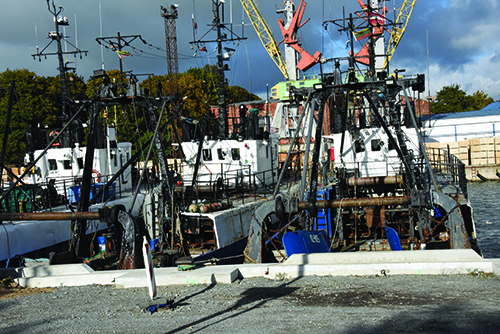
Despite a reduction in total fishing vessel numbers in the EU there is still an imbalance between
capacity and fishing opportunities in some segments which dents profitability.
The number of registered vessels in the EU fishing fleet fell by a total of 5,058 units between 2014 and 2023, a decline of 8.6%. At the same time, the average age of fishing vessels registered in the EU has risen steadily since 2014. In 2023, it stood at 34.8 years. In parallel, the number of newly built vessels has fallen over the past two decades, and the renewal rate is below 1%. Despite the reduction, many fleet segments in 2023 still showed an imbalance between fishing capacity and fishing opportunities. It is therefore hardly surprising that the net profit margin across all fleet segments fell from 8% in 2014 to 1% in 2023. This is far from the expected average net profit margin of around 18%. According to the evaluation, this is mainly due to higher energy costs, which account for a substantial share of operating expenditure.
While the evaluation paints a mixed picture for the fisheries sector, the analysis of the aquaculture sector is predominantly disappointing. There have been some successes in terms of the sector’s environmental sustainability, but production volume has grown by a meagre 2%. The 104% increase in the net profit of EU aquaculture, from EUR 388.8 million in 2014 to EUR 793.8 million in 2022, also gives a misleading impression, since this rise is not the result of higher production volumes but mainly of a shift towards higher-value fish species combined with higher selling prices. Across the EU, around 13,855 companies and micro-enterprises operate in the aquaculture sector, with production focused on freshwater fish and shellfish. The total number of employees has remained largely stable since 2016, but the proportion of young people has fallen sharply. This trend points to the sector’s reduced attractiveness and an ageing workforce. Nominal wage growth has not kept pace with inflation, leading to a decline in real purchasing power. Average wages in aquaculture have risen from EUR 24,070 in 2013 to EUR 25,800 in 2022, but this amounted to only around 72% of the general EU average.
Competitive disadvantages for Europe
Further reasons for the stagnation of EU aquaculture are slow licensing procedures and restricted access to suitable sites. The evaluation report nevertheless says that progress has been made in granting authorisations since 2021. Two thirds of Member States had taken measures to coordinate regulatory and administrative management systems for aquaculture and to digitalise licensing processes. Even so, the total number of newly granted authorisations has declined. Only Germany, Lithuania, and Portugal recorded increases.
With a share of only 2% of world production, the EU is a relatively small producer of fisheries and aquaculture products by global standards. EU vessel landings reached 3.39 million tonnes in 2023, worth EUR 6.14 billion, a 22% decline in volume since 2014, and the lowest level in a decade. The gap with the major Asian producers is steadily widening. Nevertheless, the EU remains the fourth-largest market for fisheries and aquaculture products, after China, India, and Indonesia. Owing to falling domestic landings and stagnating aquaculture, which together cover only 38% of the EU’s need for aquatic foods, dependence on imports of fish and seafood has increased significantly. In 2023, apparent consumption of fisheries and aquaculture products in the EU reached 10.25 million tonnes, equivalent to 22.89 kg per capita, a 7% decline compared with 2014.
Since Brexit, the United Kingdom’s departure from the EU, challenges in the EU fish industry have become more acute. Only one fifth of managed stocks now fall under the exclusive competence of the EU. This and numerous other geopolitical changes have meant that many stocks have since had to be managed jointly with third countries. The EU’s top priority is always sustainability in the use of marine biological resources. EU representatives therefore try, in negotiations with third countries, to work towards this objective and towards high environmental and social standards. Because not all efforts are successful, difficult compromises sometimes have to be accepted, as the EU’s 3,245 fish processing companies, which together generate EUR 33.5 billion, depend heavily on imported raw materials. Spain leads in this area, followed by Italy, France, and Poland.
Rising prices curb consumers’ appetite to buy
Since 2014, retail prices for fisheries and aquaculture products have risen continuously at an average annual rate of 3.8% from 2015 to 2024, corresponding to an overall increase of 41.5% since 2015. This is slightly less than the increase in general food prices, which stood at 44%, but it still had a strong influence on customers’ purchasing decisions. Many noticeably reduced their fish consumption, which in turn affected the profitability of fishing, aquaculture, and processing businesses. This reduced their ability and willingness to invest in modernising and renewing their technology. Some equipment has since come to be regarded as technologically outdated and less competitive than that of their global competitors. This undermines economic resilience to external shocks and uncertainties.
The evaluation shows that the last reform of the CFP has by no means solved all the problems addressed. New challenges have already been added. One example is invasive alien species, which are spreading in many marine areas and threatening native flora and fauna. Fisheries management finds it difficult to take adequate account of these non-fisheries pressures. Aquaculture is also being severely affected by external factors. In the Mediterranean, for example, many mussel stocks and farms are suffering heavy losses as a result of invasive blue crabs. The warming of the seas due to climate change is displacing some fish species from their traditional distribution areas, which severely restricts fishing opportunities for local fisheries. The expansion of offshore wind farms and the designation of marine protected areas have the same effect. The management of limited marine spaces therefore requires stronger political cooperation and coordination already during the planning stages. With the European Ocean Pact and the forthcoming European Ocean Act, EU policy is trying to take account of these changes.
The evaluation’s conclusion is sobering. The catching sector continues to face difficulties because of the state of fish stocks, it says. EU aquaculture is largely profitable but relatively small, which has so far prevented significant production growth. Instead, production volumes are stagnating or even declining. Fisheries and aquaculture therefore make only a moderate contribution to food security, quite unlike what the Common Fisheries Policy Regulation originally intended.
Manfred Klinkhardt