This article was featured in Eurofish Magazine 5 2026.

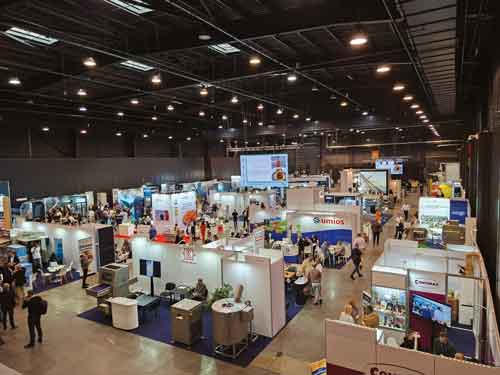
Walking through Polfish 2026 in Gdańsk reveals an enthusiastic and remarkably diverse Polish seafood sector. Officially opened by Jacek Czerniak, Secretary of State at Poland’s Ministry of Agriculture and Rural Development, the fair brings together major processors, producers, technology suppliers and sector organisations, alongside a significant international presence.
Salmon is highly visible at Polfish, reflecting the strength of Poland’s processing industry, but it is only one part of the picture. Carp and sturgeon underline the continuing importance of freshwater production and traditional consumption, while Baltic oysters and other marine and freshwater species add to the diversity on display. Alongside conventional products, companies such as Wolin offered fish in small, ready-to-eat formats, from pickled and dried products to croquettes. The company is catering to demand for convenient ways to eat fish at work, while travelling, or as part of a busy daily routine. Technology is adapting in response. Sismatec presented automated lines suited to smaller individual portions, while Paula Fish demonstrated the breadth of the processing sector through salmon, whitefish, and fish oils.
Lively cooking shows highlight both modern and traditional Polish cuisine
But Polfish is not simply a place to display products and machinery. Cooking is an unusually visible part of the fair. Energetic demonstrations by Polish chefs turn the products exhibited a few metres away into dishes that visitors can see, smell, and taste, showing how seafood can fit both established Polish cuisine and more exotic fare. Sturgeon, for example, appeared in soups prepared using oil obtained from the same fish. Preserved seafood retains familiar flavours while being combined with ingredients to create new and innovative products. Beetroot remains a recognisable accompaniment, but curry and avocado also appear in combinations extending beyond their now familiar use in sushi. Alongside these preparations, fish served raw or with minimal transformation reminds visitors that innovation does not necessarily mean abandoning the product itself.
At Polfish traditional freshwater species stood alongside salmon and other marine fish. Processing covers thawing, gutting, filleting, individual portions, and other formats; while new culinary influences are driving the manufacture of everything from well-known salads, as well as smoked, marinated, and breaded items, to highly value-added ready-to-cook and ready-to-eat products, some of which call for increasingly, specialised technology. International participants, including the Norwegian Seafood Council, Spain’s Petaca Chico, and Iceland Pelagic, showed the importance of Polish processing for raw material suppliers. Polfish presented a sector firmly rooted in Polish production and food traditions but with a vast and internationally facing processing industry, that closely follows European trends in fish consumption.
Ixai Salvo, Eurofish,
ixai@eurofish.dk