This article was featured in Eurofish Magazine 1 2026.

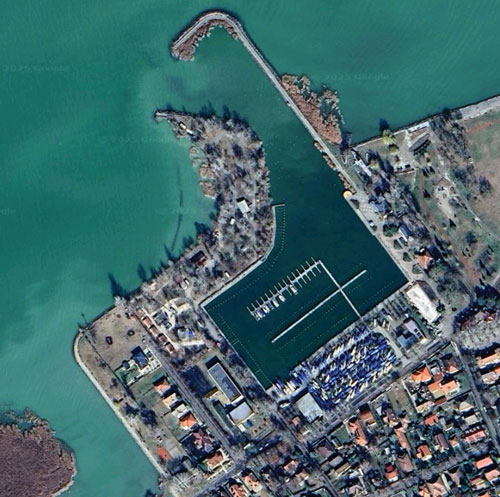
A recent statement by the HUN-REN Balatoni Limnological Research Institute warns that recurring winter fish kills observed near several harbours on Lake Balaton’s southern shore reflect a broader, systemic ecological risk rather than isolated, local incidents. The institute links the problem to the combined effects of climate change and recent intensive shoreline development, particularly the construction, expansion, or reshaping of harbours. Lake Balaton’s winters are increasingly ice-free, though the lake is shallow and exposed to wind. Fish, which feed little during this period, tend to seek calmer, sheltered areas to reduce energy expenditure. On the southern shore, many harbours have developed into large, dredged, strongly protected basins that provide such refuge, drawing large numbers of fish into relatively enclosed spaces.
The institute explains that these sheltered basins often have limited water exchange. When high densities of fish gather in areas with weak mixing, oxygen can be depleted rapidly. Oxygen demand from sediments, combined with low winter oxygen production by algae, can trigger acute oxygen shortage, leading to sudden, large-scale mortality even without an external pollution event. There are structural differences between the northern and southern shores. The northern shore’s deeper nearshore conditions enable more “flow-through” harbour designs, whereas the southern shore’s shallow waters tend to favour closed, dredged basins that may function as ecological traps. Harbours with stronger natural flushing, for example where inflows improve water exchange, are less likely to face oxygen-related fish kill risks.
The institute also addresses common explanations. It argues that cormorants are not the primary cause, although their hunting may worsen outcomes by further concentrating fish in already critical conditions. Likewise, the phenomenon is not directly attributed to natural water-level fluctuations. Current interventions such as aeration and cormorant deterrence are described as short-term, symptomatic measures. Long-term risk reduction, the institute concludes, requires more complex, scientifically grounded harbour planning and redesign that improves water movement and considers climate impacts, harbour geometry, fish behaviour, and the lake’s overall ecological functioning.