This article was featured in Eurofish Magazine 4 2026.

Anyone who thinks of packaging only as protecting the product inside underestimates the variety of its functions. Packaging can also make transport and storage more efficient, simplify handling, and attract attention. In a highly competitive market, packaging is an important marketing tool for differentiation.
Just a few decades ago, it was common to wrap fish simply in newspaper. Newspapers insulate well and absorb moisture. Even fish and chips were sold in cones made from newsprint. Wags even claimed that the printer’s ink was what really gave the dish its characteristic taste. In the 1980s, however, hygiene regulations put an end to this dubious pleasure. Today, the tradition seems to be experiencing a revival in some fish and chip shops, but that impression is deceptive. What looks like a London newspaper is actually a high-tech product, because fish and chips are now served in a hygienic, grease-resistant coated bag.
Paper packaging is still a good choice as an aroma and odour barrier. It forms a barrier that protects the contents from oxygen in the air. The material is often sturdy, which makes it suitable for stacking and palletising. It is frequently made partly from renewable raw materials that are biodegradable or enable high recycling rates. At supermarket service counters, paper for wrapping goods has become indispensable. This is often duplex paper, with a robust outer paper layer and an inner film layer. The material folds like paper, can be printed, is grease-repellent, and is attractive in terms of price.
Packaging legislation creates a binding legal framework
Where newspaper was once sufficient as packaging for fish, far more stringent requirements now must be met. The primary focus is on safety, hygiene, and product protection. In addition, properties such as sealability and temperature stability are becoming increasingly important. Convenience products can sometimes even be cooked directly in hermetically sealed retail packs that are aroma-tight. To steer ideas and developments in the packaging sector in a consistent way, a comprehensive legal foundation is needed. Packaging legislation regulates what may be used as packaging. In the fish and seafood sector, the range of packaging materials is particularly wide. This is due partly to the breadth of the product range (fresh, frozen, raw, smoked, marinated, and so on), and partly to the variety of sales channels (direct sale over service counters, self-service sale, and others). The characteristics and properties of different fish species can also differ significantly (size, fins possibly with spines, scales, slime, and so forth), which must be duly taken into account in packaging.
Primary, secondary, and tertiary packaging
Packaging must fulfil several tasks. Its main purpose is, of course, to protect the product it contains. Beyond that, it should facilitate storage, loading, and transport, support sales through attractive presentation, provide information for customers, and later enable recycling or environmentally sound disposal of the packaging. Directive 94/62/EC of the European Parliament and of the Council of 20 December 1994 classifies packaging types along the logistics chain as primary, secondary, and tertiary packaging. Each of these “packaging levels” serves a different purpose and addresses different target groups in the supply chain.
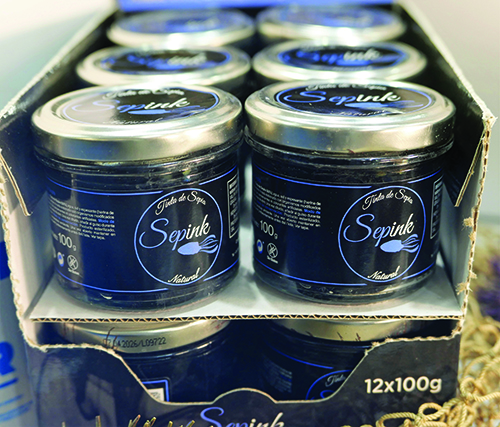
Primary packaging is the packaging that reaches the end customer at the point of sale. It is usually attractively designed so that the item catches the buyer’s eye on the shelf. Primary packaging also serves as a means of communication with customers. It makes products recognisable and is an important carrier of information, providing, for example, details of shelf life, ingredients, and preparation instructions. Secondary packaging, by contrast, bundles several primary packaged sales units when they are to be offered together at the point of sale. An example would be several tins of fish held together by a band, a plastic sheath, or in cardboard sleeves. Shelf ready packaging (SRP) is particularly useful. It is characterised by high display capability and saves a great deal of time and resources in retail. Shelf ready packs, usually cartons or trays, are secure for transport, stackable, can be placed on the retail shelf with just a few simple moves, and thanks to a folding lid or perforated tear-off front, can be opened easily without scissors or knives. This gives customers direct access to the goods. SRP is particularly advantageous for products that belong to the FMCG (fast moving consumer goods) segment.
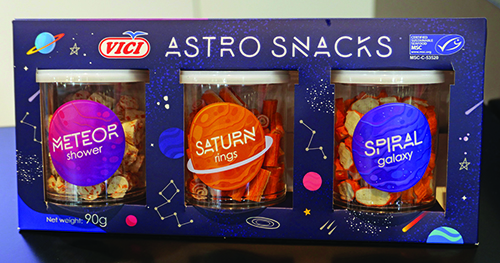
Here, three cups (primary packaging) have been combined into a single sales
unit by means of secondary cardboard packaging.
Tertiary packaging is the next level up and groups together several secondary packaged units. This simplifies handling during transport and storage, and helps prevent damage. Pallets, which play a central role in transport and warehouse processes, are typical of tertiary packaging. In online mail order business, corrugated cardboard boxes and polystyrene boxes can also serve as tertiary packaging. Companies that place packaged products on the market on a commercial basis are legally obliged to register the type and quantity of packaging they use in the public LUCID reporting register. This registration requirement also applies to companies that use only small amounts of packaging.
MAP and VSP dominate for fresh fish
For end customers, primary and secondary packaging are particularly important. They are crucial in determining whether a product catches their eye, how they perceive it, and whether they buy it. Well-designed packaging can even be more important than the product itself, the classic “lipstick on a pig”. Packaging is not only a protective shell and a brand ambassador for the product but also triggers emotions and can overshadow competing products. The range of packaging options in the fish and seafood sector is large, and choosing the right solution is one of the most important marketing decisions. Vacuum packs, polybags, skin packs (VSP, short for vacuum skin packaging), and MAP (modified atmosphere packaging) are packaging options that offer many advantages, especially for irregularly shaped products such as fish, fish fillets, and seafood. They maximise shelf life, provide product safety, and enable appealing presentation at retail level.
Clear requirements for recyclability
Packaging is therefore useful, and often indispensable, but it also creates problems, because once the product has been removed, it becomes waste. Its relatively short life cycle burdens the environment, especially as packaging often consists of plastics that decompose only very slowly. This raises the bar, because packaging must be capable of environmentally sound disposal, be recyclable, or biodegradable. The target recycling rates for packaging are 90 per cent for glass, ferrous metals, aluminium, paper, and cardboard. Composite materials and plastic packaging should be at least two-thirds recycled. This should not pose any problems for tins, which in the fish sector are commonly used and not only for herring, mackerel, sardine, or tuna products. They are mostly made of aluminium or tinplate, which can be recycled almost indefinitely. However, this requires relatively large amounts of energy, which has a negative impact on the carbon footprint. Bio-plastic, which is produced from plant-based biomass such as maize or sugar cane, is a rather controversial alternative packaging material. On the surface, it appears more sustainable than plastics made from crude oil. Life cycle assessments, however, show that bio-based plastic does not offer convincing environmental advantages. The cultivation of maize, sugar cane, or potatoes used as raw materials requires agricultural land that is then no longer available for food production. The manufacture of bio-plastic requires chemicals and a great deal of energy. Disposal is also difficult. Although the term “bio” suggests that it can simply be put in the organic waste bin, but this is not advisable for biodegradable plastic, because decomposition takes considerably longer than for “natural” compost. With the exception of bio-PET, which can be disposed of like conventional plastic, other bio-plastic packaging belongs in the residual waste bin.
Manfred Klinkhardt