This article was featured in Eurofish Magazine 3 2026.

For the 2021–2027 period, Estonia has taken a clear decision to use the European Maritime, Fisheries and Aquaculture Fund (EMFAF) to support not only investments but also applied research and innovation by operators. This helps increase the sector’s competitiveness, promote environmental protection, and strengthen a knowledge-based approach to the sector’s activities.
The sector’s needs were first mapped to identify what operators actually require and then aligned the research programme with the sector’s feedback. To this end, a survey was compiled and sent to more than 2,400 fisheries operators, including fishing, processing, and aquaculture enterprises. The responses sent a clear signal—almost two thirds of the respondents were interested in cooperation with scientists. If research institutions and operators tackle important issues together, it is easier to take ideas to prototypes and trials, and from there to actual application in fishing, aquaculture farms, and industry.
Topics of research and expected results
The Estonian research programmes are structured by theme. In the field of fisheries, the focus is on reducing negative environmental impact and increasing efficiency by developing smarter fishing gear, digital solutions, and by increasing automation. Research is also being conducted into tools (such as cameras and artificial intelligence) to identify the species composition in mixed fisheries, and into cleaner energy sources for fishing vessels. Reducing the damage caused by cormorants and seals through technological and real-time adaptive deterrence solutions, among others, is also being studied.
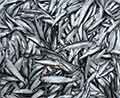
Applying artificial intelligence may be a way to automate the separation of
species in mixed catches of sprat and Baltic herring.
Aquaculture research focuses on sustainable growth. Land-based farm technologies and digital monitoring tools are being developed along with increased automation. Opportunities for better use of waste and by-products are also being explored. Solutions are also being sought to reduce damage caused by mammals and predatory birds, so that production growth does not increase the pressure on the aquatic environment and resource use becomes more efficient.
The valorisation of aquatic biological resources seeks ways to increase the value of raw materials and by-products generated in fisheries. The focus is on the valorisation of biowaste (for example, proteins, collagen), more environmentally friendly packaging, internal market opportunities, and the modernisation and digitisation of logistics. This aligns with the European trend where competitiveness increasingly depends on the strength of processing, the supply chain, and marketing.
Environmental research ensures science-based stock assessment and the protection of biodiversity. The impact of cormorants and seals on fish stocks, by-catch, and the selectivity of fishing gear are being studied, and mitigation measures are being developed. There is also a focus on preserving the diversity of fish species and exploring opportunities for algae and shellfish farming to reduce nutrient loads and develop the blue economy.
Projects selected based on novelty and impact
The call for proposals took place in the autumn of 2025, and at the end of the year, support was granted to 17 projects totalling approximately 6.3 million euros. Applications were evaluated based on criteria that favoured applied results. The highest weight was given to the novelty of the research and the direct benefits to the sector, but other factors such as the involvement of the sector, justification for the budget, and a realistic timetable of activities were also assessed. Among the conditions was that funded research should be easily findable and widely usable upon completion, and that the progress of implementation should be continuously monitorable through information days for the sector and the public. In March, the first information day introducing the studies was held, highlighting several of the projects presented. In the valorisation of aquatic biological resources theme, a study by TalTech Kuressaare College caused a flutter. It explores possibilities for producing macroalgae-based bioplastic to be used as raw material for 3D printing. The project conducts tests with algae growing in the Baltic Sea (Furcellaria, Fucus, Ulva, and Cladophora) to obtain polysaccharides and biomass, from which the production of bioplastic films, bio composites, and 3D printing filaments is planned.
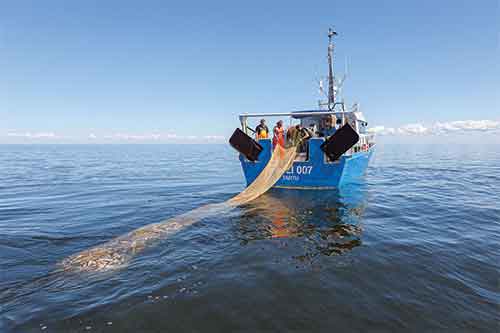
Fisheries research in Lake Peipus, Lake Lämmijärv, and the lower reaches of the Emajõgi River focusing on the migration and spawning grounds of pike-perch.
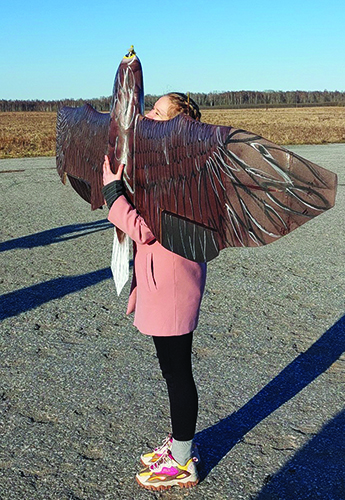
The Estonian University of Life Sciences is researching possibilities to produce liquid fertiliser from residues generated during fish filleting. During the study, residues (bones, heads, viscera, and skin) are processed using enzymes and stabilised to create a marketable fertiliser. Additionally, the time and energy consumption and the cost price of the process are assessed, a market study is conducted, and plant trials (including in drip irrigation systems) are carried out to study the fertiliser’s impact on plant growth and crop quality. From the fisheries research, the planned trials with bird-drones (linnukid) deserve mention. The University of Tartu, in cooperation with the Estonian Aviation Academy, is looking for ways to reduce bird by-catch and the raiding of catches in fishing gear by birds. A linnuk is an unmanned aerial vehicle (UAV) built to mimic the appearance and flight pattern of a bird of prey. The aim of the study is to test whether imitating avian predators deters waterbirds from targeting fish caught in fishing gear. Furthermore, a study is planned to develop an AI-based photo solution for automated species identification in trawl catches. The goal is for the system to automatically and quickly estimate the proportion of sprat and Baltic herring in the catch with over 90% accuracy. This solution will help the fisher determine the species composition objectively and quickly. It also enables the rapid sharing of results with different authorities, thereby optimising fisheries monitoring, data collection, and control.
Studying algae and oysters’ ability to remove nutrients in a RAS
Among the interesting aquaculture studies was again a project by TalTech Kuressaare College. This explores possibilities to grow and valorise three products in parallel: shrimp, algae, and oysters in a recirculating aquaculture system (RAS). The study seeks answers on how effectively a three-species IMTA (integrated multi-trophic aquaculture) system functions under RAS conditions. It also examines how efficiently algae and oysters remove nutrients and sediments, and what the growth rates and survival of the species are in an IMTA-RAS system. Noteworthy projects under the environmental research theme included those focusing on the status of the pike-perch population in Pärnu Bay and the Pärnu River, as well as on the migration and spawning grounds of pike-perch in Lake Peipus, Lake Lämmijärv, and the lower reaches of the Emajõgi River.
All presentations and materials from the information day are available on the website of the Fisheries Information Centre (link). Final research reports are public in their entirety and include an English summary to facilitate experience sharing with other Member States. Topics, such as reducing by-catch, damage caused by predators, digital monitoring, and the circular use of by-products, are relevant throughout Europe, and the Estonian research efforts could create transferable solutions and opportunities for cooperation with other Member States.
Annika Teino
Fisheries Market Adviser
Fisheries Policy Department
Ministry of Regional Affairs and Agriculture