Role of plant fibres in safeguarding hybrid fishponds against eutrophication

This article was featured in Eurofish Magazine 4 2025.
Researchers in the Czech Republic have shown that the addition of sugar beet as a source of carbon to the outer pond in a hybrid pond system contributes to keeping the hybrid pond free from algal blooms among other benefits.
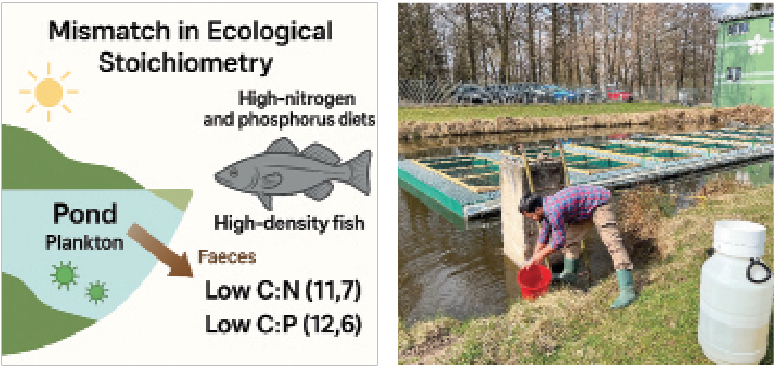
Pond fish farming in Central and Eastern Europe is being modernised by using new hybrid systems. These include combinations like cages inside ponds, tanks next to ponds, and ponds -connected to recirculating aquaculture systems (RAS). In these systems, the pond works like a natural filter. It cleans up uneaten feed, fish waste, and excess nutrients—mainly nitrogen (N) and phosphorus (P)—from fish kept in high-density areas like tanks or cages. These fish are usually fed protein or N- and P-rich diets because they are high-value carnivorous species. Such feed is also quite refined (low in indigestible organic matter) and faeces lack a high carbon (C) content but are rich in N and P. For example, a commercial feed derived faeces from Sander lucioperca (pike-perch) routinely fed in the university’s hybrid pond system could have 63.6% C, 4.39% N and 5.75% P on a dry matter (DM) basis. The waste from the fish ends up fertilising the pond, which boosts the growth of plankton and benthos. These become food for other fish that do not need extra feeding, helping turn waste into more fish for human consumption. This way of farming is an example of circular aquaculture. It is smart, resource efficient, and sustainable (Figure 1).
Fish waste with low C and excess N and P affects ponds negatively
Despite the efficient use of resources—from an ecological stoichiometry viewpoint, the faeces are not ideally balanced for microbial uptake and biomass conversion. The low molar N:P ratio suggests that phosphorus may be in excess, and carbon may not be sufficient for microbial C:N:P demands unless complemented. Adding selected plant-based carbon sources externally could enhance nutrient assimilation and improve sustainability in hybrid pond systems (Figure 1). While indoor systems like RAS can easily adjust carbon levels and pH daily (using, for example, sodium bicarbonate), people often forget to manage carbon in pond systems. Many believe that ponds naturally get carbon from sediments or the air. However, repeated use of ponds can drain their carbon, much like farming the same soil too much with inorganic N, P fertilisers can wear it out. When ponds have too much N and P but not enough C, it can lead to algal blooms and water -pollution, breaking EU environmental rules. To fix this, ponds need a good natural source of carbon.
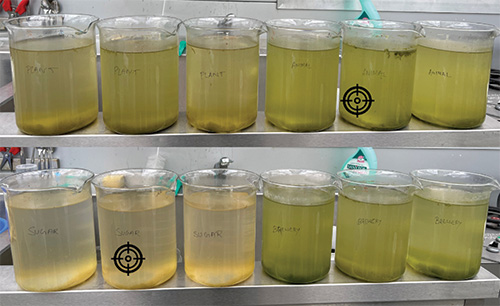
Figure 2: Outcome of mesocosm challenge pilot trial. Sugar beet suppressed eutrophication,
while animal-type faeces triggered eutrophication and cyano-bacterial bloom (data not shown).
The concept shows that some plant-based by-products from farming and food processing—usually used only for cattle feed or compost—could be a cheap and scalable way to add carbon back. Not all types of plant fibre work, but some show good potential to help clean the water and balance nutrients in these modern pond systems.
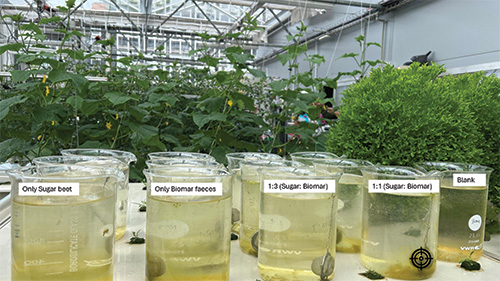
Figure 3: Outcome of main mesocosm trial balancing N, P rich commercial faeces in hybrid pond water
with a sustained-release C-source (sugar beet). Balancing commercial faeces with sugar beet at 1:1,
chlorophyll and cyano-chlorophyll was significantly suppressed compared to “only commercial faeces”
or “insufficiently balanced commercial faeces (1:3, sugar beet: commercial faeces)” (data not shown).
A two-stage mesocosm experiment was conducted using 2-liter beakers filled with pond water from hybrid systems and placed in a greenhouse water bath (Figure 2). The setup included four treatment groups with three replicates each, plus a blank control (13 beakers total). A tea strainer in each beaker held solid inputs. In the pilot trial, the scientists introduced solids at a 1:1000 dilution to test for eutrophication (algal overgrowth). Four types were used: (1) Plant-based faeces (high in C, N, P); (2) Animal-based faeces (low C, high N, P); (3) Spent brewery grains (biologically pre-processed C source); (4) Extracted sugar beet (mechano-thermally processed C source). Animal-based faeces triggered strong algal and cyanobacterial blooms, making them the worst choice. Plant-based faeces caused less eutrophication but were impractical due to carnivorous fish dietary constraints and weak suppression. Brewery grains were too bioavailable, rapidly stimulating eutrophication. Only sugar beet acted as a slow-release carbon source, effectively preventing -eutrophication, due to its predominantly lignin-cellulosic matrix (Figure 2).
Sugar beet, in the right proportions, shows promising results
In the main trial, the researchers used faeces from pike-perch fed commercial EFFICO in the hybrid pond system and selected sugar beet as the ideal sustained-release carbon source (93.3% C, 1.74% N, 0.14% P, DM basis). The faeces were collected using a Guelph system under controlled feeding conditions and freeze-dried for use. Five mesocosm treatments were tested at a realistic 1:10,000 dilution in 2 L pond water: (1) 0.2 g sugar beet; (2) 0.2 g commercial faeces; (3) commercial faeces with sugar beet at 1:3 ratio; (4) commercial faeces with sugar beet at 1:1 ratio; (5) blank pond water. Results showed that the 1:1 sugar beet to commercial faeces treatment effectively controlled eutrophication, maintaining water quality comparable to the blank pond water. This treatment also preserved dissolved oxygen (DO) levels during both day and night in non-aerated mesocosms. In contrast, commercial faeces alone or with insufficient sugar beet (1:3) led to eutrophication (Figure 3).
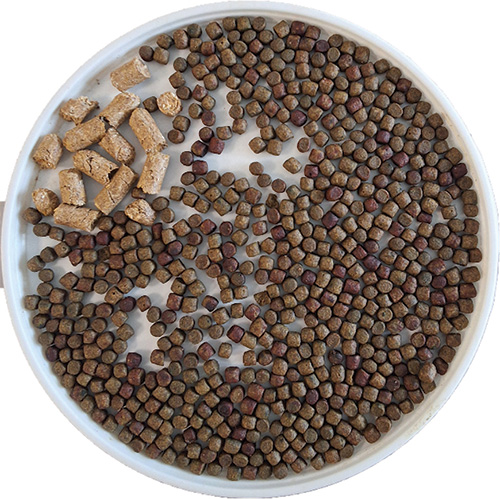
Figure 4: Example of a balanced daily input for eco-hybrid ponds—feeding
commercial feed to enclosed fish and sugar beet to the open pond.
So, what does this scientific result mean in real-world practice? A simple rule of thumb is this: for every 100 kg of fish feed used in the intensive part of a hybrid pond, about 10 kg of sugar beet should be added to the surrounding pond area. In other words, apply sugar beet equal to 10% of the daily feed amount in the outer pond, as shown in Figure 4. This approach helps keep the hybrid pond clean over time. It supports ecological balance, prevents eutrophication, and helps meet the environmental standards of the EU Water Framework Directive.
K. Roy1, kroy@frov.jcu.cz; B. Mandal1, F. Hossain1, V. Nahlik1, J. Regenda1, M. Baxa2
1University of South Bohemia in Ceske Budejovice, Faculty of Fisheries and Protection of Waters, South Bohemian Research Center of Aquaculture and Biodiversity of Hydrocenoses, Institute of Aquaculture and Protection of Waters, 37005 České Budějovice, Czech Republic
2Enki, o. p. s. – Public Benefit Corporation for Environmental Research, Education and -Public Awareness, Dukelská 145, 37901 Třeboň, Czech Republic
This concept was funded by -Národní Agentura pro Zemědělský Výzkum (Project QL25020009).