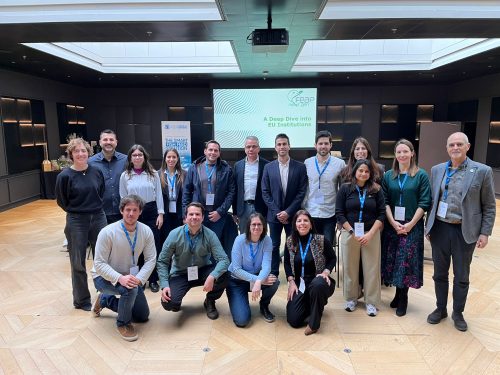
The Federation of European Aquaculture Producers held the second edition of its NextGen “Deep Dive into EU Institutions” training in Brussels, an initiative to prepare a new generation of professionals for leadership in European aquaculture. The two-day event, on 17–18 March, brought together selected young participants from Denmark, France, Greece, Hungary, Portugal, Spain, Sweden, and Türkiye. The training strengthens young professionals’ understanding of how European institutions work, and how policy decisions affect aquaculture businesses across the continent. Following the launch of the programme in 2025, the federation said the 2026 edition continued its focus on generational renewal, sector representation, and closer engagement with EU policymaking.

The programme combined presentations, networking sessions, and study visits. Javier Ojeda, Secretary General of FEAP, opened the training with an overview of the European aquaculture policy landscape and the sector’s main priorities, including sustainability, competitiveness, climate resilience, and food security. Participants also heard from representatives of DG RTD, FEFAC (the European Feed Manufacturers’ Federation), the Aquaculture Advisory Council, the Market Advisory Council, and Seafood Europe (formerly AIPCE-CEP), among other institutions, giving them a broad picture of funding opportunities, stakeholder roles, and policy developments.
A central part of the training was a visit to the European Commission’s DG MARE, where the group met officials from the aquaculture unit and the cabinet of Commissioner Kostas Kadis who presented policy priorities, implementation challenges, and the development of the Vision for Fisheries and Aquaculture 2040. Peer learning between group members was another important outcome, with participants exchanging views from different national and production contexts. The 2026 edition was again supported by AquaSorgal, a Portuguese manufacturer of feeds for farmed seafood. FEAP will continue to organise the training in the coming years to strengthen young professionals’ role in shaping a resilient and competitive European aquaculture sector.