This article was featured in Eurofish Magazine 6 2025.

Lithuania’s 95 km coastline has long hosted a coastal fishery. Today, however, the activity is at a tipping point as quotas of important species have been drastically reduced while the lack of generational change suggests a bleak future. However, local initiatives are fighting the trend.
Among coastal fishers catches of traditional mainstays—cod and salmon—have been cut sharply or prohibited, fishermen are ageing, and younger people seldom see a viable livelihood at sea. Against this sobering backdrop, two initiatives stand out: the work of the Klaipėda Fisheries Local Action Group (FLAG) which operates in Klaipėda town, and the step-by-step reconstruction of Šventoji port under the Šventoji FLAG which is active in the areas of Šventoji and Palanga. Together, they illustrate how local leadership, and targeted public funding (from both EMFF and national sources in the case of the port) can develop infrastructure leading to the creation of new economic opportunities and thus preserve coastal communities.
A fishery squeezed from all sides
The last decade has been unforgiving in the Baltic. Lithuanian coastal fishers who once landed cod and salmon now face blanket closures or near-total constraints for these species, while the small-scale fleet contends with short, weather-limited seasons and rising running costs. As Andrius Kairys, head of the Klaipėda FLAG, explains, crews are older, maintenance and safety inspections are costly, and margins on available species are tight (sprat and herring often go to fishmeal rather than for human consumption). Regulatory complexity adds to the pressure. In mixed pelagic trawls, sprat and herring are hard to separate; regulations that shut off one species can de facto shut the fishery, yet compensation mechanisms may not recognise that operational reality. Meanwhile, proposals periodically emerge for wider moratoria driven by environmental concerns. With only a handful of industrially important stocks left for the Lithuanian fleet (sprat, herring, and some flatfish), any additional limits on fishing reverberates across the entire value chain.
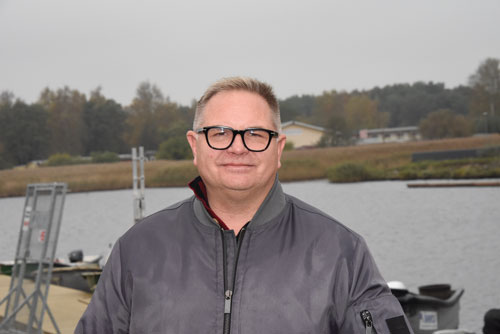
Mindaugas Skritulskas, Managing Director, Šventoji port
EU decisions for the Baltic have tightened opportunities for depleted stocks year after year, and the Council’s late-October 2025 agreement on total allowable catches (TACs) for 2026 again places catch limits across herring, sprat, cod, salmon, and plaice to balance stock recovery with livelihoods. The headline remains unchanged: continued restraint on cod and salmon, cautious settings elsewhere with a few exceptions (herring in the Central Baltic).
Coastal fishing sees fewer boats, fewer entrants
Inshore fishing in Lithuania is shrinking. Veteran fishers—often 50–55 years old or more—are reluctant to take on new debt or business models with payback stretching beyond a decade, while younger people see long hours, physical hardship, and uncertain earnings. Producer organisations exist, but with small volumes and irregular landings their ability to finance marketing or processing at scale is limited. The result is attrition with fewer active boats each year and the loss of skills and heritage. Opportunities to sell directly can be constrained too. Where hygiene rules prevent sales straight from the boat, a fisherman who lands only once or twice a week must still carry overheads for a stall, electricity, and rent. That model is hard to make work when cod and salmon are off the table and small pelagics are intermittent. Even well-meant plans for on-shore refrigeration and kiosks struggle if volumes fluctuate.
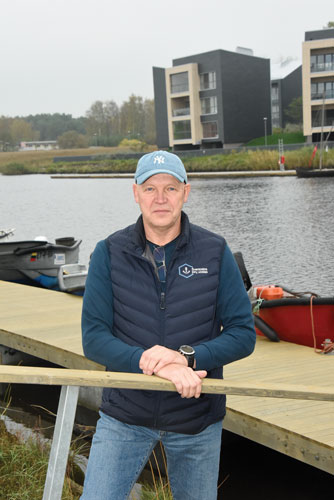
Vygintas Lekavičius, Seaport Services Administrator, Šventoji port
One bright spot, though a volatile one, has been round goby. An invasive species that expanded rapidly about a decade ago, it is not managed and catches have provided some income to coastal fishers—yet landings have been trending downwards since their peak in 2016. Herring, sprat, and plaice are the other species that are targeted by coastal fishers.
What a FLAG can do when the fleet is wary
An outcome of the EU’s community-led local development model, FLAGs bring together fishers, municipalities, NGOs, and businesses to design and fund projects tailored to local needs. In Klaipėda, the “Naujoji Klaipėdos žuvininkystės vietos veiklos grupė” (NKŽVVG) covers the city municipality and is working on a strategy that targets small but catalytic interventions such as public infrastructure for commercial and recreational fishing and tourism; diversification of fishers’ income; and climate-aware, innovation-friendly investments. These priorities accurately reflect the fishers’ concerns. Mr Kairys says ideas range from a municipally built slipway (to replace unsafe tractor launches across the beach) to micro-investments that help individual fishers buy a fridge van or kit for direct sales, or even a small recreational vessel for angling when fishing stops. The financing intensity can reach 50–75% depending on the measure and whether the project is deemed innovative—though in practice true “innovation” is difficult in such a narrow, regulated segment. Yet getting projects off the ground is hard. Early calls saw few applications as some fishers plan to retire, while others are uneasy about co-financing. Municipalities hesitate without designs, permits, and precise costings in hand. The FLAG has responded by repeating calls, re-engaging the mayor’s office about the slipway, and broadening outreach to find motivated applicants. The structure is in place—18 or so members spanning fishers, NGOs, and public bodies—but mobilising applications remains a challenge.
One project that is set to be implemented is in northern Klaipėda’s beach zone, where coastal crews currently back tractors across sand to launch small boats an operation that sometimes causes friction with other users of the beach. The project foresees a hard-surface slipway with organised parking that would be safer, cleaner, and faster to use, and could be shared by commercial fishers, recreational anglers, and kite-surfers. The municipality is the applicant (public land, public interest), but the FLAG is positioned to co-finance and organise.
Šventoji FLAG undertakes comprehensive modernisation of Šventoji port
Thirty kilometres up the coast, the Šventoji port has been undergoing a major renovation under Mindaugas Skritulskas, the managing director, with the help of EMFF and national funds. The second stage of reconstruction has resulted in a slipway with a crane, a gear hangar, and offices for the port authorities. The next phase includes two offshore breakwaters/pier arms to stop the relentless littoral drift that chokes the entrance. Designs set out a 650-metre southern structure (with a 17-metre-wide pedestrian deck) and a 450-metre companion, plus eastern, northern, and western quays inside the basin. When complete, the harbour should accommodate roughly 450–500 berths for yachts, workboats, and inshore fishing vessels. A sailing school for young mariners is also planned which will sit alongside search-and-rescue services and the Būtingė oil terminal’s auxiliaries. The port will become a mixed-use hub offering a safe refuge for small craft, a base for artisanal fishing, and a magnet for nautical tourism that can sustain cafés, service trades, and accommodation in season.
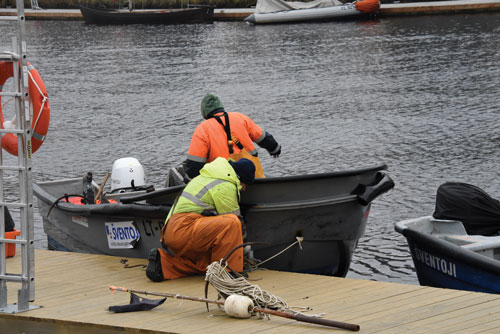
Fishers return to Šventoji port after placing their nets in the sea.
The facilities will enable fishers to move between commercial trips, angling charters, and direct-to-consumer sales when quotas or weather tighten. In addition, a permanent sailing school, dockside work, and a living waterfront may help to recruit the next cohort of skippers and marine technicians—far more effectively than classroom campaigns alone. Finally, ports attract complementary investment—boatyards, chandlers, haul-out services, hospitality—that multiplies their impact.
Projects do not have to be big to be effective
FLAGs encourage application aimed at delivering low-ticket diversification tools that fishers will actually use. Refrigerated vans, mobile sales permits, and standardised hygiene packs (scales, insulated boxes, traceability labels) are modest investments but with a potentially significant impact on margins. Where the city restricts quayside sales, a designated, serviced market point near the harbour, open on announced “landing days,” can make direct sales practical without locking fishers into year-round stall rents.
Another area of interest is to promote generational change via paid apprenticeships tied to the sailing school and port services. Few young people want to freeze on a small boat for uncertain pay. But many will apprentice in marina tech, composites, electrics, or outboard maintenance—skills that keep coastal economies viable and provide a bridge to skippering later. A FLAG-funded stipend for 12–18-month apprenticeships with port tenants would be money well spent. By publishing simple dashboards (projects approved, euros committed, jobs affected), the FLAG could help persuade hesitant applicants and municipal partners that calls for projects lead
to delivery.
A realistic but hopeful outlook
No single measure will restore what cod, salmon, and bigger pelagic quotas once meant to Lithuania’s coast. But multiple small, well-aimed steps can stabilise incomes, reduce risk, and keep the door open for renewal. Both Mr Kairys and
Mr Skritulskas are aware of the hurdles that stand in the way of rejuvenating fishing communities—-regulation, demographics, the economics of small boats and, above all, the lack of fish. They are equally clear that infrastructure for new circumstances, co-funding, and projects that respect the mixed character of a 21st-century waterfront—commercial, recreational, educational, and civic are the way forward. If authorities and communities finish the job at Šventoji and complete Klaipėda’s slipway, Lithuania can ensure that its coastal fishery survives not only the current cycle, but also future ones.