This article was featured in Eurofish Magazine 2 2026.

In the Mediterranean and Black Sea, sustainable aquaculture is increasingly defined by resilience. The sector faces mounting pressures: intensifying climate stress, more frequent and damaging extreme weather events, shifting disease risks, and rising societal demands related to environmental responsibility, animal welfare, and transparency. Meanwhile, regulatory hurdles and competition for coastal space are still holding back investment in certain countries. Yet demand for seafood shows no signs of slowing.
FAO’s latest SOFIA report projects per-capita consumption of aquatic animal foods rising to about 21.3 kg in 20321, up from around 20.7 kg in 2022. Aquaculture expansion is an obvious route to meet this demand, but it requires licences and capital. Improving performance and reducing losses along value chains offers another lever to increase supply without equivalent increases in production footprint.
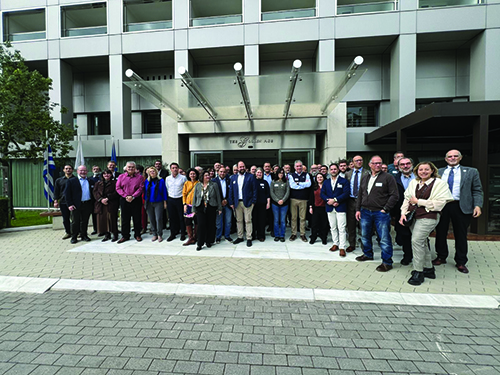
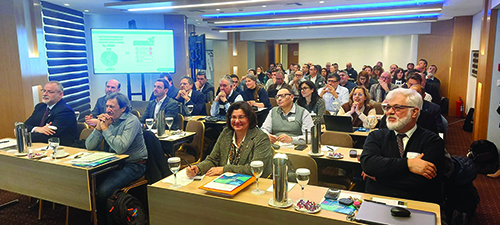
In this context, joint initiatives such as the Federation of European Aquaculture Producers (FEAP) – General Fisheries Commission for the Mediterranean (GFCM) Technical Consultation on Sustainable Aquaculture Practices play and important role. Held in Athens on 11–12 February 2026 and hosted by the Hellenic Aquaculture Producers Organization The consultation brought together more than 130 participants. Farmers, companies, researchers and technical experts shared their experience, priorities, and constraints, ensuring that discussions about sustainability remain anchored in operational reality. In a region with around 35,000 aquaculture enterprises2 in the Mediterranean and Black Sea region, largely small and medium-sized producers across a diverse sector, sustainability efforts must be viable for farms without becoming a constantly growing reporting burden.
Climate stress is extending the risk season, and compressing the response time
The Mediterranean is widely regarded as a climate change hotspot, and warming is now influencing production in ways that are increasingly visible at farm level. According to the IPCC, sea surface temperature has been rising 0.29°C–0.44°C per decade since the early 1980s, driving more frequent and intense marine heatwaves. The eastern Mediterranean shows the strongest warming trend among sub-basins.
For fish farming, higher water temperatures reduce oxygen availability, alter metabolism, and can destabilise feeding behaviour. These changes can undermine growth performance and increase susceptibility to disease.
Climate impacts are not confined to what happens underwater. Infrastructure exposure is also changing, particularly through storm risk. Eduardo Soler from Avramar Spain, spoke about the “Gloria” storm in January 2020 on the Mediterranean coast near Castellón. The consequences were destructive for two farms in the area, the biomass loss was reported at 90%. Even less extreme storm conditions can overtop shorelines and flood parts of facilities, creating biosecurity problems even when physical damage is limited.
Stelios Karapanagiotis, representing Galaxidi Marine Farm, Greece described temperature patterns shifting upwards over time in the Corinthian Gulf, with farm-level evidence indicating that seabass and seabream begin to experience stress at around 28°C, making the upward drift in summer temperatures increasingly relevant for operations.
Speakers highlighted several adaptation pathways to move beyond short-term management changes. They have started working on new feed formulations to match fish metabolism under warmer, lower-oxygen conditions, including greater flexibility in ingredients as raw material supply becomes more volatile. Alongside this, genetic improvement was presented as a medium-term option to develop stock that is more resilient to heat stress and disease. These biological measures need to be paired with tighter biosecurity and stronger environmental monitoring, while investments in infrastructure and technology, such as improved mooring systems and, in some cases, oxygenation of cages during summer, can help maintain welfare and feeding capacity when conditions deteriorate.
AI and digital tools are becoming part of basic risk management
AI and digital tools can help farms maintain control of operations. The consultation aimed to demystify AI by focusing on how it can strengthen decision-making and improve day-to-day performance.
A central example was ActFast, a Horizon Europe project developing an AI-supported early warning system for Mediterranean aquaculture to fill a clear gap: farmers need simple, site-level tools to anticipate storms, heatwaves, and other climate-related hazards. The concept is a web interface where producers enter farm coordinates and receive alerts, with forecasts up to five days ahead at high temporal and spatial resolution, covering a variety of parameters. ActFast also presented work on climate-smart diets tailored to different temperature ranges, and a webcam-based computer-vision tool to detect abnormal seabass behaviour and early signs of disease.
Disease pressure is rising, and climate change is a multiplier
With climate change reshaping the farming environment, disease is often where the impacts become most visible. Viral nervous necrosis was cited in relation to mass mortalities in wild fish across several locations, underlining that threats extend beyond farm boundaries. Lactococcosis, a re-emerging bacterial infection, was highlighted as another shifting pattern. Historically associated with freshwater systems, it is now increasingly observed in marine species such as seabass and seabream.
Co-infections were described as particularly challenging, complicating diagnosis and making it hard to trace where outbreaks begin. Vaccination was repeatedly presented as a key preventive tool. In Portugal, where complete programmes have not yet been widely adopted, farms that have implemented comprehensive vaccination schemes report strong results. Cases of Vibrio anguillarum are now rare in farms that use IP (intraperitoneal) vaccinated fish, and one seabream farm with chronic phytobacteriosis reduced antimicrobial use by 87% after introducing IP vaccination in most batches. Limited access to veterinary medicines was also raised, with concerns that a narrow set of registered options can accelerate antimicrobial resistance, strengthening the case for prevention, antibiotic alternatives, and more workable regulatory pathways.
Pulling the threads together: resilience depends on practical integration
The consultation in Athens showcases that resilience is not delivered by a single technology or policy decision, but by a combination of several strategies into one coherent operating approach. Participants also stressed that this cannot be achieved by producers alone.
Future consultations would benefit from stronger participation by ministries and policymakers, because licensing, spatial planning, health governance, and investment conditions are shaped as much by public decision-making as by on-farm practice. Moved by a constructive attitude, the audience was positive about the value of the Athens consultation as a space to share experience and align priorities, and they called for continuity, with regular follow-up events to keep cooperation active and ensure that practical solutions continue to move from discussion into implementation.
Francesca Barazzetta, Eurofish,
francesca@eurofish.dk