This article was featured in Eurofish Magazine 3 2026.

APROMAR, an association (and producer organisation) representing around 60 Spanish fish farmers companies (about 95% of the total finfish production), speaks for the sector, defends its interests, and provides services to members. Acuicultura de España, one of its initiatives, is a Communication Plan that seeks to educate the general population about Spanish aquaculture.
For years, Spanish aquaculture has had to deal with a paradox. Spain is the leading aquaculture producer in the European Union, yet the sector has often remained poorly understood by the wider public. APROMAR, the Spanish aquaculture business association and producer organisation number 30, has made changing that perception one of its central tasks. Alongside its representative and technical work, it has built a communication strategy designed to make Spanish aquaculture more visible and easier to understand. At the same time, it has supported practical innovation projects for its members and promoted a collective brand that help consumers identify farmed fish of Spanish origin at markets.
Lack of knowledge about Spanish aquaculture among general public
In 2019, a study commissioned by APROMAR showed that fewer than 30% of Spaniards knew the sector well enough to identify it properly. According to Garazi Rodríguez of APROMAR, that finding made clear that better communication was necessary to promote the sector and its benefits such as fish quality, food security, low environmental impact, and job creation—often in areas with limited economic opportunities. In response, APROMAR in 2020 launched the initiative Acuicultura de España (https://acuiculturadeespana.es/). The idea was to build a public-facing platform, separate from the association’s own institutional website, that would publish accessible, science-based information about aquaculture and ensure that reliable content appeared where consumers were already searching for answers online. The website and social media profiles present aquaculture as part of Spain’s food system, highlights its regional diversity, and explains why the sector matters in terms of nutrition and local employment. It also frames aquaculture as a national activity rooted both in marine and inland waters, which is important in a country where production ranges from sea bass and sea bream to trout, turbot, Atlantic bluefin tuna, mussels, oysters, and caviar.
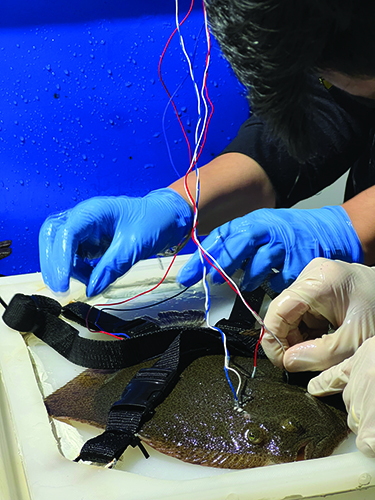
Researchers check the efficacy of electric stunning as a possible alternative to stunning fish in an ice slurry.
The communication strategy has developed in stages. At first, the emphasis was on building digital visibility through articles, blog content, social media, and collaborations with scientists and influencers. Later, once public awareness had improved, APROMAR moved into broader campaigns. Ms Rodríguez explains that annual tracking showed a strong rise in public awareness by 2025, when 55% of the respondents were aware of aquaculture in Spain and that 74% had a positive perspective on the activity, and this gave the association the confidence to launch larger-scale advertising, including television spots. Some of these campaigns are targeted at certain demographic groups, for example, young people or women. One of the key campaign messages was simple: without aquaculture, there would not be enough fish for everyone, an argument from APROMAR’s 2025 report, which states that aquaculture already supplies a major share of aquatic food globally and is central to future food security.
A multi-pronged strategy to promote the sector
Ms Rodríguez says the target for the broad communication campaign is not just consumers, but the general public, because APROMAR wants aquaculture to be known and understood beyond the point of purchase. The strategy thus includes school visits, local actions in farming areas, farm-related activities, and media work. The aim is to humanise the sector, show the people behind it, and counter outdated assumptions about fish farming. APROMAR’s own report describes this as an effort to push back against disinformation circulating about aquaculture in some circles. Rising public awareness will encourage regional and national authorities to implement measures that foster growth in the sector. Demand for fish is high, and Spain has all the conditions to increase production—today more than 60% of aquatic products is imported.
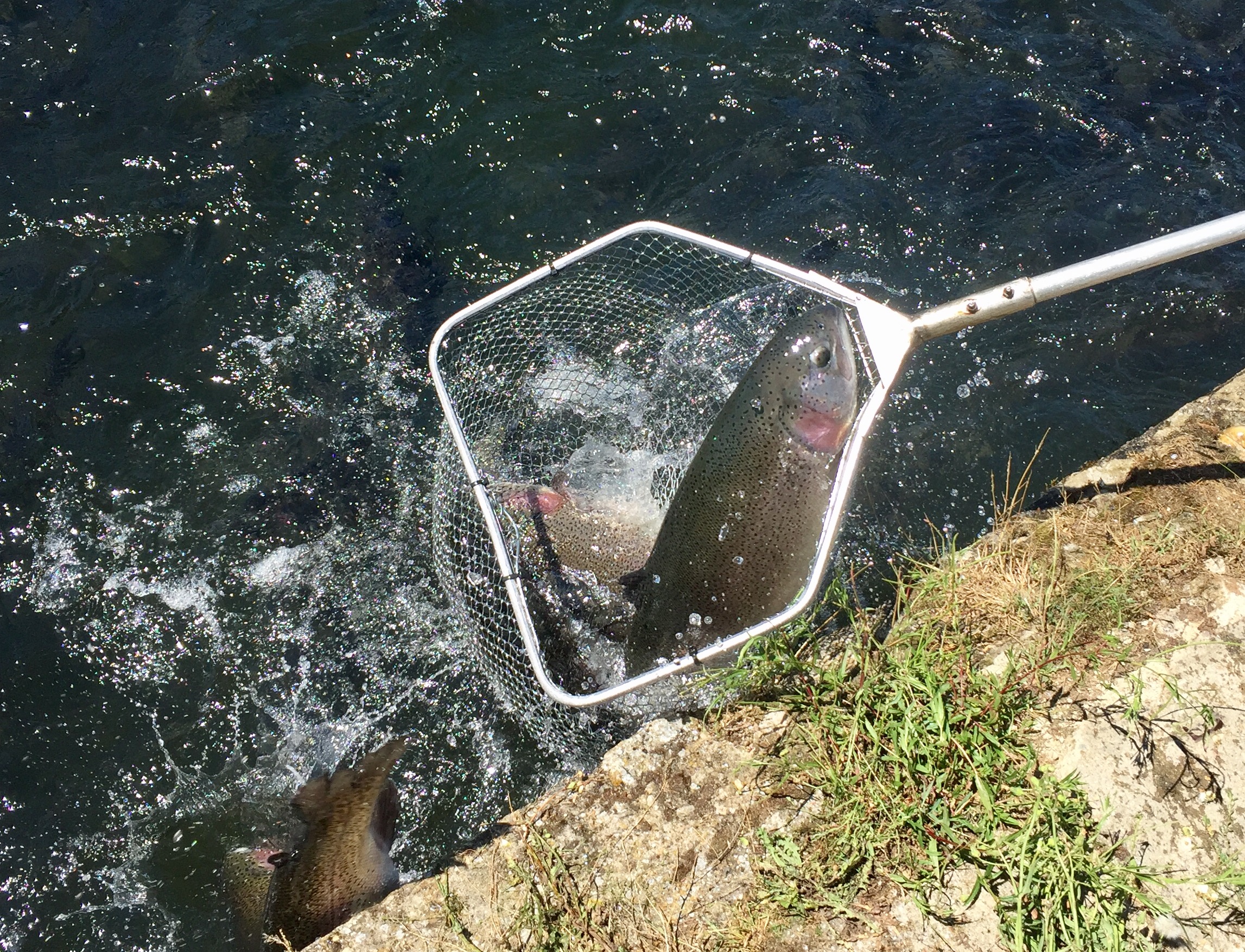
APROMAR, an association of Spanish fish farmers, is enjoying success at creating greater awareness about aquaculture among the general public in Spain. Pictured, large trout produced at a Spanish farm.
Public debate around aquaculture is often shaped by myths. Concerns about fish welfare, medicines, or environmental impact do not disappear simply because producers say they are unfounded. APROMAR has therefore tried to answer criticism with evidence. Ms Rodríguez explains that the association works with scientists and uses expert-backed content to respond to questions on social media and in public fora. The Acuicultura de España platform reinforces this by publishing articles on issues such as food safety and animal welfare, and by relying on a formal expert committee to provide authority and credibility.
Innovation is the other major pillar of APROMAR’s work. Because many of its member companies compete in the market, the association focuses on collective projects that address common bottlenecks. Ms Rodríguez describes these as applied projects, largely financed through public co-funding. For example, Ms Rodriguez mentions trials with electrical stunning systems for sea bass, sea bream, and meagre in floating pens, efforts to validate new technology for monitoring pathogens, and broader work on digitalisation and fish health. APROMAR’s innovation network, REMA, brings together producers and suppliers to identify the areas where new tools can make a difference. In 2025, the REMA programme included projects on trout welfare, electrical stunning, disease prevention, and traceability technologies. Particularly interesting is APROMAR’s work on welfare guidelines. Ms Rodríguez notes that the association is developing species-specific welfare guides by bringing together producers, NGOs, researchers, and public authorities. So far, this has resulted in guidelines for seabass, seabream, trout, and turbot, and guidelines for sole are in the works.
Label promotes Spanish origin and freshness
Marketing, finally, is where APROMAR tries to turn visibility into consumer recognition. The best-known example is the collective label now called Crianza Mares y Ríos de España. This is the successor to the earlier Crianza de Nuestros Mares label introduced in 2015 for marine species. APROMAR reworked the concept in 2023, creating a broader umbrella brand and species-specific labels, while also incorporating inland aquaculture products such as rainbow trout and caviar. The purpose of the label is to make Spanish origin more visible and easier to identify, especially at the point of sale, where imported and domestic fish often appear side by side and many shoppers assume everything on offer is local. The challenge is not merely branding, but consumer behaviour. According to Ms Rodríguez, many Spanish shoppers say they would prefer to buy a national product and even pay a little more for it, yet in practice they often do not know the difference between Spanish farmed fish and farmed fish of the same species from other countries nor where to find this information. They therefore wrongly assume that all fish is equally fresh, when it generally takes more days for fish harvested in another country to reach a Spanish retailer than it does for fish harvested in Spain, which generally arrives at fish counters within 24 hours of being harvested. The current label strategy stresses Spanish origin and freshness, using the message “Pescado Español, Pescado Fresco”. Campaigns in 2025 and 2026 have primarily focused on increasing visibility within supermarket chains marketing products under the brand. In parallel, collaboration with FEDEPESCA has supported a dedicated project aimed at improving the perception of aquaculture and boosting sales at traditional fishmongers.
Acceptance of the label is not universal
The label is not without complications. Ms Rodríguez acknowledges that only part of APROMAR’s membership actively supports it, and that uptake depends on geography, distribution strategy, and the ability to guarantee stable supply. Some retailers prefer not to highlight individual brands in fish, while some regional markets respond differently to overtly national branding. Even so, APROMAR has continued to invest in the label because it highlights farmed fish as a Spanish-produced and traceable product. This dovetails with the message promoted in the Acuicultura de España campaign, which presents fish from Spanish aquaculture as fresh and safe. At a time when the Spanish aquaculture sector is stagnating in the face of red tape, climate pressure, and competition from imports, APROMAR’s activities within visibility creation, innovation, and marketing are intended to make the sector better known and more competitive.