This article was featured in Eurofish Magazine 4 2026.

At the University of Galway, Ireland, researchers in the Aquaculture and Nutrition Research Unit (ANRU), work with national and international partners to develop solutions that improve sustainability, animal welfare, environmental monitoring, climate resilience, and supply chain transparency in aquaculture and fisheries. The research currently underway aims to further address these critical gaps by advancing innovative, evidence-based solutions throughout the seafood value chain.
Ireland has one of the largest marine areas in Europe relative to its landmass, providing significant opportunities for sustainable aquaculture development. Its Atlantic coastline is characterised by clean, cold, nutrient-rich waters that support the production of premium seafood, including salmon, oysters, mussels and seaweed. Different coastal regions offer distinct advantages, from exposed Atlantic coastal waters suitable for salmon and seaweed cultivation to more sheltered bays that support shellfish farming.
As demand for seafood grows, aquaculture is increasingly recognised as an important source of sustainable food production. However, the sector faces ongoing environmental challenges, including impacts on biodiversity, fish
welfare, disease management, and resource use. Climate change is increasing this pressure, with rising sea temperatures affecting marine ecosystems by increasing the risk of jellyfish blooms, sea lice, and diseases such as Amoebic Gill Disease in farmed salmon.
Improving animal welfare and seafood transport
The ANRU research team is working within the TRACE project, which aims to improve animal welfare and survival in highvalue liveseafood transport. Long-distance transport is essential for supplying European and global markets, yet it can induce stress, reduce survival and compromise product quality. TRACE (funded under the PeacePlus programme) is implementing advanced digital technologies, including computer vision, hyperspectral imaging, IoT sensors, and blockchain traceability, to monitor real‑time conditions during transport and identify practical ways to improve animal welfare across the supply chain. The research also investigates the molecular, physiological, and environmental drivers of transport-induced stress, addressing major knowledge gaps to make science-based recommendations for reducing waste, preventing spoilage, and enhancing product quality.
Enhancing transparency in the seafood sector
The SMART4SEA (funded by Atlantic Area) project focuses on boosting environmental traceability in the Atlantic seafood sector. SMART4SEA brings together partners from Spain, France, Ireland and Portugal to strengthen sea‑to‑fork transparency and consumer engagement across the Atlantic area. The project aims to build trust across the seafood supply chain by implementing digital technologies, life‑cycle assessments, circular‑economy strategies and stakeholder collaboration. It also addresses wider social and environmental challenges, including marine waste and microplastics, while providing transparent, reliable information to support sustainable decisions by fishermen, processors, policymakers and consumers.
The role of the university is to identify the sources, pathways, and mitigation strategies of marine plastic pollution, and to quantify seafood loss and waste within the seafood supply chain to recommend circulareconomy solutions.
Digital transformation within aquaculture
DigiATLA (funded under Interreg Atlantic Area) is a transnational initiative driving digital transformation in Atlantic aquaculture by fostering capacity building in sustainable aquaculture and precision nutrition technologies. The project aims to create high‑quality digital training resources that equip professionals with the tools and knowledge needed to improve operational efficiency, reduce environmental impacts, and increase sustainability. Its key outputs include comprehensive digital training programs supported by an online repository, pilot demonstrations showcasing industry technologies, and awareness initiatives promoting digital adoption across the sector.
The Moult Project, funded through the Marie Skłodowska-Curie programme, is being carried out at the Carna Research Station and the Ryan Institute, which is Ireland’s leading centre for aquaculture research and development, located in south‑west Connemara. With direct access to the Atlantic coastline, the station provides an ideal base for experimental work in dynamic marine ecosystems. The project focuses on understanding the moulting triggers of the European lobster and modelling how climate‑driven temperature changes may influence moulting patterns in the future. The project aims to improve predictions of climate impacts and inform sustainable management strategies for this commercially and ecologically important species.
Development of circular aquaculture feeds
The SAFE project (funded under the Horizon Europe programme) aims to revitalise freshwater aquaculture in the EU by demonstrating a circular‑economy model that lowers emissions, protects biodiversity and supports local production of sustainable feed ingredients. The project aims to reduce environmental pressures and enhance the sector’s economic resilience by transforming freshwater aquaculture’s solid and liquid waste streams into valuable resources. To ensure these innovations can be adopted in practice, SAFE will conduct a series of demonstrations across Europe to show how circular solutions can be applied at both the local and regional scales. The project will also identify the management and governance conditions needed to support successful transferability, enabling wider uptake across the EU aquaculture landscape.
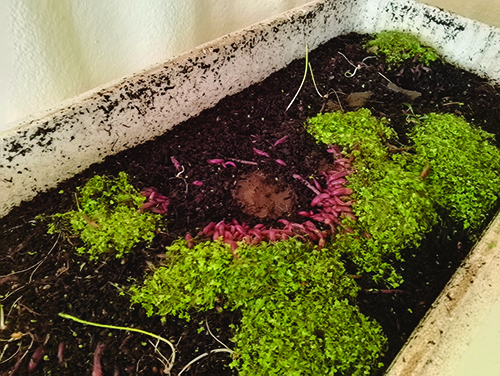
The University of Galway plays a key role in this project by conducting feeding trials on perch and salmon in Ireland. These trials test a range of novel alternative feed ingredients, including mealworms, red worms, mushroom stalks, freshwater microalgae, and other circular-economy-derived ingredients. Through these studies, the University of Galway helps assess the performance, sustainability and feasibility of innovative feed formulations, contributing essential data to support the project’s broader circulareconomy approach.
Regenerative seaweed cultivation
Óir na Farraige (funded under EIT Foods) is a regenerative ocean-farming project designed to scale seaweed cultivation for emerging bio-based industries. The project aims to introduce the first industrial-scale seaweed cultivation system in Irish waters, focusing on enhancing marine biodiversity while developing commercially viable supply chains to support coastal economies. ANRU will assess the ecosystem services generated by the farm and conduct life cycle assessments (LCAs) to validate its viability as a regenerative aquaculture model. They have been monitoring the temporal changes in pelagic and demersal fish communities across the pilot site at Bantry Bay Farm using Baited Remote Underwater Video (BRUV). The biodiversity data collected will be integrated into LCA to identify cost and emissions hotspots and establish a baseline for the future of nature credit programmes.
Phoebe Mason and Alex Wan, University of Galway, Ireland, alex.wan@universityofgalway.ie