This article was featured in Eurofish Magazine 6 2025.
The European Union’s Data Collection Framework (DCF) is the daily work of counting fish, sampling fish from nets and trawls, conducting scientific surveys and speaking to fishers and anglers to collect the data that forms the basis of fisheries policy decisions in the EU.
In a period when Baltic cod stocks have collapsed and commercial fishing for salmon faces sweeping restrictions, data about stocks have a massive influence on commercial fishers’ livelihoods as well as on the recreational activities of anglers. The legal foundation of the DCF is Council Regulation (EC) No 199/2008 and Regulation (EU) 2017/1004 which aligned data collection with the Common Fisheries Policy reform and introduced Regional Coordination Groups (RCGs). The latter regulation also recognises that recreational fisheries must be measured when they affect stocks, which is crucial in the Baltic.
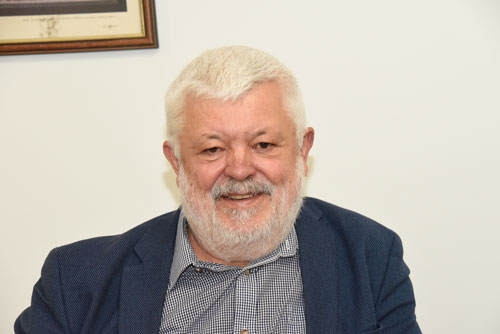
In Lithuania the Marine Research Institute at Klaipėda University is a key part of this system. Antanas Kontautas and colleagues conduct scientific surveys, undertake biological sampling for the commercial fleet, cooperate with fishers on coastal monitoring, and support trials that reduce impacts on birds and other protected fauna. The team works with gillnetters and trap-net users in the in the Baltic Sea and Curonian lagoon coastal areas, gathering catch data, lengths, and other biological information that feed directly into international assessments. Mr Kontautas underlines the importance of this collaboration and notes how fishermen have hosted gear trials and helped deploy monitoring equipment. This practical cooperation is the only way to maintain sampling effort even when fleets shrink or restrictions enter into force.
How standardised sampling guides decisions for the commercial fleet
Lithuania exemplifies the benefits of the DCF. Cod offers a good example. Targeted fishing has been halted for years, yet the expected recovery has not materialised. During both coastal and offshore monitoring, many small cod are caught: around 24–28 cm in the sea by trawls and 30–33 cm in the coastal area by monitoring nets. Very few larger cod are found, and they are in very poor condition. The mismatch underscores the influence of multifaceted pressures—environmental, ecological, and climatic—that reach far beyond the effects of fishing mortality alone, and only science can provide the answers. DCF sampling documents poor condition in many fish and recurring reports of prey scarcity for adult cod have been issued. Without standardised length and condition data taken year after year, it would be impossible to tell whether small inshore pulses are real recruitment signals or short-lived blips.
Nutrient inputs add another layer. Mr Kontautas points to nitrogen and phosphorus from agriculture and municipal sources as persistent drivers of eutrophication. These pressures shape plankton dynamics and the availability of prey for juvenile fish, with knock-on effects up the food web. The DCF cannot fix water quality on its own, yet it provides the biological and fishery indicators that show whether nutrient management is improving outcomes in the sea. When smelt in the Curonian Lagoon crashed in a recent spring, the programme’s time series helped distinguish a cyclical trough from a structural fall. The following year the stock rebounded, a pattern that would have been easy to misread without consistent data.
Pelagic species offer another example. Sprat has seen better recent catches and a more stable stock status than many demersal species, while herring has shown weakness in parts of the Baltic. Acoustic surveys at sea and port sampling on land turn landings into the length and age structures that inform advice. Under the DCF these large-scale surveys are set out in an EU multiannual programme that lists mandatory campaigns and thresholds. This common survey calendar ensures that Lithuanian sampling integrates with neighbouring efforts, so indices are comparable from the Gulf of Bothnia to the Arkona Basin.
Lithuania’s coastal fishery has become more limited. In the open sea, bottom trawling has mostly ceased, but small pelagic trawlers continue operating, primarily for fishmeal production. Socioeconomic data collected under the national work plans, together with the additional survey “Eco-Social Effects of the Fishery of the Baltic Sea” conducted by Klaipėda University this year and presented at Baltfish to the EU Baltic Member States and during the meeting between Lithuanian fishers and Charlina Vitcheva, Director, DG MARE, in September in Klaipėda, provide a crucial evidence base for understanding income dynamics, assessing operational costs, and evaluating the real situation of the Baltic Sea fishery in Lithuania. This -report would not have been possible without many years of consistent data collection efforts. Reliable DCF effort data ensure fair compensation, distinguish active fishers from inactive licence holders, and support equitable allocation of future fishing opportunities.
Recreational angling counted fairly for shared Baltic stocks
Recreational anglers in Lithuania number many tens of thousands, with estimates that rise into the hundreds of thousands when occasional participants are included. The DCF recognises the impact of anglers by requiring data on recreational catches and effort when a stock could be affected. Lithuania has set out methods for sampling this sector, including targeted data collection for cod, eel, and salmon in the Baltic Sea, inland waters, and the Curonian Lagoon. The national guidance also explains that recreational boats under six metres must be registered.
Regarding salmon, Lithuania permits anglers to retain a single fin-clipped salmon per fishing day, while requiring release of wild fish. That rule only makes sense if hatchery releases are marked, if surveys can detect marked fish in the catch, and if independent data can separate river returns from sea catches. Estonia’s decision to stop sea trout stocking and the subsequent rise in wild returns, described by Mr Kontautas, illustrates how data can shift policy. When the evidence showed natural reproduction responding, emphasis shifted to seatrout habitats and passages rather than continued releases.
From ports to rivers the framework builds trust and resilience
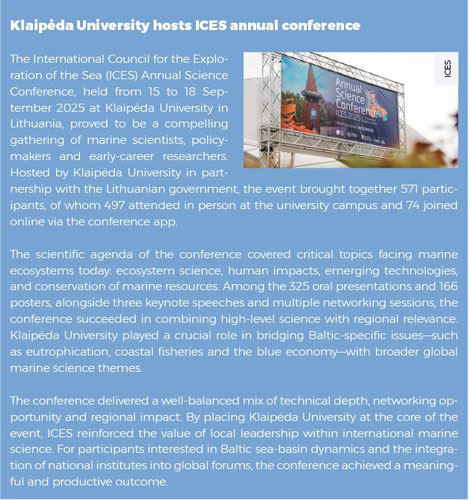
The DCF ensures that data from across the Baltic is comparable. Thus, a length distribution for sprat from Klaipėda can confidently be compared with one from Gdańsk. Through regional cooperation under the RCG Baltic, which Lithuania chairs from 2024 to 2027, the framework promotes coordinated data collection and shared understanding. In Lithuania, the DCF portal operates as an integrated data management system, providing real-time access to validated datasets and interactive online dashboards that visualise all data collected under the DCF. The DCF is essential for both commercial fishers and recreational anglers, as it provides the harmonised data foundation on which fisheries policies across countries are built. By ensuring consistent and reliable information, it strengthens the prospects for the recovery of cod and salmon stocks and supports long-term planning and sustainability within the Baltic sea fisheries sector. As a strategic measure under the EMFAF in Lithuania, the DCF demonstrates a broad scope and significant impact—extending well beyond its formal mandate to actively foster scientific cooperation through regional coordination, to contribute to policy development, and to strengthen international engagement, including organising and participation in events such as the ICES Annual Science Conference.