This article was featured in Eurofish Magazine 5 2026.

A fishing cooperative on the island of Vis plays a role in embedding the fishery in the economic, social, and cultural identity of the island.
Ribarska zadruga Komiža, on the Croatian island of Vis, is a fishers’ cooperative comprising around a dozen fishermen, a modest facility in Komiža, and a fleet of independently owned boats working from one of Croatia’s most remote inhabited islands. It occupies an important position between an ancient fishing culture and the demands of a modern seafood market by giving local fishermen bargaining power, organising sales and transport, and devising and executing projects that add value to the catch.
Fishers face several headwinds
The cooperative was established around the turn of the century. Its purpose, according to Tonči Božanić, the co-founder, who is also a former state secretary in the Croatian Ministry of Agriculture, Fisheries and Rural Development, was to strengthen the bargaining power of fishermen by getting them to work acting together. Dino Božanić, the president of the cooperative and an active fisherman, says fishers must deal with several challenges. Although fishing quotas are not decreasing and, in some cases, are even increasing, fishers’ actual catches are becoming smaller. Reduced fish availability and lower catches are among the key challenges facing the fisheries sector, particularly in a period of high inflation. The purchase and market prices of fish are not keeping pace with the cost of living and operating costs, further undermining the economic viability of fishing operations. A growing concern is also the reduced number of available working days, as weather and other conditions increasingly prevent fishers from going to sea.
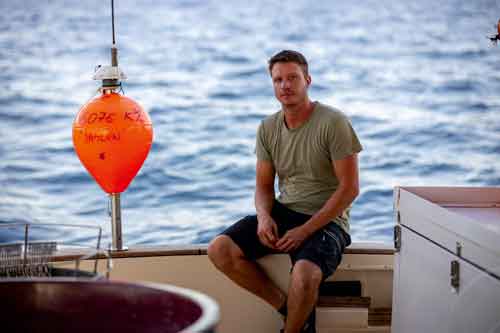
Dino Božanić, president of Ribarska zadruga Komiža
Fishers face rising labour costs, he adds. The activity is physically demanding, unpredictable and often hazardous. It is carried out on small vessels, at sea, and in changing—often adverse—weather conditions. These circumstances make it difficult to attract and retain workers. A particular challenge is the disadvantaged position of longline fishers compared with trawlers in accessing fishing grounds. Longline fishers, who use more selective and traditional fishing gear, often face less favourable conditions when it comes to access to certain fishing areas. This situation further complicates the operations of small-scale coastal fishers and the preservation of traditional fishing practices. Additional pressure on domestic fishers comes from the activity of fishers from neighbouring countries, with whom Croatian fishers share Adriatic Sea fish stocks. This issue directly affects fish availability, catch levels and the overall sustainability of Croatian fishing operations, and it should therefore be considered within the broader framework of managing shared fishery resources. Climate change, rising sea temperatures, and changes in the marine ecosystem including the emergence and spread of invasive species are also becoming increasingly significant challenges. These changes affect the distribution, availability and migratory patterns of fish stocks, and consequently the predictability of fishing activity and the security of fishers’ income.
EU support is welcome but comes with too many strings
While the European Union provides substantial investment in fisheries and opportunities to modernise vessels, equipment, business operations and processing, support schemes are often complex and administratively demanding, making it more difficult for small-scale fishers to access available funding and use it effectively.
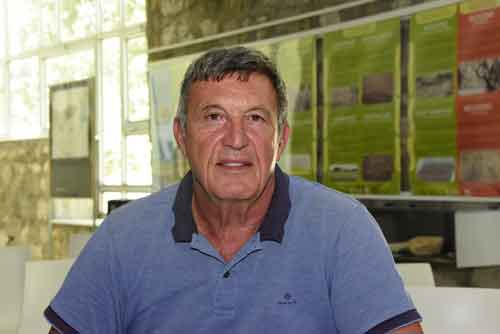
Collective organisations like the cooperative gain a legal and administrative status that carries more weight with local and national authorities than that enjoyed by an individual fisher. The fishermen own the cooperative, however, and this shapes the way the cooperative works. Rudolf Šaravanja, the manager, stresses that the cooperative is not a conventional fish-trading company seeking to buy as cheaply and sell as dearly as possible. The margin between the price paid to members and the eventual selling price is intended to cover operating costs, including vehicles and logistics, while the economic benefit ultimately returns to the fishermen. Prices are discussed openly and payment on time is fundamental, he says. The cooperative members mainly operate relatively small boats, and longlining is central to their activity. Mr Šaravanja identifies hake and swordfish as core species, with fishermen switching gear and fishing patterns according to season and target species. A typical boat of around nine or ten metres may land roughly up to half a tonne of high-value fish after one to three days at sea, although catches vary widely. Some fish is sold locally, but much of it must reach buyers on the mainland quickly.
Fishers freed from marketing, sales, and delivery
This makes marketing almost inseparable from fishing. While boats are still at sea, fishermen send the cooperative information about species and estimated quantities. Mr Šaravanja starts contacting customers immediately. In his words, the cooperative often “sells the fish before we catch the fish”. Once the vessels return, the catch is weighed, chilled, loaded, and moved onwards, often for delivery the following morning. Weekends, public holidays, bad weather, and ferry-linked island logistics all complicate the process. The cooperative’s role is therefore not merely to find a buyer but to manage a narrow window in which premium fresh fish must be landed and delivered.
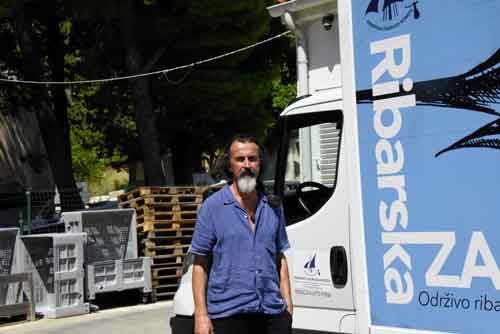
Rudolf Šaravanja, manager of Ribarska zadruga Komiža
The system also allows the cooperative to defend a consistent price. Mr Šaravanja says buyers are not offered a lower unit price simply because they take a larger quantity. If one customer will not accept the price, the cooperative approaches another. This position would be difficult for an individual fisherman with a perishable catch and few immediate alternatives, and it illustrates the benefits of cooperative membership. The advantages have not, however, persuaded every fisherman in Komiža to join the cooperative. Mr Božanić explains that long-established commercial relationships can be hard to break. Some fishermen historically received loans or equipment from private buyers and repaid these obligations through fish deliveries, creating durable ties between vessel and buyer. Others simply prefer complete independence. The cooperative therefore currently consists of 12 fishers out of a total of around 50 registered on the island.
Projects improve fish quality, sustainability
At the same time, its institutional role has expanded. The European Commission’s current list of recognised fisheries producer organisations records Ribarska zadruga Komiža as a producer organisation as of 20 December 2024. This gives formal recognition to a function the cooperative has long performed in practice including coordinating producers, marketing catch, and strengthening their position in the supply chain. In addition, as a producer organisation, it is entitled to favourable funding terms when implementing projects. Investment supported through FLAG Škoji has also moved the cooperative beyond basic first sale. Its “Komiška sabljarka” project received EUR74,197.24 in public support at 100% aid intensity. The project financed a specialised refrigerated vehicle with insulated containers, a solar installation at the cooperative’s premises, handling and cleaning equipment, and educational activities. It also branded Komiža swordfish under GEOfood, the food initiative developed within UNESCO Global Geoparks. Manuela Antičević, programme leader at the FLAG Škoji describes this as Croatia’s first fishery product to carry the GEOfood brand.
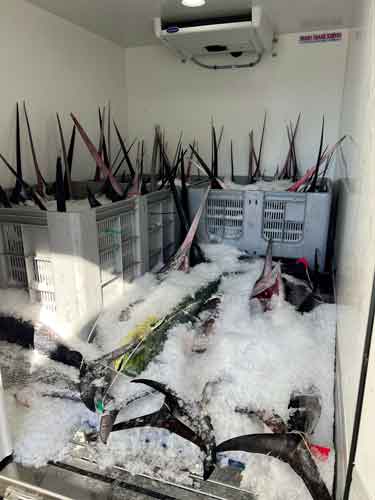
High quality swordfish caught by members of the fishing cooperative, Ribarska zadruga Komiža, is ready for delivery to the mainland.
The investment addresses several pressures at once. Better cold-chain logistics protect quality during the journey from island to buyer. Solar power reduces energy requirements from conventional sources, while branding aims to highlight a high-value local catch freshly caught using sustainable gear to distinguish it from imported frozen fish. While the cooperative and the FLAG Škoji offer the fishers a way to move up the value chain and help to embed them in the local economy, one of the most significant long-term concerns remains the declining interest of young people in entering the fishing profession, alongside the increasing difficulty of finding qualified workers. If this trend continues, the issues of generational renewal, knowledge transfer and the long-term survival of fisheries—particularly on islands and in smaller coastal communities—will become even more pronounced, says Mr Božanić.