This article was featured in Eurofish Magazine 2 2026.

Meaningful comparisons of the environmental impacts, both positive and negative, of different aquaculture production technologies call for standardised indicators and systems of measurement.
Fish farmers today are exposed to an ever-growing vocabulary of sustainability—carbon footprints, life cycle assessment, product environmental footprint, ecosystem services, carrying capacity, environmental impact assessment, and so on. Each term appears in funding calls, certification schemes, retailer requirements, and policy documents. For many producers, whether operating ponds, cages, recirculating aquaculture systems (RAS), shellfish farms, or seaweed lines, the challenge is not just meeting and maintaining increasingly demanding environmental sustainability standards, but how to understand and navigate the different methods used to measure them.
This article aims to guide aquaculture professionals through the most important environmental assessment approaches. What do they actually measure? How are they connected? And in which situations is each method most relevant? While the terminology may seem complex, the logic behind these tools is straightforward once the differences are clear.
Aquaculture’s environmental impact depends on several factors
Sustainability in food production is commonly defined by the Food and Agriculture Organization of the United Nations as meeting the needs of the present without compromising the ability of future generations to meet their own needs. In aquaculture, this means producing nutritious aquatic food while safeguarding water resources, biodiversity, climate stability, and surrounding ecosystems. Research has shown that aquaculture can contribute significantly to food security and human health and often has lower greenhouse gas emissions than many terrestrially bred animal proteins. However, environmental performance can vary considerably depending on the species farmed, the production system used, feed composition, and management practices. This diversity makes reliable and robust environmental assessment essential.
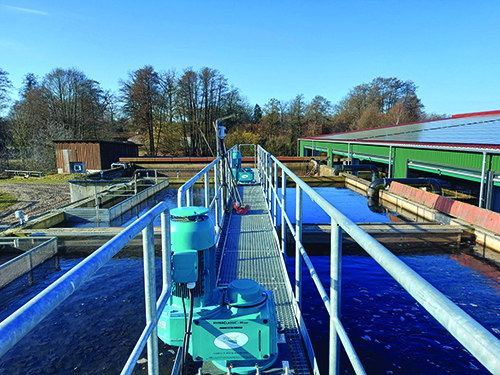
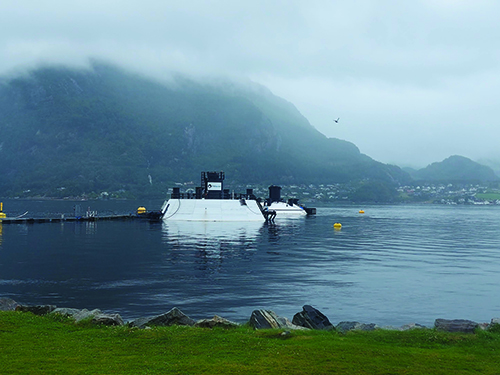
At the most immediate level, environmental performance concerns what happens around the farm itself. This is the domain of Environmental Impact Assessment, or EIA. An EIA evaluates the local effects of aquaculture operations on water quality, nutrient discharge, sediment accumulation, habitats, and biodiversity. It addresses questions such as whether a lake, river, coastal zone, or groundwater body can absorb nutrient inputs without ecological degradation. The concept of carrying capacity and especially ecological carrying capacity, plays a central role here. Every ecosystem has physical and ecological limits, and sustainable production must remain within them. Different farming systems, stocking densities, feeding strategies, and water management approaches can significantly influence how much production an ecosystem can sustain without environmental harm.
EIA provides a site-specific picture of envirnmental impacts
For example, in case of pond aquaculture, the picture is very complex. Extensive and semi-intensive ponds often retain nutrients in sediments and biomass, and in some cases function as managed wetlands that support birds, amphibians, and other wildlife. Cage farming in open waters depends strongly on hydrodynamics and stocking densities, while RAS facilities minimise water discharge but concentrate waste streams that must be treated effectively. Shellfish and seaweed systems may even remove nutrients from surrounding waters. EIA therefore provides a site-specific, locally focused evaluation of impacts, forming the basis for licensing and regulatory compliance. What it does not capture, however, is the full global footprint of producing feed, energy, and infrastructure.
To understand that broader picture, the aquaculture sector increasingly relies on Life Cycle Assessments, or LCAs. Whereas EIA looks outward from the farm into its immediate environment, LCA looks both upstream and downstream across the entire value chain. It examines environmental impacts from feed ingredient production, hatchery operations, energy use, farm infrastructure, grow-out, processing, transport, and sometimes even retail and consumption. Because it follows the product from “cradle to grave,” an LCA provides a comprehensive picture of the total environmental burden.
An LCA measures the environmental impact of a product over its lifespan
In practice, an LCA typically measures impacts per functional unit, often one kilogram of live or processed fish. It quantifies environmental impacts like greenhouse gas emissions, eutrophication potential, water consumption, land use, acidification, and ecotoxicity. This allows comparison between production systems and even between aquaculture and other animal protein farming. For example, a RAS facility may perform very well in terms of local nutrient discharge but show higher carbon emissions if electricity demand is significant. Conversely, pond systems may emit methane from sediments yet also store carbon and provide nutrient retention services.
Feed production frequently emerges as one of the largest contributors to life cycle impacts across all systems. An LCA thus helps avoid “problem shifting,” where solving a local issue inadvertently increases global impacts.
Within the European Union, the Product Environmental Footprint, or PEF, represents a further step in harmonising life cycle thinking. PEF builds on LCA principles but introduces strict methodological rules to ensure comparability between products. Its development is closely linked to European environmental policy objectives, including the European Green Deal. For aquaculture producers, PEF may increasingly influence environmental claims, eco-labels, and market access. So far, Product Environmental Footprint Category Rules (PEFCRs) have been developed mainly for marine fish products, providing a standardised framework for assessing their environmental performance. Similar rules for freshwater fish and other aquatic products would allow more consistent and comparable environmental assessments across the full diversity of the aquaculture sector.
Ecosystem services are valuable contributions to the environment
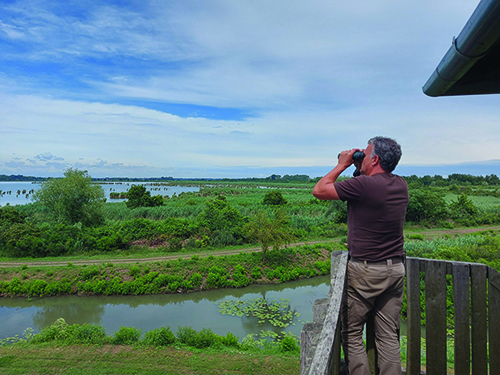
Yet focusing only on impacts risks overlooking an important dimension of aquaculture: its potential contributions to ecosystems and society. This is where the concept of ecosystem services becomes relevant. Ecosystem services describe the benefits that ecosystems provide to humans. These services include not only the provision of food and biological resources, but also ecological functions that regulate and maintain environmental quality. Many ecosystem services actively improve environmental conditions or help reduce human pollution. In aquaculture, these can include water storage, nutrient cycling, carbon sequestration, habitat provision, and cultural values such as recreation and education. Extensive fishpond systems in Europe illustrate this particularly well. Many have evolved over centuries into valuable wetland habitats that support biodiversity and contribute to regional landscape identity.
Shellfish farms can enhance water clarity through filtration, while integrated systems can recycle nutrients between trophic levels. Such services are rarely fully captured in traditional environmental impact metrics. As a result, a production system might appear burdensome in a narrow footprint analysis while simultaneously providing important regulating or cultural services.
The integration of ecosystem services into Life Cycle Assessment (LCA) is still at an early stage of development. Traditional LCA focuses mainly on quantifying negative environmental impacts, such as greenhouse gas emissions, eutrophication, or resource use, while positive contributions from ecosystems are rarely captured. In recent years, researchers have begun developing frameworks that link ecosystem services to LCA, particularly within the impact assessment and interpretation phases. These approaches attempt to account for services such as carbon sequestration, nutrient retention, water purification, and habitat provision. However, standardised indicators, consistent datasets, and widely accepted methodologies are still lacking. As a result, ecosystem services are currently considered mostly in a qualitative way or through supplementary analyses rather than being fully integrated into standard LCA results. Further methodological development is needed before ecosystem services can be systematically and quantitatively included in LCA-based sustainability assessments.
APIs take environmental, economic, and social impacts into account
Aquaculture Performance Indicators (APIs) also provide a practical framework that links scientific assessment tools with a broader concept of sustainability in aquaculture. APIs combine environmental, economic, and social indicators into a unified performance framework. The API methodology is based on a set of standardised indicators that measure key aspects of aquaculture systems, including resource use efficiency, environmental pressures, productivity, and socio-economic performance. These indicators are typically derived from farm-level data and can incorporate results from EIA and LCA analyses where available. By translating complex sustainability information into measurable and comparable metrics, APIs make it easier to assess and benchmark the performance of different aquaculture systems.
Tamas Bardocz,
Eurofish, tamas.bardocz@eurofish.dk